
Free Safe Operating Procedure (Sheep Drafting) Template
Manage risks associated with sheep drafting with our structured template. Download your free Safe Operating Procedure to establish a clear, safe process.
Free Safe Operating Procedure (Sheep Drafting) Template
DOCX • 126 KB + PDF
Updated Oct 2026
No signup required
Purpose of the Free Safe Operating Procedure (Sheep Drafting) Template
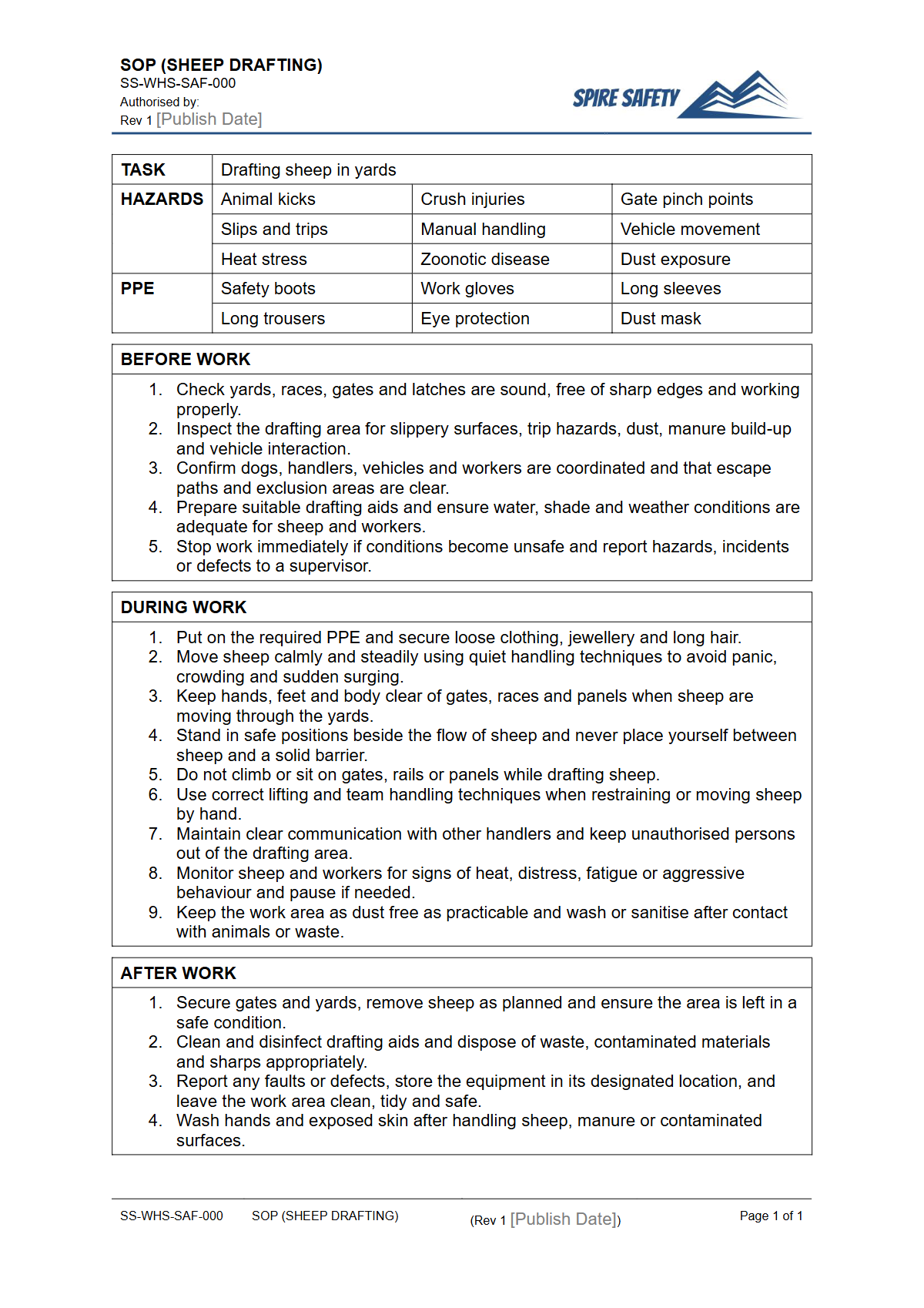
This free Safe Operating Procedure (Sheep Drafting) template provides a structured starting point for documenting the safety measures required for sorting and handling sheep. Sheep drafting, while a routine task on many Australian farms, presents significant risks including body stressing from repetitive actions, being crushed or pinned by animals or gates, and potential exposure to zoonotic diseases.
Implementing a formal SOP helps to standardise the process, ensuring every worker understands the required steps to perform the task safely and efficiently. It forms a critical part of a farm's overall safety framework, demonstrating a commitment to proactive risk management.
A documented procedure is an essential tool for training, supervision, and incident investigation. By clearly outlining pre-operational checks, the step-by-step drafting process, and emergency procedures, this template helps minimise the likelihood of injury.
Using this SOP consistently helps build a robust safety culture and is a fundamental component of effective WHS management systems on any agricultural property.
Video walkthrough
How to use the Free Safe Operating Procedure (Sheep Drafting) Template
To get started, download the template in your preferred format—DOCX for easy editing or PDF for straightforward printing. The document is logically structured to guide you through defining the required PPE, identifying potential hazards, and detailing the control measures.
It includes sections for pre-start checks on the drafting race and gates, the sequence of operations, and post-task clean-up. This structured approach helps ensure no critical safety step is overlooked.
Important: This document is a template and must be customised. We cannot provide a document that is universally compliant for every worksite, because the specific risks vary.
You must review and amend this Safe Operating Procedure to reflect the unique conditions of your workplace, including the specific type of drafting equipment used, the layout of your yards, and your farm's emergency procedures. For other agricultural tasks, you might also find our FREE Spreader SOP (Safe Operating Procedure) Template useful.
When to use this Safe Operating Procedure
A Safe Operating Procedure for sheep drafting should be used as a primary reference document whenever the task is performed. It is particularly critical during the induction and training of new farmhands or contractors who may be unfamiliar with your specific yard setup and procedures.
The SOP also serves as an excellent tool for refresher training for experienced workers, helping to prevent complacency and reinforce best practices. Following an incident or a near miss, the SOP should be reviewed and updated as part of the investigation process to prevent recurrence.
Many farms also integrate SOP reviews into their regular safety meetings to ensure continued relevance.
Who should use this SOP
This Safe Operating Procedure is intended for use by multiple parties on a farm or agricultural business. Persons Conducting a Business or Undertaking (PCBUs) and farm managers should use it to fulfil their duty of care by establishing a safe system of work.
Supervisors can use it as a checklist to ensure workers are following the prescribed safety steps and not taking hazardous shortcuts. For workers and farmhands, the SOP is a direct guide on how to perform their duties safely, protecting themselves and their colleagues.
It empowers them to understand the risks and the controls put in place to manage them, fostering a more collaborative approach to workplace safety.
Key Safety Elements in Sheep Drafting
A comprehensive SOP for sheep drafting should always address several key areas. Firstly, pre-operational checks of the drafting race, gates, and latches are non-negotiable to prevent equipment failure during use.
Secondly, it must consider animal behaviour; understanding the flight zone of sheep and using low-stress stock handling techniques can significantly reduce the risk of unpredictable movements and potential injuries. Thirdly, clear communication between workers is vital, especially in noisy yard environments.
Finally, the procedure should specify the required Personal Protective Equipment (PPE), such as sturdy, non-slip boots and gloves, to protect against common hazards. Regular reviews of these procedures are a core activity in a WHS compliance auditing program.
This template is just one of many procedural documents available. You can browse our complete free WHS resources library for more templates to support your safety management system.
Common mistakes
Common mistakes to avoid
- Using the downloaded template without customising it for the specific farm, yards, and equipment.
- Failing to adequately train all workers on the contents of the final, customised SOP.
- Neglecting to regularly check and maintain drafting gates, races, and latches for wear and tear.
- Not reviewing or updating the SOP after an incident, near miss, or change in procedure.
Legal references
Legal considerations
The following legal requirements may be relevant to this type of work.
- Work Health and Safety Act (Harmonised) — Provides the primary duties for protecting workers and other people from work health and safety risks.
- Work Health and Safety Regulations (Harmonised) — Sets out requirements supporting the management of workplace hazards and risks.
The following codes may be relevant to this type of work.
- Managing WHS Risks Code of Practice — Provides practical guidance on identifying hazards, assessing risks and applying effective controls.
- Work Health and Safety Consultation, Cooperation and Coordination Code of Practice — Provides practical guidance on consulting workers and coordinating with other duty holders.
- Managing the Work Environment and Facilities Code of Practice — Provides practical guidance on safe work environments, workplace facilities and related controls.
Did you know
Zoonotic Risks
Zoonoses are diseases that can be transmitted from animals to humans. In Australia, farm workers handling sheep are at risk of contracting diseases like Q-fever, scabby mouth, and leptospirosis, highlighting the importance of PPE and good hygiene.
The Flight Zone
Low-stress stock handling techniques are based on understanding a sheep's 'flight zone'—the personal space around it. Working calmly on the edge of the flight zone allows a handler to move stock effectively with less stress for both the animal and the worker.
FAQ
Frequently asked questions
01What are the key hazards involved in sheep drafting?
02Does a Safe Operating Procedure replace a risk assessment for sheep drafting?
03How often should an SOP for sheep drafting be reviewed?
04Can this template be used for other livestock handling tasks?
Share this resource
Free Safe Operating Procedure (Sheep Drafting) Template
Browse Categories
How To Use It
- 1Download and open in Word or PDF.
- 2Replace the placeholders with your business details.
- 3Get it reviewed by a WHS specialist before rollout.
Need it customised?
Our WHS consultants can adapt this template to your site, run a gap analysis, or audit what you already have in place.
Book a Free Consultation WHS consulting servicesor call 1300 156 382
Related templates
- Free Safe Operating Procedure (Sheep Feeding) Template
- Free Safe Operating Procedure (Sheep Footbath) Template
- Free Safe Operating Procedure (Sheep Loading) Template
- Free Safe Operating Procedure (Sheep Weighing) Template
- Free Safe Operating Procedure (Sheet Metal Brake) Template
- Free Safe Operating Procedure (Sheet Metal Roller) Template