
Free Safe Operating Procedure (Sprinkler Head Change) Template
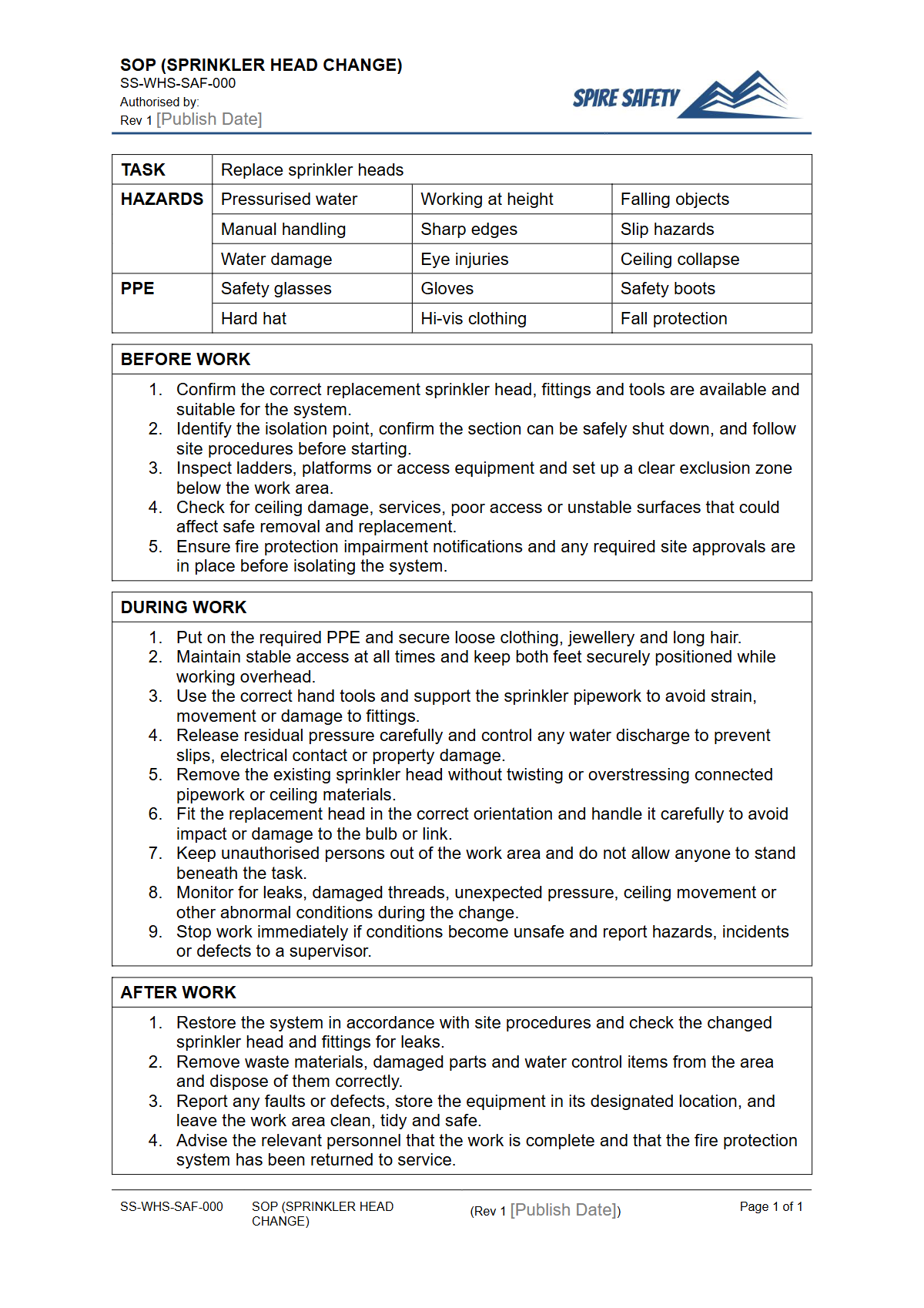
Download our free Safe Operating Procedure for sprinkler head changes. This customisable template helps you outline step-by-step safety controls for this task.
Free Safe Operating Procedure (Sprinkler Head Change) Template
DOCX • 126 KB + PDF
Updated Oct 2026
No signup required
Purpose of the Free Safe Operating Procedure (Sprinkler Head Change) Template
Changing a fire sprinkler head is a critical maintenance task that carries significant risks if not performed correctly. This includes potential water damage from accidental system activation, personal injury from stored pressure, or compromising the integrity of the fire protection system.
Our Free Safe Operating Procedure (Sprinkler Head Change) Template provides a structured framework for documenting the required safety steps. It is designed to help your organisation establish a clear, consistent, and safe method for this specialised work, forming a key component of your overall safety documentation.
Using a documented SOP ensures that all personnel follow a pre-approved, risk-assessed process. This minimises the chance of error, protects workers, and helps maintain the operational readiness of your fire safety equipment.
A well-defined procedure is a cornerstone of effective WHS management systems, demonstrating a commitment to proactive risk management and workplace safety. This template acts as a starting point, guiding you through the essential elements of a comprehensive procedure.
Video walkthrough
How to use the Free Safe Operating Procedure (Sprinkler Head Change) Template
This template is provided in both DOCX and PDF formats to suit your needs. The DOCX file is fully editable, allowing you to tailor the procedure to your specific site requirements, types of sprinkler systems, and organisational policies.
We recommend a competent person, such as a fire systems technician or a maintenance manager with relevant expertise, leads the customisation process.
Key steps for customisation include:
- Site-Specific Details: Add your company name, logo, and relevant site information.
- Risk Assessment: Conduct a specific risk assessment for the task at your facility and incorporate the identified hazards and control measures into the SOP. This should cover risks like working at heights, hazardous materials (if applicable), system pressure, and tool use.
- Equipment and Tools: List the exact personal protective equipment (PPE) required, as well as the specific tools and equipment needed for the job (e.g., correct sprinkler wrench, drainage hoses, buckets).
- Step-by-Step Procedure: Detail the precise sequence of actions, from notifying stakeholders and isolating the system to draining, replacing the head, repressurising, and testing. Be explicit and unambiguous in your instructions.
- Review and Approval: Ensure the finalised SOP is reviewed and approved by management and relevant safety personnel before being issued for use. Regular reviews are also essential, a process that can be verified through WHS compliance auditing.
Important: This document is a template, not a finished procedure. It is essential that you customise it to align with the unique context of your workplace, including the specific sprinkler systems in use and the competency of your personnel.
For complex systems or if you lack in-house expertise, engaging external WHS consulting services is a prudent step.
When to use a Safe Operating Procedure for a Sprinkler Head Change
This Safe Operating Procedure should be used every time a fire sprinkler head needs to be replaced. This may occur during scheduled maintenance, after accidental activation, following damage to a head, or as part of a building renovation or refit.
Having a formalised procedure is particularly important because the task is often performed infrequently, increasing the risk that workers may forget critical safety steps.
It serves as both a planning tool for supervisors and a practical checklist for the technician performing the work. It is also an invaluable training document for new maintenance staff or contractors, ensuring they understand your organisation's safety expectations.
Similar to how you would require a specific procedure for high-risk activities like welding, you can find an example in our free Oxy Acetylene SOP, this task demands a formalised approach to control the risks involved.
Who should use this SOP
This SOP should be used by personnel who are trained, competent, and authorised to perform maintenance on fire sprinkler systems. This typically includes:
- Licensed fire systems technicians
- Qualified plumbers with specific training in fire protection systems
- Specialised in-house maintenance personnel who have demonstrated competency
It is not intended for use by untrained staff. Supervisors and WHS managers should also use the document to ensure work is being planned and executed in line with the organisation's safety standards and regulatory obligations.
If your workplace uses a variety of equipment, consider standardising your safety documents by exploring our extensive free WHS resources library for other templates.
Common mistakes
Common mistakes to avoid
- Failing to fully isolate and drain the correct section of the sprinkler system before starting work.
- Using the wrong type of wrench (e.g., a pipe wrench), which can damage the new sprinkler head.
- Overtightening the new head, which can crack the fitting or damage the seal.
- Forgetting to conduct a proper leak check and fully restore the system to operational status after the change.
Legal references
Legal considerations
The following legal requirements may be relevant to this type of work.
- Work Health and Safety Act (Harmonised) — Provides the primary duties for protecting workers and other people from work health and safety risks.
- Work Health and Safety Regulations (Harmonised) — Sets out requirements supporting the management of workplace hazards and risks.
The following codes may be relevant to this type of work.
- Managing WHS Risks Code of Practice — Provides practical guidance on identifying hazards, assessing risks and applying effective controls.
- Work Health and Safety Consultation, Cooperation and Coordination Code of Practice — Provides practical guidance on consulting workers and coordinating with other duty holders.
- Managing the Work Environment and Facilities Code of Practice — Provides practical guidance on safe work environments, workplace facilities and related controls.
Did you know
Colour Coded
The colour of the liquid-filled glass bulb in a sprinkler head indicates its activation temperature. The most common colour is red, which signifies an activation temperature of 68°C.
Australian Standards
The design, installation, and maintenance of fire sprinkler systems in Australia are primarily governed by the AS 2118 series and AS 1851 for routine service and testing.
FAQ
Frequently asked questions
01What key information must be included in an SOP for changing sprinkler heads?
02Is a Safe Operating Procedure legally required for changing sprinkler heads in Australia?
03Who is qualified to change a fire sprinkler head?
04How often should a Safe Operating Procedure be reviewed?
Share this resource
Free Safe Operating Procedure (Sprinkler Head Change) Template
Browse Categories
How To Use It
- 1Download and open in Word or PDF.
- 2Replace the placeholders with your business details.
- 3Get it reviewed by a WHS specialist before rollout.
Need it customised?
Our WHS consultants can adapt this template to your site, run a gap analysis, or audit what you already have in place.
Book a Free Consultation WHS consulting servicesor call 1300 156 382
Related templates
- Free Safe Operating Procedure (Sprinkler Head Cleaning) Template
- Free Safe Operating Procedure (Sprinkler Pump Test) Template
- Free Safe Operating Procedure (Sprinkler Valve Test) Template
- Free Safe Operating Procedure (Stable Bedding Change) Template
- Free Safe Operating Procedure (Stable Manure Removal) Template
- Free Safe Operating Procedure (Stadium Seat Cleaning) Template