
Free Safe Operating Procedure (Vet Waste Handling) Template
Properly managing veterinary waste is critical for safety and environmental protection in any animal care facility.
Free Safe Operating Procedure (Vet Waste Handling) Template
DOCX • 126 KB + PDF
Updated Oct 2026
No signup required
Purpose of the Free Safe Operating Procedure (Vet Waste Handling) Template
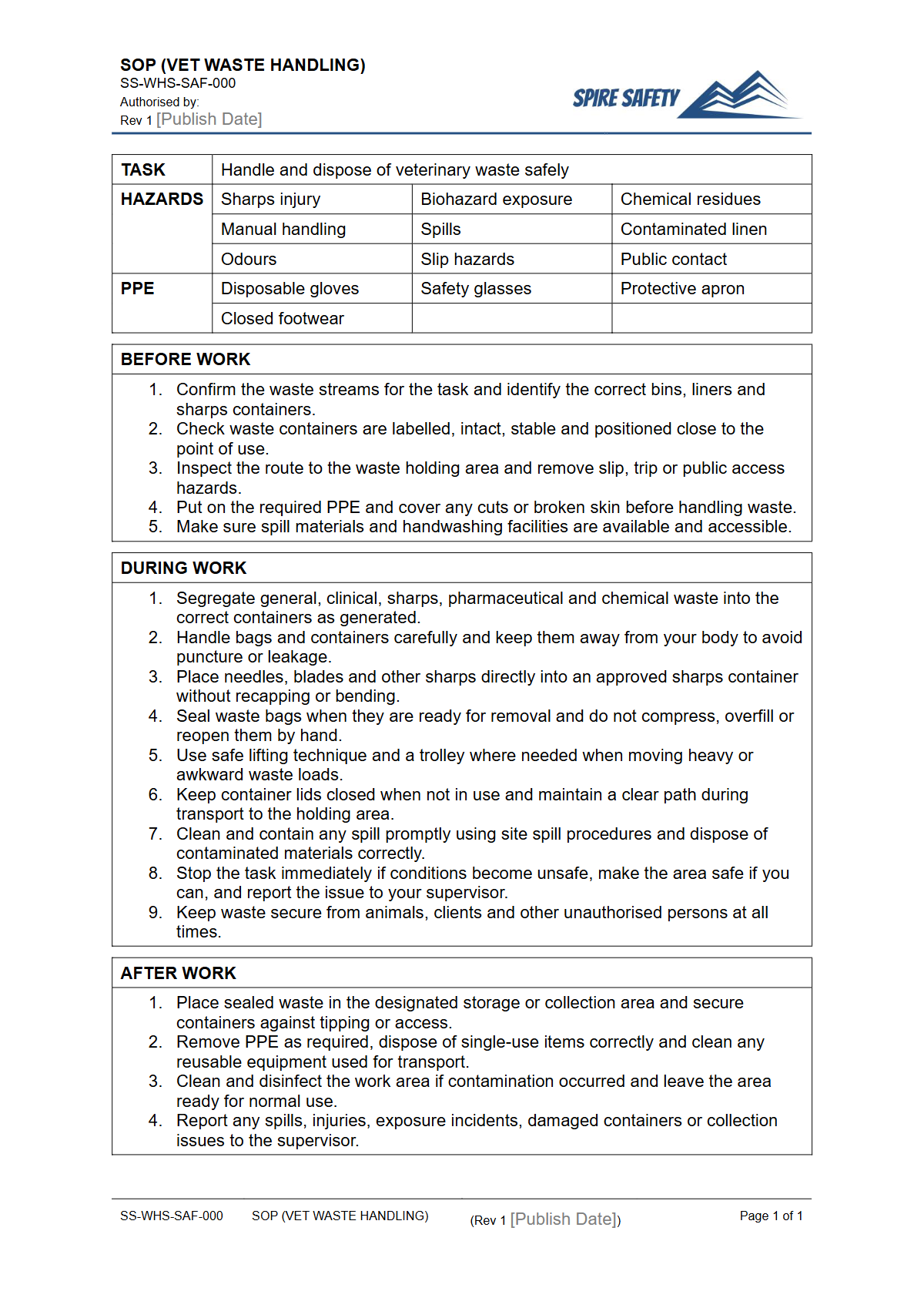
Handling veterinary waste correctly is a non-negotiable aspect of running a safe and responsible animal care facility. This Free Safe Operating Procedure (Vet Waste Handling) Template provides a structured starting point for your clinic or hospital to document the specific steps for managing clinical, sharps, cytotoxic, pharmaceutical, and related wastes.
Using a standardised procedure helps manage significant WHS risks, including sharps injuries, exposure to infectious agents, and manual handling strains. A documented SOP is also a critical tool for effective staff training and demonstrates due diligence in meeting your health and safety obligations.
A well-implemented SOP ensures that all team members, from veterinarians to kennel hands, understand their responsibilities for waste segregation, handling, storage, and disposal. This consistency is fundamental to preventing incidents and protecting the health of your workers, clients, and the wider community.
Furthermore, this procedure forms a vital component of your overarching WHS management systems, integrating with risk assessments, training records, and incident reporting processes to create a safer work environment.
Video walkthrough
How to use the Free Safe Operating Procedure (Vet Waste Handling) Template
This downloadable document provides a comprehensive framework aligned with Australian WHS principles for managing veterinary waste. It is available in both DOCX and PDF formats, allowing for easy customisation.
Before you begin, it’s important to understand that this document is a template, not a finished procedure. We've provided a solid framework, but you must customise it to reflect the specific wastes, equipment, chemicals, and layout of your veterinary clinic or animal hospital. Follow these steps to implement it effectively:
- Consult your team: Involve the veterinarians, nurses, and support staff who perform these tasks daily. Their input is invaluable for creating a practical and effective procedure.
- Customise the content: Review each section and add site-specific details. This includes names of approved waste contractors, locations of waste storage areas, specific PPE required, and emergency contact details.
- Risk Assessment: Ensure the controls outlined in the SOP align with your current workplace risk assessment for waste handling tasks.
- Training: Once finalised, use the SOP as a central tool for training all relevant new and existing staff. Keep records of this training.
- Review and Update: The procedure should be reviewed regularly (e.g., annually), after any incident, or if processes or waste types change. This continuous improvement is often a focus during a formal WHS compliance auditing process.
When to use a Vet Waste Handling SOP
A Safe Operating Procedure for veterinary waste is not a document to be filed away and forgotten. It is a live document that should be used actively within your practice to guide behaviour and reinforce safe work practices.
Initial Staff Training and Induction
Every new employee who may come into contact with veterinary waste must be trained on this procedure as part of their induction. This ensures they understand the risks and control measures from day one.
Using the SOP as a training checklist helps guarantee that all key safety information is covered consistently.
Ongoing Reference and Refresher Training
The SOP should be kept in a location easily accessible to all relevant staff, such as near the main waste segregation bins or in the treatment area. It serves as a quick reference guide to reinforce correct procedures.
It is also an essential tool for conducting periodic refresher training sessions to ensure long-term compliance and address any bad habits that may have developed.
Who should use this Safe Operating Procedure
This SOP is intended for any person conducting a business or undertaking (PCBU) in the veterinary or animal care industry. It should be implemented and followed by all workers whose roles involve generating or handling clinical and related wastes.
This includes:
- Veterinarians
- Veterinary Nurses and Technicians
- Animal Attendants and Kennel Hands
- Practice Managers
- Cleaning and Maintenance Staff
- Students and Work Experience Personnel
Practice managers and WHS officers are responsible for ensuring the procedure is properly customised, implemented, and reviewed. For practices needing assistance in developing comprehensive safety frameworks beyond this template, engaging with external safety experts can provide valuable guidance.
Spire Safety offers specialised WHS consulting to help businesses navigate their obligations. For larger organisations looking to achieve certification against internationally recognised standards, documented procedures like this SOP are essential for meeting the requirements of ISO 45001 consulting.
For more templates and safety documents, browse our complete free WHS resources library.
Common mistakes
Common mistakes to avoid
- Incorrectly segregating waste streams (e.g., sharps in clinical waste bags instead of a sharps container).
- Overfilling waste bags or sharps containers, increasing the risk of spills or puncture injuries.
- Using damaged, unapproved, or non-compliant containers for waste storage and transport.
- Failing to provide adequate training, instruction, and supervision to all staff involved in waste handling.
Legal references
Legal considerations
The following legal requirements may be relevant to this type of work.
- Work Health and Safety Act (Harmonised) — Provides the primary duties for protecting workers and other people from work health and safety risks.
- Work Health and Safety Regulations (Harmonised) — Sets out requirements supporting the management of workplace hazards and risks.
The following codes may be relevant to this type of work.
- Managing WHS Risks Code of Practice — Provides practical guidance on identifying hazards, assessing risks and applying effective controls.
- Work Health and Safety Consultation, Cooperation and Coordination Code of Practice — Provides practical guidance on consulting workers and coordinating with other duty holders.
- Managing the Work Environment and Facilities Code of Practice — Provides practical guidance on safe work environments, workplace facilities and related controls.
Did you know
Sharps Injuries
A significant portion of workplace injuries in veterinary practices are needlestick or other sharps injuries. A clear SOP and designated, puncture-proof sharps containers are the primary controls for this serious hazard.
Environmental Impact
Improper disposal of veterinary pharmaceuticals and chemicals can have serious environmental consequences, contaminating soil and water systems. Correct waste segregation is a key environmental protection measure.
FAQ
Frequently asked questions
01What is considered clinical waste in a veterinary setting?
02How often should a vet waste handling SOP be reviewed?
03Do I need separate bins for different types of veterinary waste?
04What PPE is required for handling vet waste?
Share this resource
Free Safe Operating Procedure (Vet Waste Handling) Template
Browse Categories
How To Use It
- 1Download and open in Word or PDF.
- 2Replace the placeholders with your business details.
- 3Get it reviewed by a WHS specialist before rollout.
Need it customised?
Our WHS consultants can adapt this template to your site, run a gap analysis, or audit what you already have in place.
Book a Free Consultation WHS consulting servicesor call 1300 156 382
Related templates
- Free Safe Operating Procedure (Vibrating Screed) Template
- Free Safe Operating Procedure (Vibrating Screen) Template
- Free Safe Operating Procedure (Vibration Logger) Template
- Free Safe Operating Procedure (Vibration Meter) Template
- Free Safe Operating Procedure (Vibratory Feeder) Template
- Free Safe Operating Procedure (Vibro Hammer) Template