
Tiling Safety Toolbox Talk Template
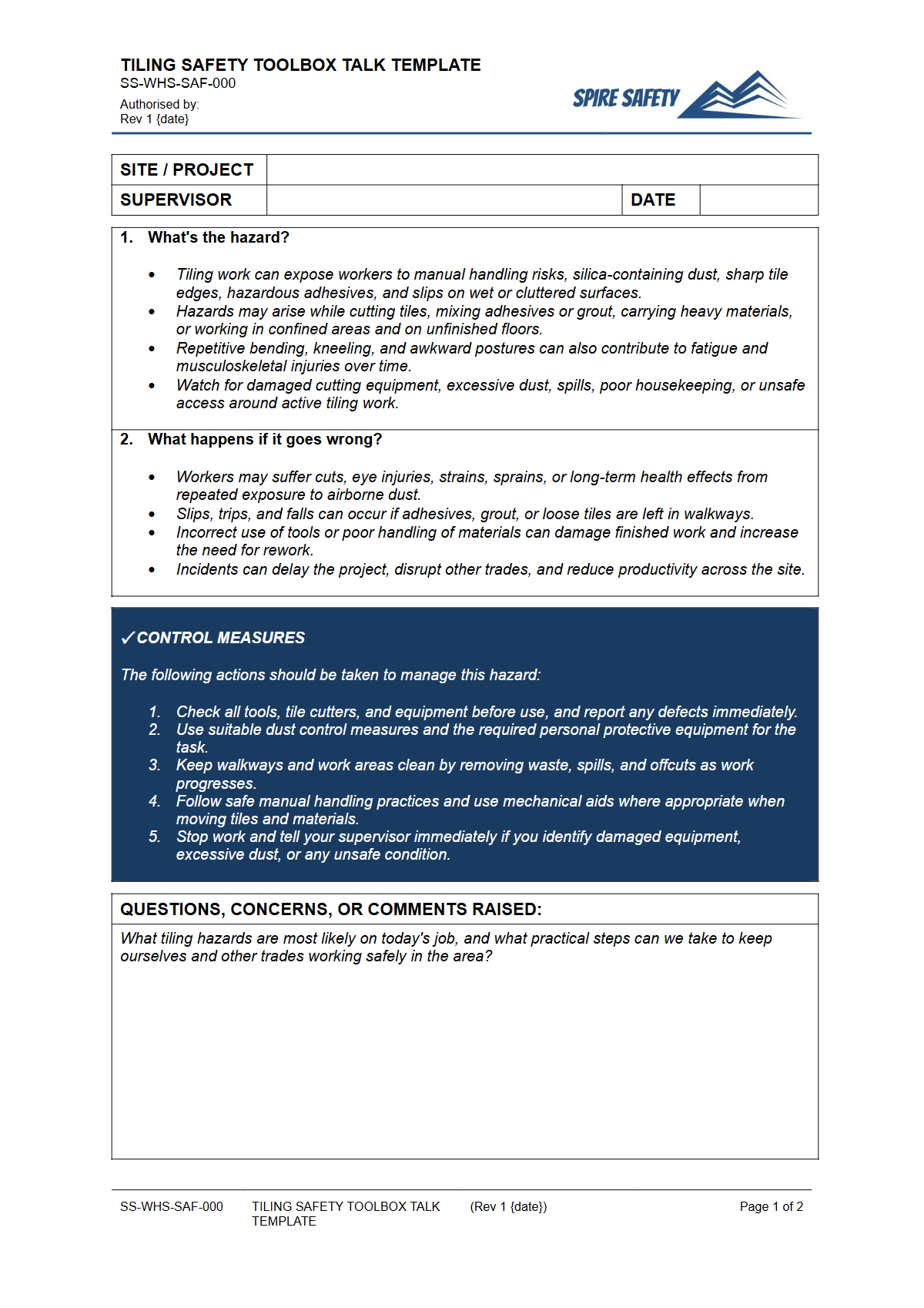
Download our free Tiling Safety Toolbox Talk Template. A structured starting point for discussing tiling hazards and controls in your workplace.
Tiling Safety Toolbox Talk Template
DOCX • 141 KB + PDF
Updated Oct 2026
No signup required
Purpose of this document
Our Tiling Safety Toolbox Talk Template provides a structured framework for conducting essential safety discussions with your team. This tool is designed to support organisations in effectively communicating critical work health and safety information pertaining to tiling operations.
It helps facilitate discussions about common hazards encountered during tiling work, outlines essential control measures, and reinforces safe work practices. By utilising this template, you can promote a proactive safety culture, ensuring that all workers understand and apply necessary precautions to minimise risks associated with tiling tasks.
It serves as a valuable educational resource, supporting ongoing safety training and promoting a safer working environment for everyone involved in tiling activities.
Video walkthrough
How to use this Toolbox Talk
This Tiling Safety Toolbox Talk Template is provided as a foundational document designed to be adapted to the specific needs and contexts of your workplace. To use it effectively, download the DOCX file and review its contents thoroughly.
Identify sections that require customisation based on unique site conditions, specific equipment used, chemicals handled, and the particular risks associated with your tiling projects. This template MUST be customised to your workplace. Integrate your organisation's policies, procedures, and hazard control measures.
During the toolbox talk, encourage open discussion, invite questions from your team, and record attendance and any outcomes of the discussion. This process ensures the information is relevant, understood, and actionable, reinforcing your organisation’s commitment to safety.
When to use it
Utilise this Tiling Safety Toolbox Talk Template regularly, especially before commencing new tiling projects, when introducing new equipment or materials, or after any incident or near-miss related to tiling activities. It's also beneficial for routine safety meetings to refresh workers' knowledge and reinforce safe work practices.
Consider conducting these talks whenever there are changes in work procedures, legislation, or when new workers join the team who may be involved in tiling tasks. Proactive and consistent use of this template can significantly contribute to maintaining high safety standards on-site and preventing workplace injuries.
Who should use it
This Toolbox Talk is ideal for supervisors, team leaders, WHS officers, and anyone responsible for overseeing tiling work or managing a team of tilers. It's also highly beneficial for all workers involved in tiling activities, including apprentices, contractors, and subcontractors, ensuring everyone has a shared understanding of safety expectations and procedures.
Safety managers can leverage this resource as part of their broader WHS management systems. It can be particularly useful for organisations aiming to enhance their safety communication and incident prevention strategies, aligning with robust Australian WHS practice. Supervisors will find it invaluable for initiating engaging discussions that lead to practical safety improvements rather than just ticking a box.
For those seeking further guidance on WHS best practice, Spire Safety offers expert WHS consulting services.
Common mistakes
Common mistakes to avoid
- Failing to conduct a site safety assessment before commencing work
- Not providing adequate ventilation when working with adhesives and grouts
- Neglecting to wear appropriate Personal Protective Equipment (PPE)
- Using blunt or damaged tools, increasing the risk of injury
Legal references
Legal considerations
The following legal requirements may be relevant to this type of work.
- Work Health and Safety Act (Harmonised) — Provides the primary duties for protecting workers and other people from work health and safety risks.
- Work Health and Safety Regulations (Harmonised) — Sets out requirements supporting the management of workplace hazards and risks.
The following codes may be relevant to this type of work.
- Managing WHS Risks Code of Practice — Provides practical guidance on identifying hazards, assessing risks and applying effective controls.
- Work Health and Safety Consultation, Cooperation and Coordination Code of Practice — Provides practical guidance on consulting workers and coordinating with other duty holders.
- Managing the Work Environment and Facilities Code of Practice — Provides practical guidance on safe work environments, workplace facilities and related controls.
Did you know
Slips, Trips, and Falls
Working with wet materials, off-cuts, and uneven surfaces are common causes of slips, trips, and falls in tiling, accounting for a significant percentage of workplace injuries.
Respirable Crystalline Silica (RCS)
Cutting, grinding, and drilling tiles can release respirable crystalline silica (RCS) dust, which can lead to serious lung diseases including silicosis if not properly controlled.
FAQ
Frequently asked questions
01What is the purpose of a Tiling Safety Toolbox Talk Template?
02How often should tiling safety toolbox talks be conducted?
03Can this template be used for residential and commercial tiling projects?
04Where can I find more free WHS resources?
Share this resource
Tiling Safety Toolbox Talk Template
Browse Categories
How To Use It
- 1Download and open in Word or PDF.
- 2Replace the placeholders with your business details.
- 3Get it reviewed by a WHS specialist before rollout.
Need it customised?
Our WHS consultants can adapt this template to your site, run a gap analysis, or audit what you already have in place.
Book a Free Consultation WHS consulting servicesor call 1300 156 382