
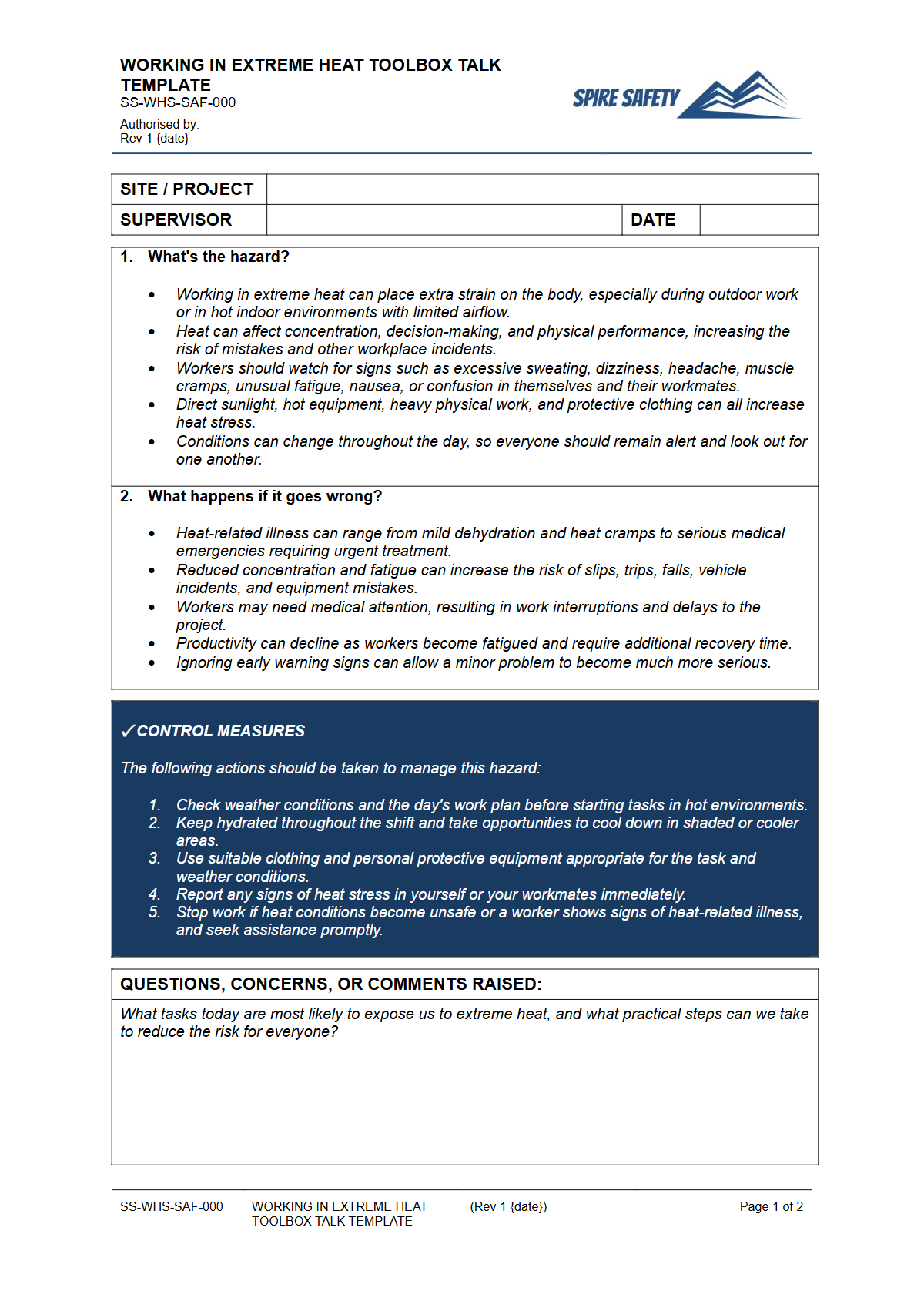
Working in Extreme Heat Toolbox Talk Template
Download your free Toolbox Talk Template for working in extreme heat. A structured starting point to discuss heat stress risks and controls with your team.
Working in Extreme Heat Toolbox Talk Template
DOCX • 139 KB + PDF
Updated Oct 2026
No signup required
Purpose of this document
Our Working in Extreme Heat Toolbox Talk Template is designed to facilitate crucial discussions about the risks associated with working in high temperatures and how to manage them effectively. This resource aims to help organisations protect their workers from heat-related illnesses such as heat stroke, heat exhaustion, and dehydration.
By using this template, you can systematically address common hazards, outline preventive measures, and promote a safety-conscious culture on site.
It provides a clear framework for supervisors and team leaders to deliver consistent and comprehensive information regarding safe work practices during hot weather, aligning with Australian WHS practice. Regular toolbox talks on this topic are vital to ensure all workers recognise the signs of heat stress, understand emergency procedures, and know their responsibilities in maintaining a safe work environment when temperatures rise.
Video walkthrough
How to use this Toolbox Talk
This Toolbox Talk template is provided in a customisable DOCX format, along with a PDF version for easy reference. We've structured it to be a practical starting point for your discussions.
However, it is crucial that you customise the content to reflect the specific conditions, tasks, and controls present in your workplace. No two workplaces are identical, and what constitutes 'extreme heat' or the most effective control measures will vary based on your industry, location, and the nature of work being performed.
Please note that this resource should be adapted to your unique operational requirements and cannot be used as-is for compliance.
Before conducting the talk, review the template thoroughly and amend it with details specific to your site. Include information about your organisation's heat stress policy, identified hot spots, designated shaded rest areas, access to drinking water, and specific PPE requirements.
Encourage worker participation and questions during the session to foster a collaborative approach to safety. Document attendance and any actions arising from the discussion.
When to use it
This free WHS resources library Toolbox Talk is ideal for use prior to the onset of warmer seasons or during periods of predicted extreme heat conditions. It should be conducted whenever there's a risk of heat stress to workers, especially before outdoor work, physically demanding tasks, or work in hot indoor environments like foundries or plant rooms.
It's also beneficial as part of an induction process for new employees or as a refresher for existing teams to reinforce safe practices and remind everyone about the potential dangers of working in extreme heat.
Who should use it
Supervisors, team leaders, site managers, and WHS officers are the primary users for this Working in Extreme Heat Toolbox Talk Template. Anyone responsible for managing teams that may be exposed to high temperatures will find this template valuable.
It supports those in leadership roles to effectively communicate safety information, manage risks, and demonstrate their commitment to worker wellbeing. While not a substitute for comprehensive WHS management systems, it serves as a critical tool for daily operational safety briefings.
Common mistakes
Common mistakes to avoid
- Not providing enough accessible, cool drinking water.
- Failing to adapt work schedules during extreme heat forecasts.
- Underestimating the cumulative effect of heat exposure over a workday.
- Not properly training workers to recognise and report heat stress symptoms in themselves or others.
Legal references
Legal considerations
The following legal requirements may be relevant to this type of work.
- Work Health and Safety Act (Harmonised) — Provides the primary duties for protecting workers and other people from work health and safety risks.
- Work Health and Safety Regulations (Harmonised) — Sets out requirements supporting the management of workplace hazards and risks.
The following codes may be relevant to this type of work.
- Managing WHS Risks Code of Practice — Provides practical guidance on identifying hazards, assessing risks and applying effective controls.
- Work Health and Safety Consultation, Cooperation and Coordination Code of Practice — Provides practical guidance on consulting workers and coordinating with other duty holders.
- Managing the Work Environment and Facilities Code of Practice — Provides practical guidance on safe work environments, workplace facilities and related controls.
Did you know
Body Temperature
The human body's core temperature needs to stay around 37°C for optimal function. Exposure to high heat can disrupt this, leading to serious health issues.
FAQ
Frequently asked questions
01What is considered 'extreme heat' in a workplace context?
02What are the common signs of heat stress?
03How can I prevent heat-related illnesses at my workplace?
04Does my organisation need a specific policy for working in heat?
Share this resource
Working in Extreme Heat Toolbox Talk Template
Browse Categories
How To Use It
- 1Download and open in Word or PDF.
- 2Replace the placeholders with your business details.
- 3Get it reviewed by a WHS specialist before rollout.
Need it customised?
Our WHS consultants can adapt this template to your site, run a gap analysis, or audit what you already have in place.
Book a Free Consultation WHS consulting servicesor call 1300 156 382
Related templates
- Working Near Live Traffic Toolbox Talk Template
- Working Near Overhead Powerlines Toolbox Talk Template
- Working Safely After Natural Disaster Toolbox Talk Template
- Working Safely Under Pressure Deadlines Toolbox Talk Template
- Workplace Bullying and Harassment Toolbox Talk Template
- Aged Care Manual Handling Toolbox Talk Template