
Chainsaw Toolbox Talk Template
Download our free Chainsaw Toolbox Talk Template in DOCX/PDF. Covering safe chainsaw use and maintenance, this resource aids WHS compliance. Get started now!
Chainsaw Toolbox Talk Template
DOCX • 138 KB + PDF
Updated Oct 2026
No signup required
Purpose of this document
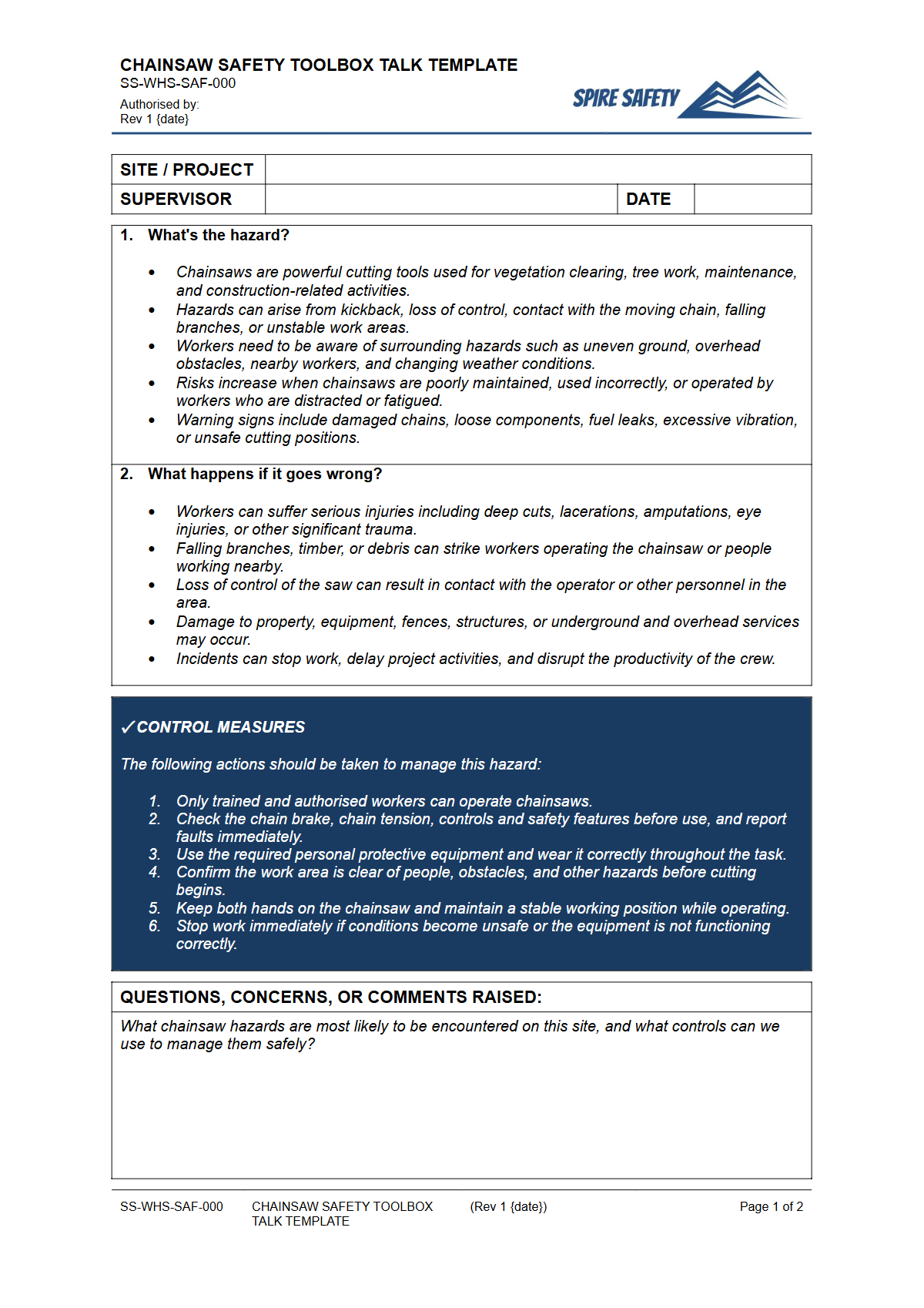
This Chainsaw Toolbox Talk Template is a free, downloadable resource provided by Spire Safety to assist Australian workplaces in conducting effective WHS discussions on the safe operation and maintenance of chainsaws. Chainsaws are powerful and potentially dangerous pieces of equipment, and their use requires a high level of skill, awareness, and adherence to safety protocols. This template helps facilitate a structured conversation about key safety issues, promoting a safer working environment and helping to prevent incidents, injuries, and fatalities associated with chainsaw use. It covers essential topics such as pre-operation checks, personal protective equipment (PPE), safe operating procedures, and emergency responses.
Regular toolbox talks are a crucial component of a robust safety management system, ensuring that workers are consistently reminded of hazards and control measures relevant to their tasks. This resource complements broader WHS management systems by offering a focused tool for a specific high-risk activity.
Video walkthrough
How to use this Toolbox Talk
Our Chainsaw Toolbox Talk Template is available for download in both DOCX (editable) and PDF formats. To use it, we recommend the following steps:
Download the Template: Choose your preferred format (DOCX for editing, PDF for quick reference).
Customise: The DOCX version is designed for easy customisation. It must be customised to your workplace’s specific operations, equipment, and risk assessments. Include details relevant to the chainsaws used, the environment they are operated in, and any unique site-specific hazards or procedures. Add your company logo and specific policies.
Schedule the Talk: Conduct the toolbox talk before work commences, or at a time when all relevant workers can attend without interruption.
Facilitate Discussion: As the facilitator, lead the discussion, encouraging active participation from all attendees. Use the talking points provided in the template as a guide, tailoring the conversation to address any concerns or observations raised by your team.
Document Attendance and Outcomes: Record the date, attendees, topics discussed, and any actions agreed upon. This documentation is vital for demonstrating due diligence and forms an important part of your WHS records.
Review and Update: Periodically review the effectiveness of your toolbox talks and update the content as needed, especially after incidents, near misses, or changes in equipment, procedures, or legislation.
When to use it
This Chainsaw Toolbox Talk Template should be used:
Before any work involving chainsaws: As a pre-start safety briefing to ensure all workers are aware of the risks and control measures.
Periodically: Even if chainsaw work is routine, regular toolbox talks maintain safety awareness and reinforce best practices.
After an incident or near miss: To discuss what went wrong, reinforce safe behaviours, and prevent recurrence.
When new chainsaws are introduced: To familiarise workers with new equipment features, specific operating procedures, and maintenance requirements.
When new workers are employed: As part of their induction and ongoing training, particularly if they will be operating chainsaws.
Following changes in procedures or work environment: To ensure all workers are informed about updated safety protocols or new hazards.
Who should use it
This Chainsaw Toolbox Talk Template is designed for:
Supervisors and Team Leaders: Those responsible for overseeing work involving chainsaws and conducting safety briefings.
WHS Managers and Officers: For incorporating into their WHS program and ensuring comprehensive safety communication.
Business Owners and Managers: To support their primary duty of care in providing a safe workplace.
Workers who operate chainsaws: As an educational and discussion tool to enhance their understanding of safe work practices.
WHS Committees: As a resource for their discussions and recommendations on managing chainsaw-related risks.
Explore our other free WHS resources library for more templates and guides that can assist your organisation in maintaining high safety standards.
Common mistakes
Common mistakes to avoid
- Failing to conduct thorough pre-operational checks on the chainsaw.
- Operating chainsaws without appropriate or correctly fitted PPE.
- Not receiving adequate training or refresher training for chainsaw use.
- Attempting to operate a chainsaw with one hand or in an unstable position.
Legal references
Legal considerations
The following legal requirements may be relevant to this type of work.
- Work Health and Safety Act (Harmonised) — Provides the primary duties for protecting workers and other people from work health and safety risks.
- Work Health and Safety Regulations (Harmonised) — Sets out requirements supporting the management of workplace hazards and risks.
The following codes may be relevant to this type of work.
- Managing WHS Risks Code of Practice — Provides practical guidance on identifying hazards, assessing risks and applying effective controls.
- Work Health and Safety Consultation, Cooperation and Coordination Code of Practice — Provides practical guidance on consulting workers and coordinating with other duty holders.
- Managing the Work Environment and Facilities Code of Practice — Provides practical guidance on safe work environments, workplace facilities and related controls.
Did you know
Chainsaw Kickback
Kickback is the most common cause of serious chainsaw injuries. It occurs when the upper quadrant of the guide bar tip strikes an object or gets pinched, causing an uncontrolled upward and backward thrust of the saw.
PPE is Non-Negotiable
Using correct personal protective equipment, including chainsaw protective trousers/chaps, safety helmet with face shield and hearing protection, gloves, and safety boots, can significantly reduce the severity of chainsaw-related injuries.
FAQ
Frequently asked questions
01What is a chainsaw toolbox talk?
02How often should chainsaw safety talks occur?
03What topics should a chainsaw toolbox talk cover?
04Can this template be used for all types of chainsaws?
Share this resource
Chainsaw Toolbox Talk Template
Browse Categories
How To Use It
- 1Download and open in Word or PDF.
- 2Replace the placeholders with your business details.
- 3Get it reviewed by a WHS specialist before rollout.
Need it customised?
Our WHS consultants can adapt this template to your site, run a gap analysis, or audit what you already have in place.
Book a Free Consultation WHS consulting servicesor call 1300 156 382