
Chemical Burns and Skin Protection Toolbox Talk Template
Download our free Chemical Burns and Skin Protection Toolbox Talk template for a structured discussion on WHS risks and controls. Customise for your workplace.
Chemical Burns and Skin Protection Toolbox Talk Template
DOCX • 138 KB + PDF
Updated Oct 2026
No signup required
Purpose of this document
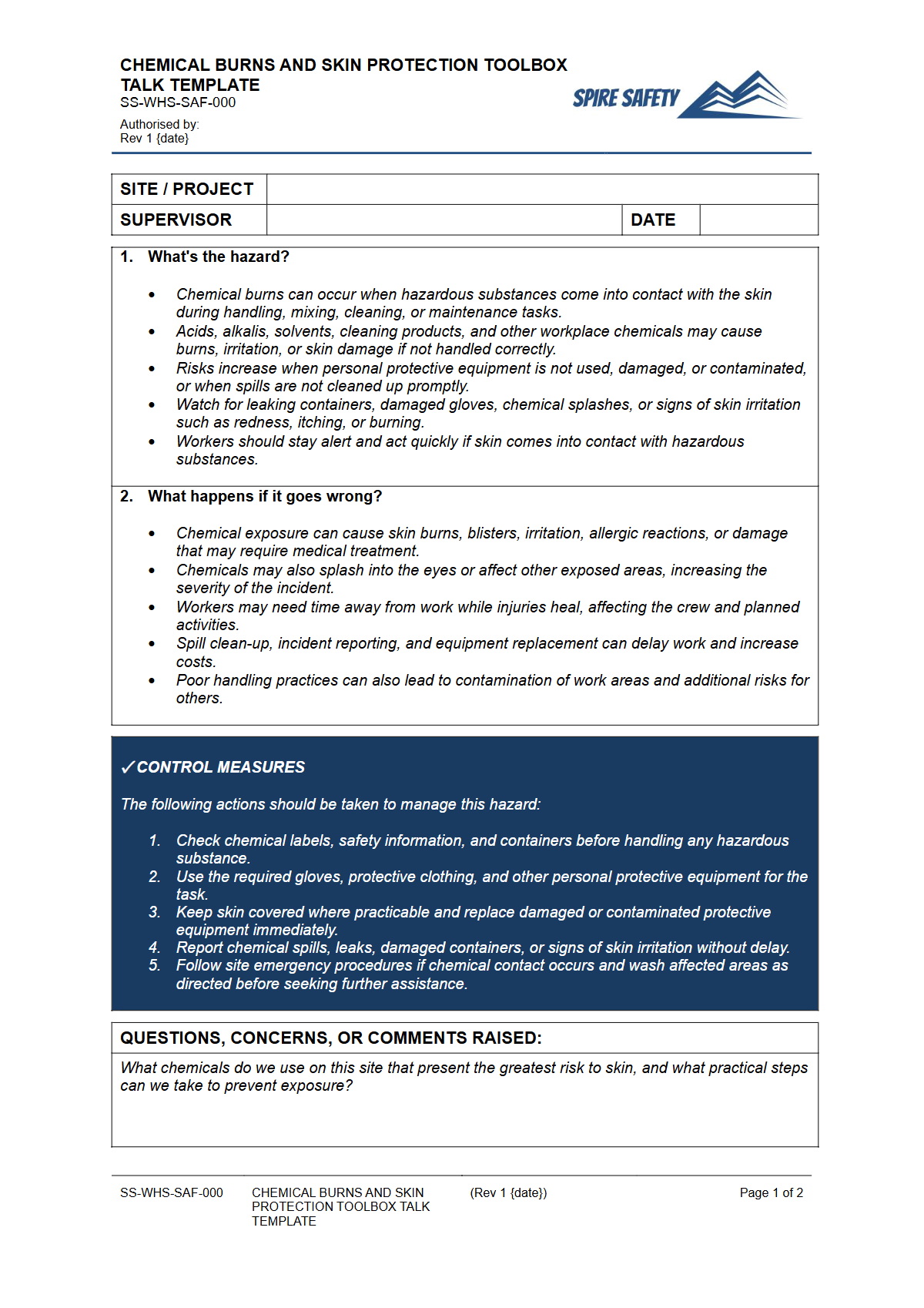
This free Chemical Burns and Skin Protection Toolbox Talk Template provides a structured framework for discussing the risks of chemical burns and the importance of skin protection in your workplace. It's designed to help facilitate conversations about hazard identification, risk control measures, and safe work practices related to hazardous chemicals that can cause skin injuries. Utilising this template can assist your organisation in raising awareness, reinforcing safety procedures, and promoting a proactive approach to managing chemical-related skin hazards.
The template focuses on practical steps workers can take to prevent chemical exposure, the correct use of personal protective equipment (PPE), and emergency response procedures for chemical splashes or burns. It's an essential tool for any workplace where hazardous chemicals are present, aligning with Australian WHS practice for managing chemical risks and worker safety. Regularly conducting toolbox talks on this topic supports a strong safety culture and helps to minimise incidents.
Video walkthrough
How to use this Toolbox Talk
Our Chemical Burns and Skin Protection Toolbox Talk Template is provided in both DOCX and PDF formats for your convenience. The DOCX version is fully editable, allowing you to tailor the content to your specific workplace conditions, chemicals used, and risk control measures. Once downloaded, review the template thoroughly. Add details relevant to your site's chemical inventory, specific handling procedures, and emergency contacts. Ensure any site-specific PPE requirements are clearly outlined.
When delivering the toolbox talk, encourage open discussion and participation from workers. This template is a starting point; I recommend you customise it to your workplace's unique risks and procedures to ensure its effectiveness. Focus on practical examples and real-world scenarios that resonate with your team. Following the talk, record attendance and key discussion points for your safety records. This demonstrates your commitment to WHS and continuous improvement, which is a key aspect of robust WHS management systems.
When to use it
This Toolbox Talk template is ideal for use during regular safety meetings, particularly before starting new tasks involving hazardous chemicals, following chemical-related incidents or near misses, or as part of onboarding for new employees working with chemicals. It's also beneficial to schedule these talks periodically (e.g., quarterly or biannually) to refresh worker knowledge and reinforce safe practices. Use it whenever there are changes in chemical products, processes, or equipment that could affect skin exposure risks. It's especially important after any WHS audit findings related to chemical handling or PPE use.
Who should use it
This resource is suitable for WHS managers, supervisors, team leaders, and anyone responsible for conducting safety briefings or delivering training in workplaces where hazardous chemicals are present. Plant managers, line managers, and HSEQ professionals will also find it a valuable asset for their safety program. Any organisation committed to improving its chemical safety protocols and protecting its workers from chemical burns will benefit from incorporating this Chemical Burns and Skin Protection Toolbox Talk into their regular safety schedule. For more free WHS resources, explore our free WHS resources library at Spire Safety.
Common mistakes
Common mistakes to avoid
- Failing to review and update SDSs regularly.
- Using generic PPE that isn't suitable for specific chemical hazards.
- Not training workers on emergency shower and eyewash station locations and use.
- Storing incompatible chemicals together, leading to potential reactions and splashes.
Legal references
Legal considerations
The following legal requirements may be relevant to this type of work.
- Work Health and Safety Act (Harmonised) — Provides the primary duties for protecting workers and other people from work health and safety risks.
- Work Health and Safety Regulations (Harmonised) — Sets out requirements supporting the management of workplace hazards and risks.
The following codes may be relevant to this type of work.
- Managing WHS Risks Code of Practice — Provides practical guidance on identifying hazards, assessing risks and applying effective controls.
- Work Health and Safety Consultation, Cooperation and Coordination Code of Practice — Provides practical guidance on consulting workers and coordinating with other duty holders.
- Managing the Work Environment and Facilities Code of Practice — Provides practical guidance on safe work environments, workplace facilities and related controls.
Did you know
Corrosive Substances
Many common household and industrial chemicals, including drain cleaners and oven cleaners, are highly corrosive and can cause severe chemical burns upon skin contact if not handled properly.
Delayed Symptoms
Some chemical burns, particularly those from hydrofluoric acid, may not show immediate symptoms, making early detection and treatment challenging but critical for preventing severe tissue damage.
FAQ
Frequently asked questions
01What are the common causes of chemical burns?
02What is the immediate first aid for a chemical burn?
03How often should toolbox talks on chemical safety be conducted?
04Does this template cover all types of hazardous chemicals?
Share this resource
Chemical Burns and Skin Protection Toolbox Talk Template
Browse Categories
How To Use It
- 1Download and open in Word or PDF.
- 2Replace the placeholders with your business details.
- 3Get it reviewed by a WHS specialist before rollout.
Need it customised?
Our WHS consultants can adapt this template to your site, run a gap analysis, or audit what you already have in place.
Book a Free Consultation WHS consulting servicesor call 1300 156 382