
Chemical Spraying Safety Toolbox Talk Template
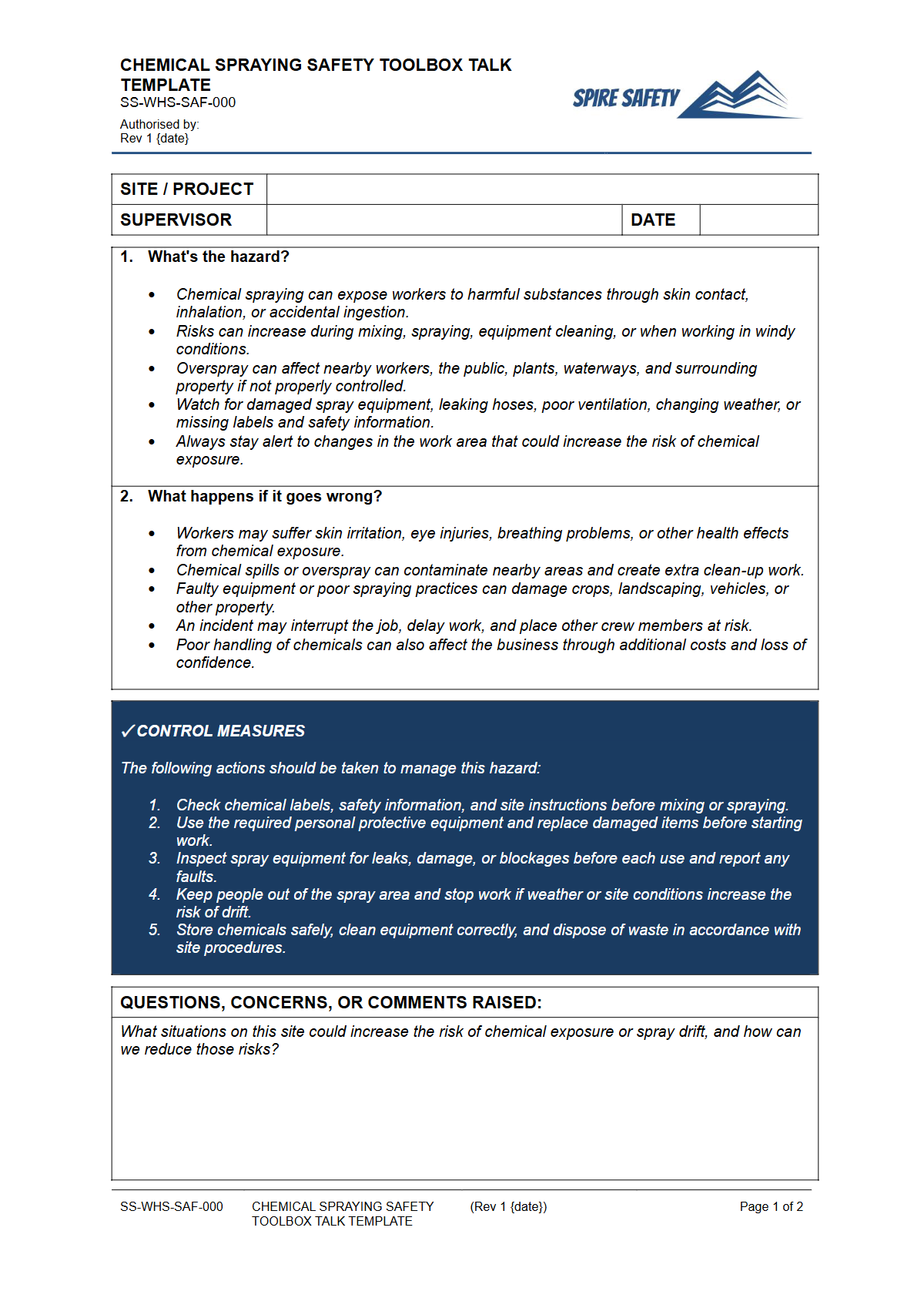
Download our free Chemical Spraying Safety Toolbox Talk Template to discuss safe work procedures, PPE, and hazard control for chemical spraying tasks.
Chemical Spraying Safety Toolbox Talk Template
DOCX • 138 KB + PDF
Updated Oct 2026
No signup required
Purpose of this document
This Chemical Spraying Safety Toolbox Talk Template provides a structured framework for conducting essential safety discussions with your team. Focusing on the safe handling and application of chemicals, this template helps organisations address critical aspects of WHS related to chemical spraying. It’s designed to facilitate proactive conversations about potential hazards, necessary control measures, and individual responsibilities to prevent incidents and promote a safer working environment.
By utilising this template, you can effectively communicate safe work practices, reinforce the importance of personal protective equipment (PPE), and encourage open dialogue about chemical safety within your workplace. This helps to ensure that all workers understand the risks associated with chemical spraying and are equipped with the knowledge to perform their duties safely and responsibly. It serves as a valuable tool in your overall WHS management systems strategy.
Video walkthrough
How to use this Toolbox Talk
This Chemical Spraying Safety Toolbox Talk Template is provided in an editable DOCX format, allowing for complete customisation to suit your specific workplace requirements and the chemicals being used. It is a starting point, and I must stress that this template needs to be customised to your workplace, specific tasks, and the particular chemicals being handled and sprayed. Review and adapt all sections, including the hazards, control measures, and discussion points, to accurately reflect your operational context. While aligned with Australian WHS practices, tailoring is crucial for genuine effectiveness.
Before conducting the toolbox talk, ensure you understand the specific WHS risks associated with the chemicals your team will be spraying. Gather any relevant Safety Data Sheets (SDS) and site-specific safe work procedures. During the talk, encourage active participation from all attendees, document key discussion points, and record attendance. The secondary PDF download type is for quick reference or distribution when no editing is required.
When to use it
This Chemical Spraying Safety Toolbox Talk Template should be used whenever your team is involved in tasks requiring the handling and spraying of chemicals. This includes routine spraying activities, the introduction of new chemicals or spraying equipment, or after any incidents or near misses related to chemical exposure. It's also beneficial for refresher training or as part of an induction process for new workers who will be performing chemical spraying duties. Regular chemical spraying safety talks contribute significantly to maintaining a high level of safety awareness and competence among your workforce.
Who should use it
This template is ideal for WHS officers, supervisors, team leaders, and managers responsible for overseeing teams that engage in chemical spraying activities across various industries, including agriculture, horticulture, pest control, cleaning services, and construction. Anyone tasked with communicating WHS information and facilitating safety discussions will find this a valuable resource. Workers performing chemical spraying tasks will be the primary audience for the toolbox talk itself. Explore our free WHS resources library for more useful templates.
Common mistakes
Common mistakes to avoid
- Failing to read and understand Safety Data Sheets (SDS) for all chemicals used.
- Not wearing appropriate or correctly fitted Personal Protective Equipment (PPE).
- Spraying in unsuitable weather conditions, like high winds, leading to drift.
- Improper storage or labelling of chemical containers.
- Lack of emergency preparedness for spills or exposures.
Legal references
Legal considerations
The following legal requirements may be relevant to this type of work.
- Work Health and Safety Act (Harmonised) — Provides the primary duties for protecting workers and other people from work health and safety risks.
- Work Health and Safety Regulations (Harmonised) — Sets out requirements supporting the management of workplace hazards and risks.
The following codes may be relevant to this type of work.
- Managing WHS Risks Code of Practice — Provides practical guidance on identifying hazards, assessing risks and applying effective controls.
- Work Health and Safety Consultation, Cooperation and Coordination Code of Practice — Provides practical guidance on consulting workers and coordinating with other duty holders.
- Managing the Work Environment and Facilities Code of Practice — Provides practical guidance on safe work environments, workplace facilities and related controls.
Did you know
Chemical Hazards
Many common chemicals used in spraying, such as herbicides and pesticides, can cause a range of health effects, from skin irritation and respiratory issues to severe organ damage, if not handled correctly.
Ventilation Matters
Adequate ventilation is crucial when spraying chemicals, even outdoors, to minimise the inhalation of harmful vapours and reduce exposure risks.
FAQ
Frequently asked questions
01What is a chemical spraying safety toolbox talk?
02How often should we conduct chemical spraying safety toolbox talks?
03What kind of PPE is typically required for chemical spraying?
04Where can I find more WHS resources for chemical safety?
05Is this template structured with Australian WHS laws?
Share this resource
Chemical Spraying Safety Toolbox Talk Template
Browse Categories
How To Use It
- 1Download and open in Word or PDF.
- 2Replace the placeholders with your business details.
- 3Get it reviewed by a WHS specialist before rollout.
Need it customised?
Our WHS consultants can adapt this template to your site, run a gap analysis, or audit what you already have in place.
Book a Free Consultation WHS consulting servicesor call 1300 156 382