
Working in Cold Wet Conditions Toolbox Talk Template
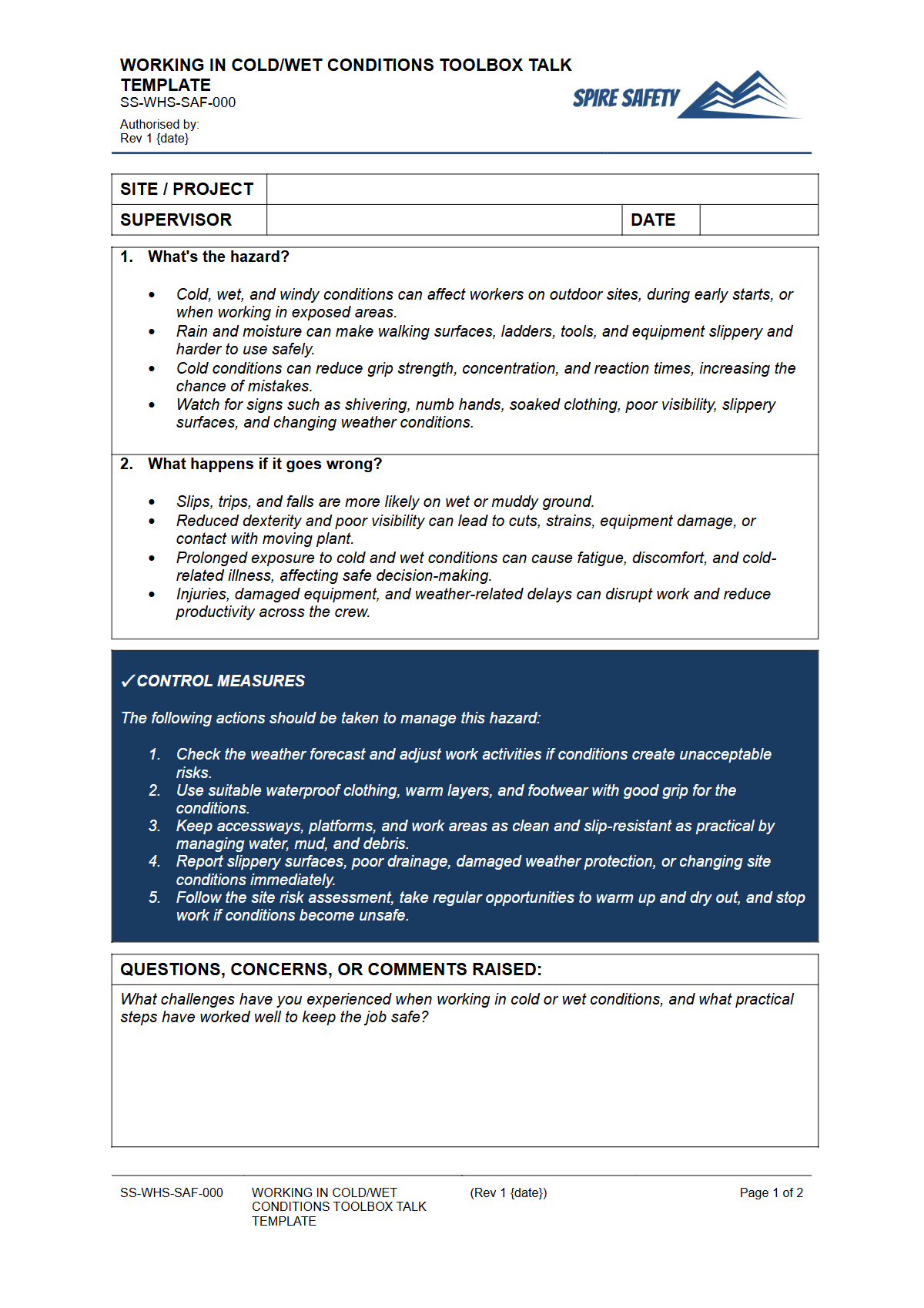
Download your free Toolbox Talk template for working in cold, wet conditions. Identify hazards, manage risks, and protect your team today.
Working in Cold Wet Conditions Toolbox Talk Template
DOCX • 139 KB + PDF
Updated Oct 2026
No signup required
Purpose of this document
This free Working in Cold Wet Conditions Toolbox Talk template provides a structured starting point for discussions about managing risks associated with adverse weather at your workplace. It's designed to help supervisors and safety officers address critical safety considerations when personnel are exposed to cold and wet environments, whether outdoors or in temperature-controlled settings like cold storage.
The template encourages proactive discussion on hazard identification and risk control measures. By utilising this resource, organisations can enhance their WHS management systems by fostering a culture of safety awareness and encouraging open communication about workplace hazards.
This is particularly important for tasks performed in winter months or in industries where exposure to cold and wet conditions is routine.
Video walkthrough
How to use this Toolbox Talk
This Toolbox Talk template for working in cold wet conditions is a customisable resource. It must be customised to your specific workplace, tasks, and potential exposures.
Download the DOCX version to tailor the content to reflect the unique hazards and control measures relevant to your operations. Discuss the points with your team, encouraging their input on how cold and wet conditions affect their work and what measures they believe are most effective.
Remember to record attendance and any agreed-upon actions to demonstrate due diligence and continuous improvement of your WHS practices.
Consider integrating this Toolbox Talk into regular team meetings or pre-task briefings, especially before commencing work in challenging weather. The goal is to facilitate a practical conversation that reinforces safe work behaviour and ensures everyone understands their responsibilities in maintaining a safe work environment.
When to use it
This Toolbox Talk is ideal for use:
- Before periods of anticipated cold or wet weather (e.g., heading into winter).
- Prior to tasks that involve prolonged exposure to cold or wet conditions (e.g., outdoor construction, refrigeration work, emergency services in adverse weather).
- As part of induction training for new workers who may be exposed to such conditions.
- Following any incident or near-miss related to cold or wet weather exposure, as a refresher.
- During regular safety meetings to reinforce good WHS practices.
Who should use it
This resource is primarily intended for:
- Team leaders and supervisors conducting safety briefings.
- Health and Safety Representatives (HSRs) looking to raise awareness.
- WHS officers seeking to refresh safety knowledge.
- Project managers overseeing outdoor worksites.
- Any individual responsible for the health and safety of workers under their control, especially those operating in environments prone to cold and wet conditions.
For more useful documents, visit our free WHS resources library.
Common mistakes
Common mistakes to avoid
- Not customising the Toolbox Talk to specific workplace hazards and tasks.
- Failing to conduct the talk when changes in weather or work methods occur.
- Not actively engaging workers and asking for their input during the discussion.
- Neglecting to record attendance and key actions or concerns raised during the talk.
Legal references
Legal considerations
The following legal requirements may be relevant to this type of work.
- Work Health and Safety Act (Harmonised) — Provides the primary duties for protecting workers and other people from work health and safety risks.
- Work Health and Safety Regulations (Harmonised) — Sets out requirements supporting the management of workplace hazards and risks.
The following codes may be relevant to this type of work.
- Managing WHS Risks Code of Practice — Provides practical guidance on identifying hazards, assessing risks and applying effective controls.
- Work Health and Safety Consultation, Cooperation and Coordination Code of Practice — Provides practical guidance on consulting workers and coordinating with other duty holders.
- Managing the Work Environment and Facilities Code of Practice — Provides practical guidance on safe work environments, workplace facilities and related controls.
Did you know
Impact on Manual Dexterity
Exposure to cold temperatures can significantly reduce manual dexterity and fine motor skills, increasing the risk of accidents when operating machinery or handling tools.
Psychological Effects
Working in consistently cold and wet conditions can also contribute to lower morale and increased fatigue, impacting overall productivity and vigilance on site.
FAQ
Frequently asked questions
01What are the common health risks associated with working in cold and wet conditions?
02What control measures can be implemented for cold and wet work environments?
03How often should a 'Working in Cold Wet Conditions' Toolbox Talk be conducted?
04Can this Toolbox Talk template be used for indoor cold environments?
Share this resource
Working in Cold Wet Conditions Toolbox Talk Template
Browse Categories
How To Use It
- 1Download and open in Word or PDF.
- 2Replace the placeholders with your business details.
- 3Get it reviewed by a WHS specialist before rollout.
Need it customised?
Our WHS consultants can adapt this template to your site, run a gap analysis, or audit what you already have in place.
Book a Free Consultation WHS consulting servicesor call 1300 156 382
Related templates
- Working in Extreme Heat Toolbox Talk Template
- Working Near Live Traffic Toolbox Talk Template
- Working Near Overhead Powerlines Toolbox Talk Template
- Working Safely After Natural Disaster Toolbox Talk Template
- Working Safely Under Pressure Deadlines Toolbox Talk Template
- Workplace Bullying and Harassment Toolbox Talk Template