
Free Pre-Start Checklist (Band Slicer) Template
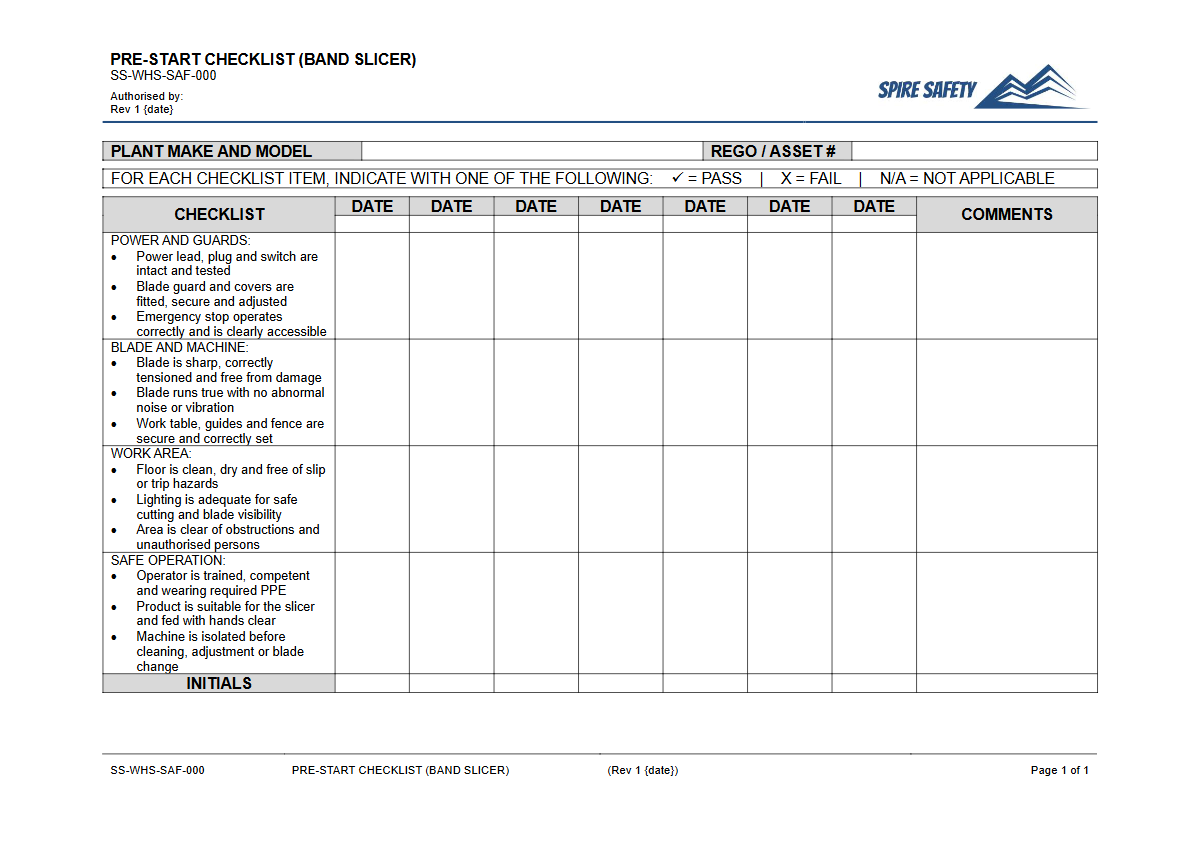
Download our free Pre-Start Checklist for band slicers. This structured template helps formalise safety checks for your Australian workplace.
Free Pre-Start Checklist (Band Slicer) Template
DOCX • 125 KB + PDF
Updated Oct 2026
No signup required
Purpose of the Free Pre-Start Checklist (Band Slicer) Template
Using a band slicer, a common piece of equipment in food processing, manufacturing, and workshops, comes with significant risks if the machine is not properly maintained. Our Free Pre-Start Checklist (Band Slicer) Template provides a structured starting point for operators to conduct essential safety and operational checks before use.
Systematically inspecting the equipment helps identify potential faults, damage, or wear and tear that could lead to an incident, equipment failure, or injury. Formalising this process ensures that no critical checks are missed, promoting a consistent approach to safety across all shifts and operators.
This checklist is designed to be integrated into your daily operational procedures. By documenting that key components like blade guards, tensioners, emergency stops, and interlocks are functioning correctly, you create a record of due diligence.
This process supports the broader goal of risk management and is a fundamental part of a safe system of work. For a more comprehensive approach to machine safety, this checklist should be used alongside a detailed Band Saw Safe Operating Procedure (SOP) template that outlines step-by-step instructions for use.
Video walkthrough
How to use the Free Pre-Start Checklist (Band Slicer) Template
This resource is available for immediate download in both DOCX and PDF formats. The DOCX file is fully editable, allowing you to tailor the checklist to the specific make and model of band slicer used in your workplace, as well as your operational context.
You can add, remove, or modify checklist items to align with the manufacturer's recommendations and the outcomes of your risk assessments.
IMPORTANT NOTE: This document is a template and not a complete, ready-to-use solution. It is provided as a starting point only.
As every workplace and piece of equipment is unique, you must customise this checklist to suit your specific site, machinery, and legal obligations. We do not make any claims about its compliance or legal suitability for your organisation.
It is your responsibility to ensure the final document is fit for purpose. This includes verifying that operators are trained not only on the machine itself but also on how to correctly complete the pre-start process, which can be confirmed using a free Band Saw VOC template.
When to use it
A pre-start checklist for a band slicer should be completed before every shift or before the first use of the machine on any given day. If the equipment is used intermittently, a check should be performed before each use.
This frequency ensures that any issues that may have developed since the last operation—whether due to damage, tampering, or environmental factors—are identified before the machine is energised. Regular, consistent checks are crucial for maintaining a safe working environment and preventing incidents before they occur.
Consistent use of pre-start checks also helps build a proactive safety culture where equipment care is seen as a shared responsibility. Reinforcing this behaviour is an excellent topic for safety meetings, which can be guided by a Pre-Start Checks and Plant Maintenance Toolbox Talk to standardise the message and facilitate discussion among team members.
Who should use it
The pre-start checklist should be completed by the person operating the band slicer. This must be a worker who has been properly trained, is deemed competent in the safe operation of the specific machine, and understands the purpose of each item on the checklist.
They are in the best position to notice subtle changes or issues with the equipment they are about to use. Simply ticking boxes without performing the physical checks defeats the purpose and introduces significant risk.
Supervisors and managers also have a role to play. They are responsible for ensuring that operators are completing the checklists correctly and consistently.
They must also establish a clear procedure for what an operator should do if a fault is found. This includes tagging the equipment out of service and reporting the defect for maintenance.
These documented processes form a critical part of your overall WHS management systems, providing evidence that proactive safety measures are being implemented and monitored.
The completed checklists should be collected and reviewed periodically. This review can help identify recurring faults with specific machines, indicating a need for more intensive maintenance or potential replacement.
These records are also valuable during safety inspections and formal WHS compliance audits, demonstrating a systematic approach to plant safety. For more templates and safety documents, you can browse our complete free WHS resources library.
Common mistakes
Common mistakes to avoid
- Using the generic template without customising it for the specific band slicer model and workplace risks.
- Operators 'pencil-whipping' the form—ticking boxes without physically performing the checks.
- Failing to establish a clear procedure for reporting and acting on identified faults, leading to unsafe equipment being used.
- Neglecting to train workers on how to properly conduct the pre-start inspection and why it is important.
Legal references
Legal considerations
The following legal requirements may be relevant to this type of work.
- Work Health and Safety Act (Harmonised) — Provides the primary duties for protecting workers and other people from work health and safety risks.
- Work Health and Safety Regulations (Harmonised) — Sets out requirements supporting the management of workplace hazards and risks.
The following codes may be relevant to this type of work.
- Managing WHS Risks Code of Practice — Provides practical guidance on identifying hazards, assessing risks and applying effective controls.
- Work Health and Safety Consultation, Cooperation and Coordination Code of Practice — Provides practical guidance on consulting workers and coordinating with other duty holders.
- Managing the Work Environment and Facilities Code of Practice — Provides practical guidance on safe work environments, workplace facilities and related controls.
Did you know
Blade Speed
Band slicer blades can travel at speeds exceeding 80 kilometres per hour. Ensuring the blade is correctly tensioned and tracked during a pre-start check is critical to prevent blade breakage or derailment during operation.
Leading Cause of Injury
According to Safe Work Australia, being hit by moving objects, which includes contact with machinery parts like blades, is one of the leading causes of serious injury claims in the country. Diligent pre-start checks help mitigate this risk.
FAQ
Frequently asked questions
01What should be included in a band slicer pre-start checklist?
02How often should a band slicer pre-start check be conducted?
03Are pre-start checklists a legal requirement in Australia?
04Who is responsible for completing the band slicer pre-start check?
Share this resource
Free Pre-Start Checklist (Band Slicer) Template
Browse Categories
How To Use It
- 1Download and open in Word or PDF.
- 2Replace the placeholders with your business details.
- 3Get it reviewed by a WHS specialist before rollout.
Need it customised?
Our WHS consultants can adapt this template to your site, run a gap analysis, or audit what you already have in place.
Book a Free Consultation WHS consulting servicesor call 1300 156 382