
Free Pre-Start Checklist (Batch Plant) Template
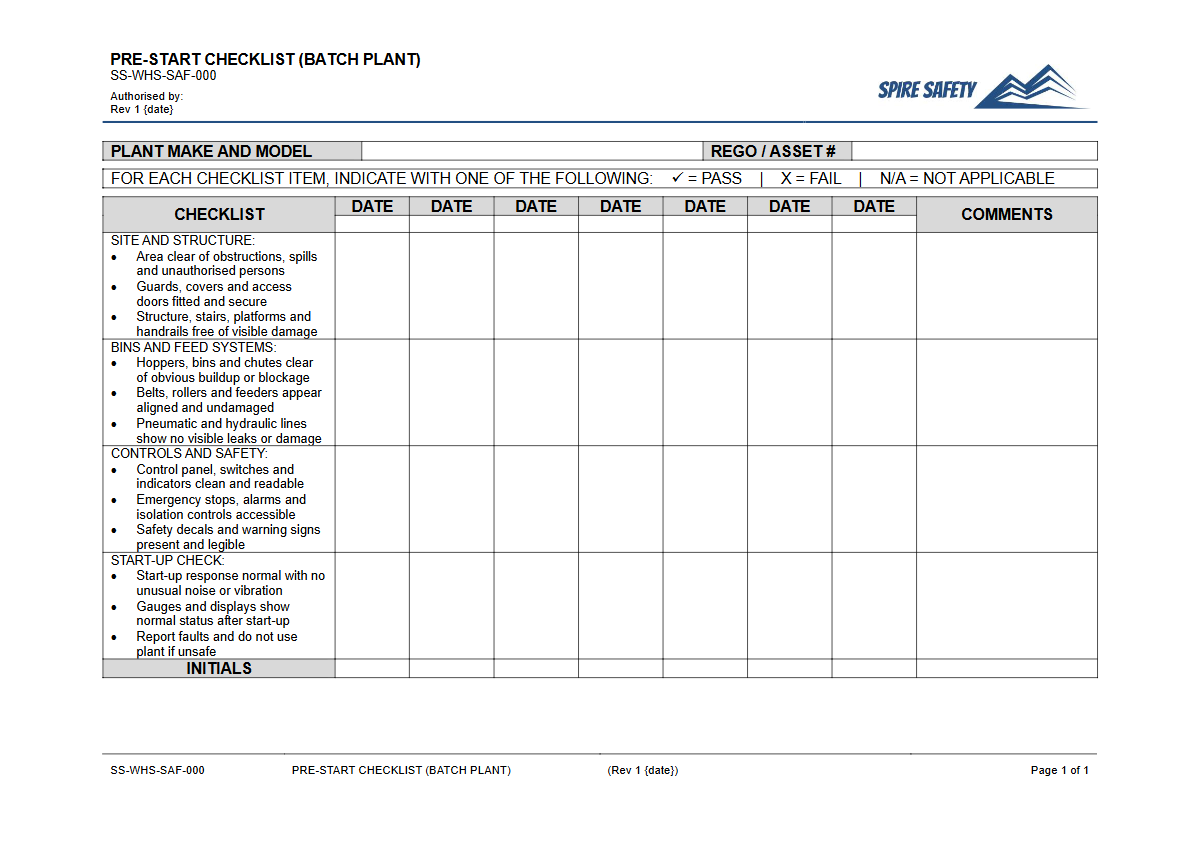
Download our free Pre-Start Checklist (Batch Plant) Template. This structured DOCX & PDF resource helps formalise daily equipment checks and manage WHS risks.
Free Pre-Start Checklist (Batch Plant) Template
DOCX • 125 KB + PDF
Updated Oct 2026
No signup required
Purpose of the Free Pre-Start Checklist (Batch Plant) Template
Operating a concrete batch plant involves significant risks associated with heavy machinery, moving parts, and hazardous materials. A systematic inspection before each use is a fundamental safety control.
This Free Pre-Start Checklist (Batch Plant) Template provides a structured framework for operators to conduct thorough, documented inspections. Using a checklist helps formalise the process of identifying potential faults, mechanical issues, or damage before they can lead to an incident, equipment failure, or costly downtime.
It establishes a clear record that demonstrates due diligence in managing plant safety.
The checklist encourages a proactive approach to maintenance and safety, shifting the focus from reactive repairs to preventative care. By documenting checks on critical components like conveyors, mixers, silos, and safety systems, you create an auditable trail of your safety procedures.
For similar material processing equipment, our free Pre-Start Checklist (Granulator) Template can offer additional insights into structured inspections.
Video walkthrough
How to use the Free Pre-Start Checklist (Batch Plant) Template
This template is provided in both DOCX and PDF formats for your convenience. The DOCX file is fully editable, allowing for complete customisation to suit your specific operational needs and equipment.
To implement this Pre-Start Checklist effectively:
- Download: Choose the DOCX version to edit or the PDF for immediate use.
- Customise: This is the most critical step. A competent person must review and adapt the checklist to match the specific make and model of your batch plant. Add or remove items to reflect your plant’s configuration, including aggregate storage, cement silos, weigh batchers, conveyor systems, water meters, and control panels.
- Train: Ensure all operators are trained not just on how to operate the plant, but on the importance of the pre-start check and how to complete the form correctly.
- Integrate: Make the pre-start check a non-negotiable part of the daily startup procedure. Completed checklists should be reviewed by a supervisor and filed for record-keeping purposes.
IMPORTANT: This document is a template and should not be used as-is. We strongly recommend you engage a competent person to customise it to ensure it is specific to your plant, site conditions, and organisational procedures.
Properly integrating such tools is a key part of building robust WHS management systems that protect workers and the business.
When to use it
A pre-start check should be completed before the batch plant is operated at the beginning of each shift or workday. It should also be conducted if the plant has been shut down for maintenance or repairs, or if a new operator is taking over mid-shift.
This regular frequency ensures that the plant's condition is verified before any work commences, minimising the risk of incidents caused by equipment faults.
For operations involving different types of heavy plant, it's essential to apply the same principles. For example, similar diligence is required when performing pre-start checks for forestry forwarders to ensure they are safe for operation in their unique environment.
Who should use it
The pre-start checklist should be completed by the person who will be operating the batch plant. This must be a competent person who has received adequate information, training, and instruction on the plant's operation, its specific hazards, and the control measures in place.
Supervisors have a responsibility to ensure these checks are being completed correctly and that any identified faults are reported and rectified promptly.
Verifying that these processes are followed consistently is a crucial aspect of safety oversight. This can be assessed during periodic WHS compliance auditing to ensure procedures are effective in practice.
The records from these checklists serve as valuable evidence of your organisation's commitment to safety management and provide important data for maintenance planning. This template is one of many available in our free WHS resources library designed to support your safety goals.
Common mistakes
Common mistakes to avoid
- Using a generic checklist without customising it for the specific plant model and site risks.
- Operators 'pencil-whipping' the form without physically inspecting each item.
- Failing to take immediate action to isolate and repair defects found during an inspection.
- Not retaining completed checklists as a formal record of safety and maintenance activities.
Legal references
Legal considerations
The following legal requirements may be relevant to this type of work.
- Work Health and Safety Act (Harmonised) — Provides the primary duties for protecting workers and other people from work health and safety risks.
- Work Health and Safety Regulations (Harmonised) — Sets out requirements supporting the management of workplace hazards and risks.
The following codes may be relevant to this type of work.
- Managing WHS Risks Code of Practice — Provides practical guidance on identifying hazards, assessing risks and applying effective controls.
- Work Health and Safety Consultation, Cooperation and Coordination Code of Practice — Provides practical guidance on consulting workers and coordinating with other duty holders.
- Managing the Work Environment and Facilities Code of Practice — Provides practical guidance on safe work environments, workplace facilities and related controls.
Did you know
Silica Dust Hazard
Concrete batching can release respirable crystalline silica (RCS), a hazardous dust that can cause serious lung diseases like silicosis. Effective dust suppression systems and respiratory protection are critical controls.
FAQ
Frequently asked questions
01What should a batch plant pre-start inspection include?
02Is this batch plant checklist compliant with Australian WHS laws?
03How often should a batch plant be inspected?
04Who is a 'competent person' to operate a batch plant?
Share this resource
Free Pre-Start Checklist (Batch Plant) Template
Browse Categories
How To Use It
- 1Download and open in Word or PDF.
- 2Replace the placeholders with your business details.
- 3Get it reviewed by a WHS specialist before rollout.
Need it customised?
Our WHS consultants can adapt this template to your site, run a gap analysis, or audit what you already have in place.
Book a Free Consultation WHS consulting servicesor call 1300 156 382