
Free Pre-Start Checklist (Bar Bender) Template
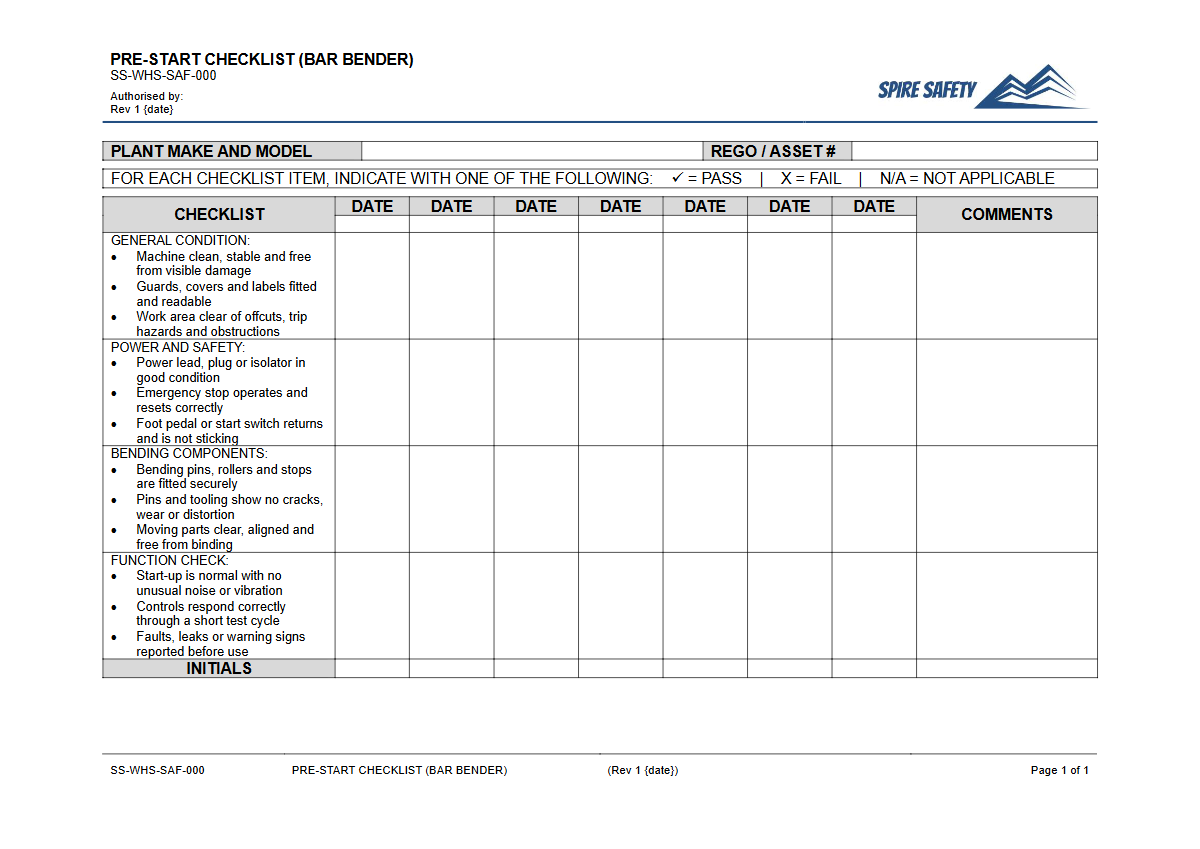
Download our free Pre-Start Checklist for Bar Benders. This DOCX & PDF template helps formalise safety checks for construction and metalworking sites.
Free Pre-Start Checklist (Bar Bender) Template
DOCX • 125 KB + PDF
Updated Oct 2026
No signup required
Purpose of the Free Pre-Start Checklist (Bar Bender) Template
Using a bar bender on a construction or fabrication site involves significant risks, including entanglement, crushing, and electrical hazards. To help manage these, Spire Safety offers this free Pre-Start Checklist (Bar Bender) Template.
This structured document provides a systematic way for operators to inspect equipment before each use, formalising the process of identifying potential faults or hazards before they can cause an incident. A consistent pre-start process is a fundamental part of a proactive safety culture and helps demonstrate due diligence in managing workplace risks.
The checklist prompts operators to verify critical safety components like emergency stops, guarding, electrical integrity, and the condition of bending mechanisms. By completing this check, you create a daily record of the machine's condition, which is invaluable for maintenance tracking and incident investigations. Much like with other workshop machinery, ensuring guards are in place and functional is a critical step, a process formalised in documents such as our free Pre-Start Checklist (Bench Grinder) Template.
Video walkthrough
How to use the Free Pre-Start Checklist (Bar Bender) Template
This template is available for immediate download in both DOCX and PDF formats. The DOCX version is fully editable, allowing you to tailor it to your specific operational needs.
The PDF is ideal for printing and immediate use if the standard checks are suitable for your equipment.
To effectively implement the checklist:
- Download the DOCX file.
- Modify the checklist to include the specific make and model of your bar bender.
- Add or remove checks based on manufacturer recommendations and a site-specific risk assessment.
- Involve operators and supervisors in the customisation process to ensure the checklist is practical and relevant.
- Train all operators on how to properly complete the checklist and what actions to take if a fault is found.
IMPORTANT: This is a template, not a finished document. We don't know your specific machinery, site conditions, or internal procedures.
You MUST customise this checklist in consultation with your team to ensure it's relevant and effective for your workplace. Integrating such procedures is a key element of robust WHS management systems.
When to use it
A pre-start checklist for a bar bender should be completed before the machine is used for the first time in a shift. It should also be completed if a new operator takes over mid-shift.
This frequency ensures that the equipment's condition is verified at the start of each work period, preventing the use of a machine that may have been damaged or become unsafe since its last operation. This routine is standard practice for most high-risk plant on construction sites, similar to the checks outlined in our free Pre-Start Checklist for Floor Saws.
Who should use it
Only competent and authorised personnel who have been trained in the safe operation of the specific bar bender should conduct the pre-start check. The operator using the machine is responsible for ensuring it is safe before they begin work.
Supervisors also have a role in periodically verifying that checks are being completed correctly and in taking action on any reported faults or defects. If you need assistance developing competency frameworks for your team, consider engaging professional WHS consulting services.
Key Items on the Bar Bender Checklist
While you must customise the template, a comprehensive bar bender checklist generally covers several key areas to ensure operator safety and machine integrity:
- Guards and Shields: All guards must be in place, secure, and undamaged to prevent contact with moving parts.
- Emergency Stop: The emergency stop button(s) must be accessible, clearly marked, and functional.
- Controls: Check that all operating controls, including foot pedals and switches, are working correctly and are not damaged.
- Bending Mechanism: Inspect rollers, pins, and bending discs for wear, damage, or cracks.
- Electrical Components: Visually inspect cords, plugs, and casings for signs of damage, fraying, or exposure.
- Hydraulics (if applicable): Check for any leaks from hoses, fittings, or cylinders.
- Work Area: Ensure the surrounding area is clean, free of obstructions, and well-lit.
Regularly reviewing these checks and the completed records is a key activity in maintaining safety standards. This process can be formalised through periodic WHS compliance auditing to ensure procedures are being followed effectively.
By embedding this pre-start checklist into your daily routine, you strengthen your safety processes and reduce the risk of incidents. For more templates and tools to support your safety management system, explore our complete free WHS resources library.
Common mistakes
Common mistakes to avoid
- "Pencil-whipping" the checklist without physically inspecting each item.
- Failing to customise the generic template to the specific make and model of the bar bender.
- Neglecting to remove a faulty machine from service after a defect is identified.
- Allowing operators to use the checklist without being trained on what each item means and how to inspect it.
Legal references
Legal considerations
The following legal requirements may be relevant to this type of work.
- Work Health and Safety Act (Harmonised) — Provides the primary duties for protecting workers and other people from work health and safety risks.
- Work Health and Safety Regulations (Harmonised) — Sets out requirements supporting the management of workplace hazards and risks.
The following codes may be relevant to this type of work.
- Managing WHS Risks Code of Practice — Provides practical guidance on identifying hazards, assessing risks and applying effective controls.
- Work Health and Safety Consultation, Cooperation and Coordination Code of Practice — Provides practical guidance on consulting workers and coordinating with other duty holders.
- Managing the Work Environment and Facilities Code of Practice — Provides practical guidance on safe work environments, workplace facilities and related controls.
Did you know
Entanglement Hazard
The rollers and bending mechanisms on a bar bender can cause severe entanglement and crush injuries. Loose clothing, unsecured long hair, and jewellery should never be worn when operating this type of machinery.
Safe Work Australia Guidance
Safe Work Australia provides a model Code of Practice for 'Managing risks of plant in the workplace,' which outlines the legal duties for inspecting and maintaining equipment like bar benders.
FAQ
Frequently asked questions
01Is a pre-start checklist for a bar bender legally required in Australia?
02What should happen if a fault is found during a bar bender pre-start check?
03How often should we review and update our bar bender checklist?
04Can a digital checklist be used instead of a paper one?
Share this resource
Free Pre-Start Checklist (Bar Bender) Template
Browse Categories
How To Use It
- 1Download and open in Word or PDF.
- 2Replace the placeholders with your business details.
- 3Get it reviewed by a WHS specialist before rollout.
Need it customised?
Our WHS consultants can adapt this template to your site, run a gap analysis, or audit what you already have in place.
Book a Free Consultation WHS consulting servicesor call 1300 156 382