
Free Pre-Start Checklist (Beer Chiller) Template
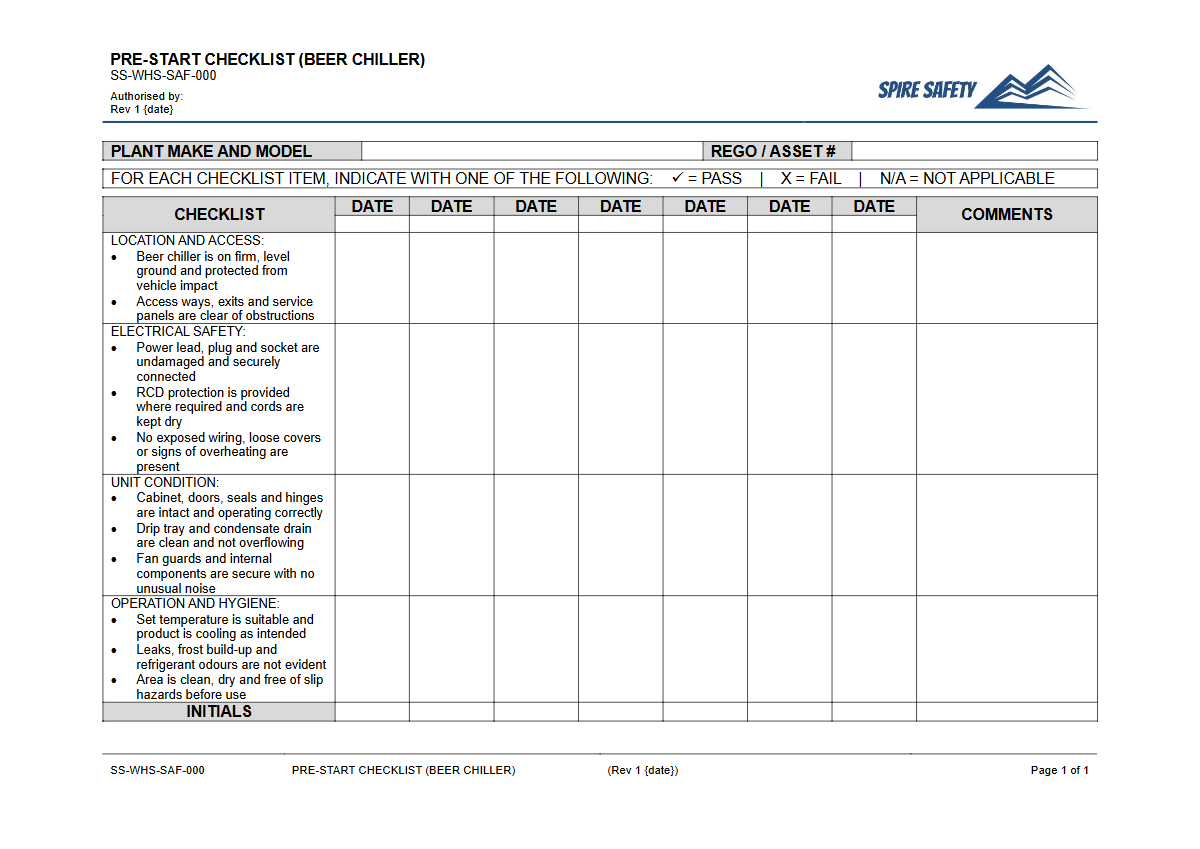
Download our Free Pre-Start Checklist (Beer Chiller) Template (DOCX & PDF) for Australian hospitality venues.
Free Pre-Start Checklist (Beer Chiller) Template
DOCX • 125 KB + PDF
Updated Oct 2026
No signup required
Purpose of the Free Pre-Start Checklist (Beer Chiller) Template
A beer chiller is a critical piece of equipment in any hospitality venue, essential for both product quality and operational safety. Daily inspections are vital for identifying potential hazards before they lead to incidents, equipment failure, or costly downtime.
This Free Pre-Start Checklist (Beer Chiller) Template provides a structured framework for conducting these checks, helping your organisation meet its duties under WHS legislation. Consistent use helps identify risks such as electrical faults, refrigerant leaks, fluid spills creating slip hazards, and poor temperature control that can affect beverage quality and safety.
A systematic pre-start check is a fundamental component of preventative maintenance. By formalising this process, you create a clear record of equipment condition, demonstrate due diligence, and empower staff to take ownership of safety in their work area.
For a broader discussion on this topic with your team, our Pre-Start Checks and Plant Maintenance Toolbox Talk can be a valuable resource.
Video walkthrough
How to use the Free Pre-Start Checklist (Beer Chiller) Template
This resource is provided as a downloadable DOCX and PDF file. The DOCX version is fully editable, allowing you to tailor the checklist to the specific make and model of the beer chiller(s) used in your workplace, as well as your operational context. Key steps for implementation include:
- Download: Choose either the DOCX for customisation or the PDF for immediate use.
- Customise: Add your company branding and review each checkpoint. Modify, add, or remove items to ensure the checklist is relevant to your specific equipment and environment.
- Train: Ensure all relevant personnel are trained on how to properly conduct the checks, what each item means, and the procedure for reporting any identified faults or 'No' answers.
- Implement: Integrate the checklist into your daily opening procedures for bar and cellar staff.
- Review: Store completed checklists as a record of inspection and review them periodically to identify recurring issues or trends.
Note: This template is a starting point. To be effective and support your safety obligations, we recommend you customise this document to reflect the unique hazards and control measures of your specific workplace and equipment. This checklist is best used as one part of a holistic safety framework.
Implementing comprehensive WHS management systems ensures that procedures like pre-start checks are effectively integrated, monitored, and improved over time.
When to use it
The beer chiller pre-start checklist should be completed before the equipment is used for the first time each day or at the beginning of each new shift in a 24-hour operation. This frequency ensures that any issues that may have developed overnight or during a previous shift are identified and addressed before the peak service period begins.
It turns a simple daily task into a proactive safety and quality assurance measure.
Who should use it
This checklist is designed for use by any person responsible for operating or managing the beer chilling system. This typically includes:
- Bar Staff / Bartenders: As the primary operators, they are best placed to notice changes in performance or condition.
- Cellar Managers / Staff: Those responsible for keg changes, line cleaning, and cellar maintenance.
- Venue Managers / Supervisors: To oversee the process and ensure corrective actions are taken when faults are reported.
- Maintenance Personnel: As a reference when conducting repairs or scheduled maintenance.
Clearly defining who is responsible for the check, who they report issues to, and what happens when a fault is found is critical for the system to work effectively. If you need assistance defining these roles and establishing clear safety procedures, our WHS consulting services can provide expert guidance tailored to your business.
By embedding this check into your standard operating procedures, you foster a proactive safety culture where potential problems are found and fixed early. Regular verification that these processes are being followed correctly is also important, which can be confirmed through internal or external WHS compliance auditing to ensure your safety systems remain effective.
Common mistakes
Common mistakes to avoid
- Failing to customise the template for the specific chiller model and its location.
- 'Pencil-whipping' the form without physically performing the checks.
- Ignoring minor issues like damaged door seals or unusual noises, which can escalate into major failures.
- Not having a clear and immediate action plan for when a 'Fail' or 'No' item is recorded on the checklist.
Legal references
Legal considerations
The following legal requirements may be relevant to this type of work.
- Work Health and Safety Act (Harmonised) — Provides the primary duties for protecting workers and other people from work health and safety risks.
- Work Health and Safety Regulations (Harmonised) — Sets out requirements supporting the management of workplace hazards and risks.
The following codes may be relevant to this type of work.
- Managing WHS Risks Code of Practice — Provides practical guidance on identifying hazards, assessing risks and applying effective controls.
- Work Health and Safety Consultation, Cooperation and Coordination Code of Practice — Provides practical guidance on consulting workers and coordinating with other duty holders.
- Managing the Work Environment and Facilities Code of Practice — Provides practical guidance on safe work environments, workplace facilities and related controls.
Did you know
Serving Temperature
The ideal serving temperature for most draught lagers is between 2-4°C. A correctly functioning and monitored chiller is crucial for maintaining this, as temperature fluctuations can significantly impact the beer's flavour profile and carbonation.
Refrigerant Risks
Many common refrigerants are colourless and odourless but heavier than air. In an enclosed, poorly ventilated cellar, a significant leak can displace oxygen and create a serious asphyxiation hazard, highlighting the importance of checking for unusual noises or hissing sounds.
FAQ
Frequently asked questions
01What are the main hazards associated with a beer chiller?
02How often should a full service be done on a commercial beer chiller?
03Who is responsible for training staff on using this checklist?
04Can this template be used for other types of refrigeration units?
Share this resource
Free Pre-Start Checklist (Beer Chiller) Template
Browse Categories
How To Use It
- 1Download and open in Word or PDF.
- 2Replace the placeholders with your business details.
- 3Get it reviewed by a WHS specialist before rollout.
Need it customised?
Our WHS consultants can adapt this template to your site, run a gap analysis, or audit what you already have in place.
Book a Free Consultation WHS consulting servicesor call 1300 156 382