
Free Pre-Start Checklist (Belt Sander) Template
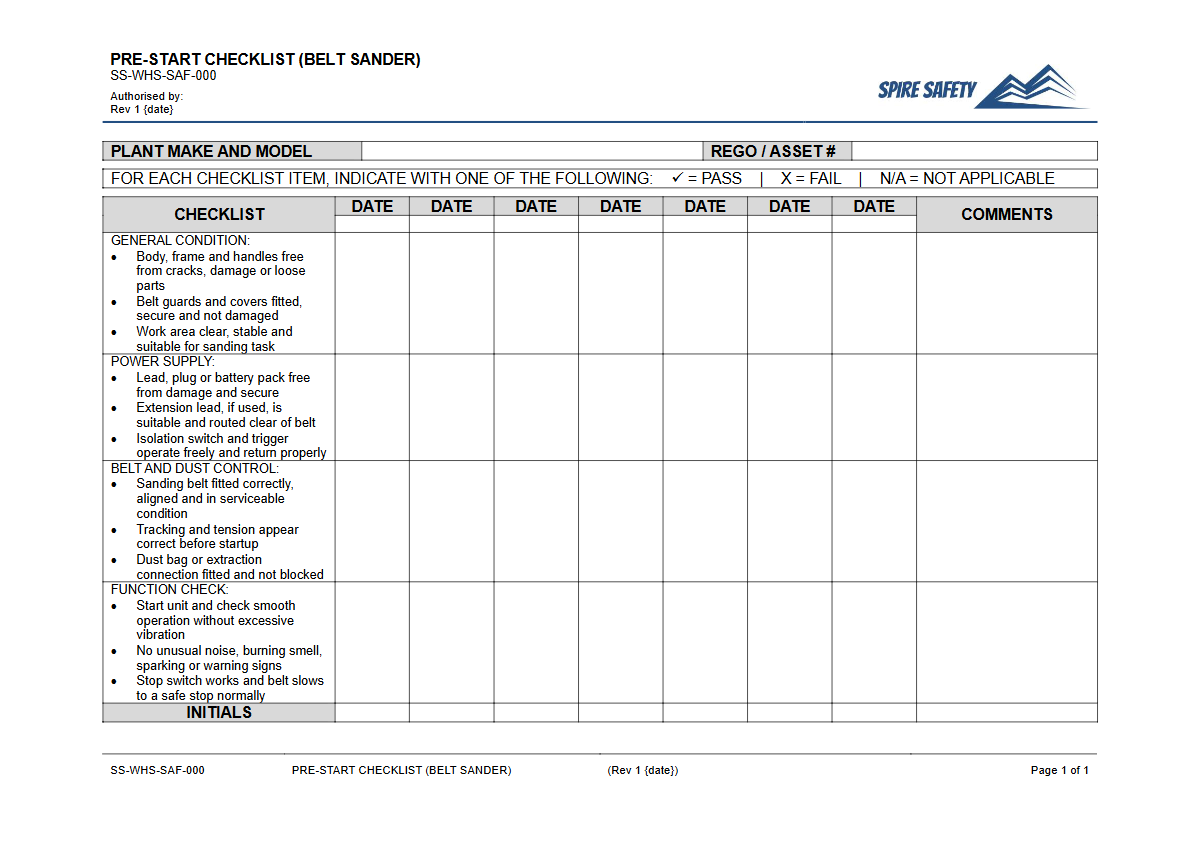
Formalise your workshop safety procedures with our Free Pre-Start Checklist (Belt Sander) Template. This structured document helps identify hazards before use.
Free Pre-Start Checklist (Belt Sander) Template
DOCX • 125 KB + PDF
Updated Oct 2026
No signup required
Purpose of the Free Pre-Start Checklist (Belt Sander) Template
A belt sander is a powerful tool capable of removing material quickly, but it also presents significant risks, including entanglement, airborne dust, electrical hazards, and contact with the abrasive belt. This free Pre-Start Checklist (Belt Sander) Template provides a structured framework for operators to inspect the equipment before each use.
Implementing these checks helps formalise safety procedures, identify potential faults before they cause injury, and create a documented record of due diligence. Regular inspections are a cornerstone of a proactive safety culture, ensuring that machinery is maintained in a safe operating condition.
Similar to checks for other workshop equipment, such as our free Bench Grinder Pre-Start Checklist, this process helps prevent incidents and reinforces safe work practices among all users.
Video walkthrough
How to use the Free Pre-Start Checklist (Belt Sander) Template
This template is designed as a starting point for developing a site-specific checklist. To implement it effectively in your workplace:
- Download the DOCX file and add your company branding.
- Customise the checklist items to reflect the specific make and model of belt sander(s) in use, your operational environment, and any unique hazards present. It is crucial that you adapt this document; we do not know your workplace and cannot guarantee this template covers all your specific risks.
- Train all operators and supervisors on how to complete the checklist correctly and what actions to take if a fault is identified (e.g., tag out of service, report to a supervisor).
- Integrate the completed checklists into your record-keeping procedures. These records are valuable for maintenance scheduling, incident investigations, and demonstrating compliance.
These checklists are most effective when they are part of a broader safety framework. For assistance in developing comprehensive WHS management systems, consider engaging with professional consultants to ensure all aspects of workplace safety are covered.
When to use it
The Pre-Start Checklist for a belt sander should be completed before the first use on any given day or shift. This frequency ensures that the equipment's condition is verified before work commences, catching any damage or faults that may have occurred overnight or during a previous shift.
If the sander is used intermittently throughout the day by different operators, it is good practice for each new operator to conduct their own quick check before starting. This is similar to the safety protocols for other powerful tools, as outlined in resources like our Pre-Start Checklist for Floor Saws. Any 'No' or 'Fail' result on the checklist should immediately trigger a 'do not operate' response until the issue is rectified by a competent person.
Who should use it
This checklist should be completed by the person operating the belt sander. The operator has the most direct interaction with the equipment and is best placed to identify any abnormalities.
Supervisors or team leaders should also be familiar with the checklist to ensure it is being completed correctly and to follow up on any reported defects. All personnel using the checklist must be deemed competent to operate the belt sander, meaning they have received adequate information, instruction, training, and supervision.
If you need support in defining competency requirements and training programs, engaging in WHS consulting can provide expert guidance tailored to your organisation's needs.
Reviewing Checklist Effectiveness
Periodically review the checklist's content and its implementation to ensure it remains effective. This review process could involve analysing completed checklists for recurring faults, which may indicate a need for a revised maintenance schedule or further operator training.
Conducting regular WHS compliance auditing can help verify that safety procedures like pre-start checks are being consistently followed and are effective at controlling risks. An effective system also includes robust controls for secondary hazards, such as using a Pre-Start Checklist for a Fume Cabinet when dealing with hazardous dust or vapours in a workshop.
You can explore our entire free WHS resources library for more templates to support your safety management system.
Common mistakes
Common mistakes to avoid
- Failing to check that the dust collection bag is empty and correctly attached, or that the vacuum extraction system is turned on.
- Neglecting to inspect the sanding belt for tears, poor joints, or excessive wear, which can cause it to break during operation.
- Forgetting to ensure all guards, particularly over the belt and motor, are in place and securely fastened.
- Overlooking the condition of the power cord and plug for cuts, abrasions, or exposed wires.
Legal references
Legal considerations
The following legal requirements may be relevant to this type of work.
- Work Health and Safety Act (Harmonised) — Provides the primary duties for protecting workers and other people from work health and safety risks.
- Work Health and Safety Regulations (Harmonised) — Sets out requirements supporting the management of workplace hazards and risks.
The following codes may be relevant to this type of work.
- Managing WHS Risks Code of Practice — Provides practical guidance on identifying hazards, assessing risks and applying effective controls.
- Work Health and Safety Consultation, Cooperation and Coordination Code of Practice — Provides practical guidance on consulting workers and coordinating with other duty holders.
- Managing the Work Environment and Facilities Code of Practice — Provides practical guidance on safe work environments, workplace facilities and related controls.
Did you know
Static Shock
The high speed of the sanding belt moving over the rollers can generate a significant amount of static electricity, which can give the operator a startling but usually harmless shock.
Dust Hazard
Fine wood dust is classified as a 'Group 1 carcinogen' by the International Agency for Research on Cancer (IARC), meaning it is known to cause cancer in humans. This makes effective dust extraction a critical health control, not just a housekeeping measure.
FAQ
Frequently asked questions
01What key items should be on a belt sander pre-start checklist?
02Is a pre-start check legally required for a belt sander in Australia?
03What PPE is required when using a belt sander?
04What should an operator do if they find a fault during a pre-start check?
Share this resource
Free Pre-Start Checklist (Belt Sander) Template
Browse Categories
How To Use It
- 1Download and open in Word or PDF.
- 2Replace the placeholders with your business details.
- 3Get it reviewed by a WHS specialist before rollout.
Need it customised?
Our WHS consultants can adapt this template to your site, run a gap analysis, or audit what you already have in place.
Book a Free Consultation WHS consulting servicesor call 1300 156 382