
Free Pre-Start Checklist (Bitumen Kettle) Template
Download our Free Pre-Start Checklist (Bitumen Kettle) Template.
Free Pre-Start Checklist (Bitumen Kettle) Template
DOCX • 125 KB + PDF
Updated Oct 2026
No signup required
Purpose of the Free Pre-Start Checklist (Bitumen Kettle) Template
Operating a bitumen kettle introduces significant workplace hazards, including severe burns from hot bitumen, fire or explosion risks, and exposure to harmful fumes. A systematic pre-start inspection is a critical control measure to ensure the equipment is safe to operate before any work begins.
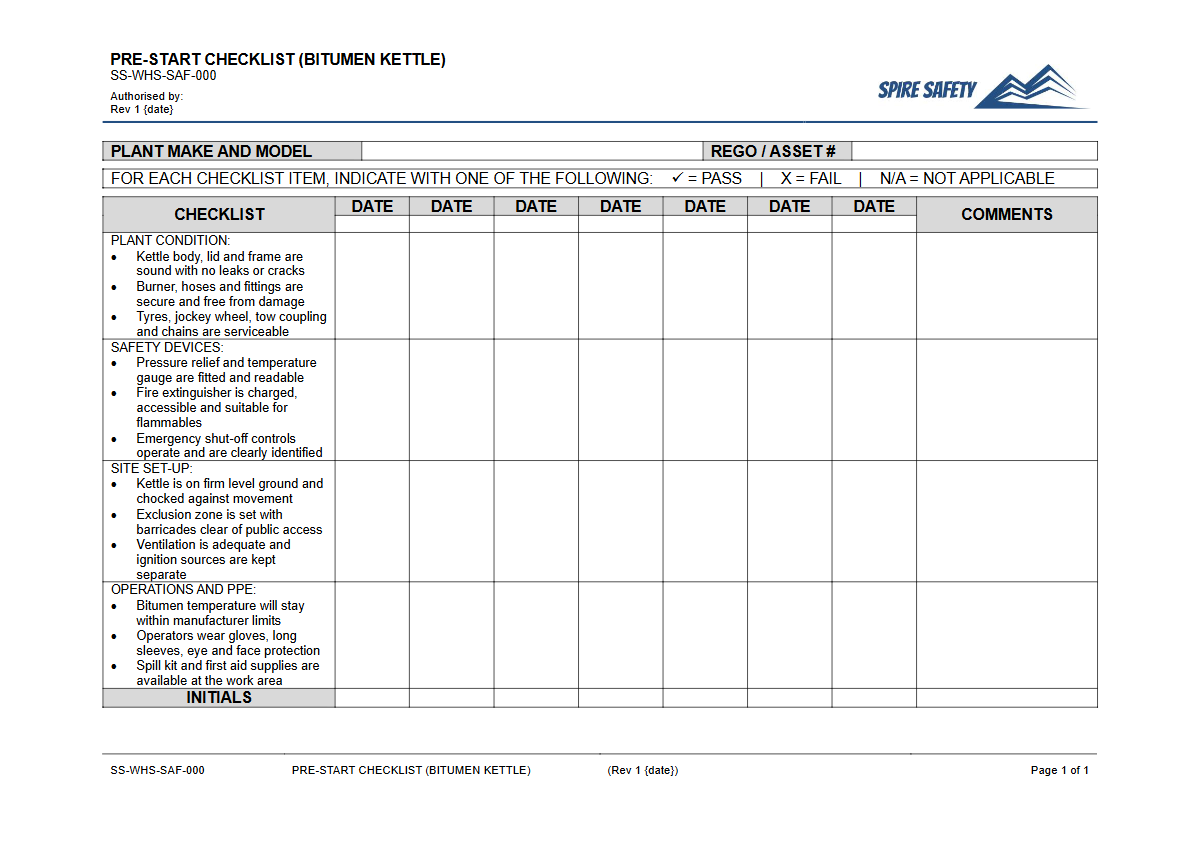
This Free Pre-Start Checklist (Bitumen Kettle) Template provides a structured framework for operators to verify the condition of the kettle, its safety features, and the surrounding work area. Using this checklist helps formalise and document these crucial checks, demonstrating due diligence in managing high-risk plant.
Implementing consistent pre-start inspections supports your broader safety program by identifying potential faults before they lead to incidents. It encourages a proactive safety culture where equipment condition is actively monitored rather than assumed.
To further embed this practice, regular safety discussions are essential; you can use our Pre-Start Checks and Plant Maintenance Toolbox Talk to facilitate these conversations with your team.
Video walkthrough
How to use the Free Pre-Start Checklist (Bitumen Kettle) Template
This resource is available as a fully editable DOCX file, allowing for extensive customisation, and a ready-to-use PDF. The checklist is designed as a comprehensive starting point aligned with Australian WHS principles for managing risks associated with plant.
To effectively implement the checklist:
- Download and Customise: Download the template and modify it to match the specific make and model of the bitumen kettle(s) used in your operations. Add, remove, or adjust checklist items to reflect manufacturer recommendations and site-specific risks.
- Consult and Train: Involve operators and supervisors in the customisation process to ensure the checklist is practical and relevant. Once finalised, provide training to all relevant personnel on how to correctly complete the checklist and what actions to take if a fault is identified.
- Integrate into Workflow: Make the pre-start check a non-negotiable step before every use. Completed checklists should be filed and periodically reviewed by a supervisor to spot recurring maintenance issues or gaps in operator knowledge.
Important: This template must be customised to your workplace. We have provided a structured foundation, but you must adapt it to your specific equipment, operational context, and risk profile to ensure it is effective for your business.
These daily checks are a component of a much larger safety framework. For a holistic approach, these procedures should be integrated into comprehensive WHS management systems that govern all aspects of your safety-related activities.
When to use it
A bitumen kettle pre-start checklist should be completed by the operator before the commencement of each shift or before the first use of the day. Consistency is key to an effective inspection program.
The check should also be performed if the equipment is taken to a new location on-site or after it has undergone maintenance or repair, to verify it is safe to return to service. It serves as the final check to confirm the plant is fit for purpose before ignition.
Similar principles apply to other high-risk equipment involving heat or specialised processes. For instance, our free Pre-Start Checklist (Air Arc) Template follows a similar logic of pre-use verification for a different but equally hazardous task.
Who should use it
The pre-start checklist must be completed by a person who is trained, competent, and authorised to operate the bitumen kettle. They must have the knowledge to recognise potential defects or hazards associated with the equipment.
Supervisors or managers should also be familiar with the checklist so they can review completed forms, confirm compliance, and address any reported issues promptly. Operator competency is a cornerstone of safe plant operation, and for some equipment, this involves more formal assessments, such as our Verification of Competency for a pipe threader, which can be adapted for other plant.
Periodically reviewing the effectiveness of your pre-start process is also a vital step. A formal review can determine if the checks are being completed correctly and if they are successfully preventing incidents.
This can be part of a broader WHS compliance auditing program to ensure your safety systems remain effective over time. For more templates and safety documents, browse our complete free WHS resources library.
Common mistakes
Common mistakes to avoid
- Failing to check pressure relief valves for blockages or damage.
- Operating the kettle in poorly ventilated areas, leading to fume build-up.
- Ignoring small leaks from hoses or fittings, which can worsen under pressure.
- Overfilling the kettle, which can cause dangerous spillage of hot bitumen when heated.
Legal references
Legal considerations
The following legal requirements may be relevant to this type of work.
- Work Health and Safety Act (Harmonised) — Provides the primary duties for protecting workers and other people from work health and safety risks.
- Work Health and Safety Regulations (Harmonised) — Sets out requirements supporting the management of workplace hazards and risks.
The following codes may be relevant to this type of work.
- Managing WHS Risks Code of Practice — Provides practical guidance on identifying hazards, assessing risks and applying effective controls.
- Work Health and Safety Consultation, Cooperation and Coordination Code of Practice — Provides practical guidance on consulting workers and coordinating with other duty holders.
- Managing the Work Environment and Facilities Code of Practice — Provides practical guidance on safe work environments, workplace facilities and related controls.
Did you know
Flash Point
The flash point of bitumen (the temperature at which it gives off enough vapour to ignite) is typically above 230°C. Overheating a kettle beyond this point creates a significant fire and explosion risk.
Burn Risk
Because of its high temperature and viscosity, a bitumen burn is extremely severe. It sticks to the skin and continues to transfer heat long after initial contact, causing deep tissue damage.
FAQ
Frequently asked questions
01What are the main hazards of operating a bitumen kettle?
02How often should pre-start checks be performed on a bitumen kettle?
03Is this bitumen kettle checklist a legal document?
04What Personal Protective Equipment (PPE) is required for operating a bitumen kettle?
Share this resource
Free Pre-Start Checklist (Bitumen Kettle) Template
Browse Categories
How To Use It
- 1Download and open in Word or PDF.
- 2Replace the placeholders with your business details.
- 3Get it reviewed by a WHS specialist before rollout.
Need it customised?
Our WHS consultants can adapt this template to your site, run a gap analysis, or audit what you already have in place.
Book a Free Consultation WHS consulting servicesor call 1300 156 382