
Free Pre-Start Checklist (Blast Chiller) Template
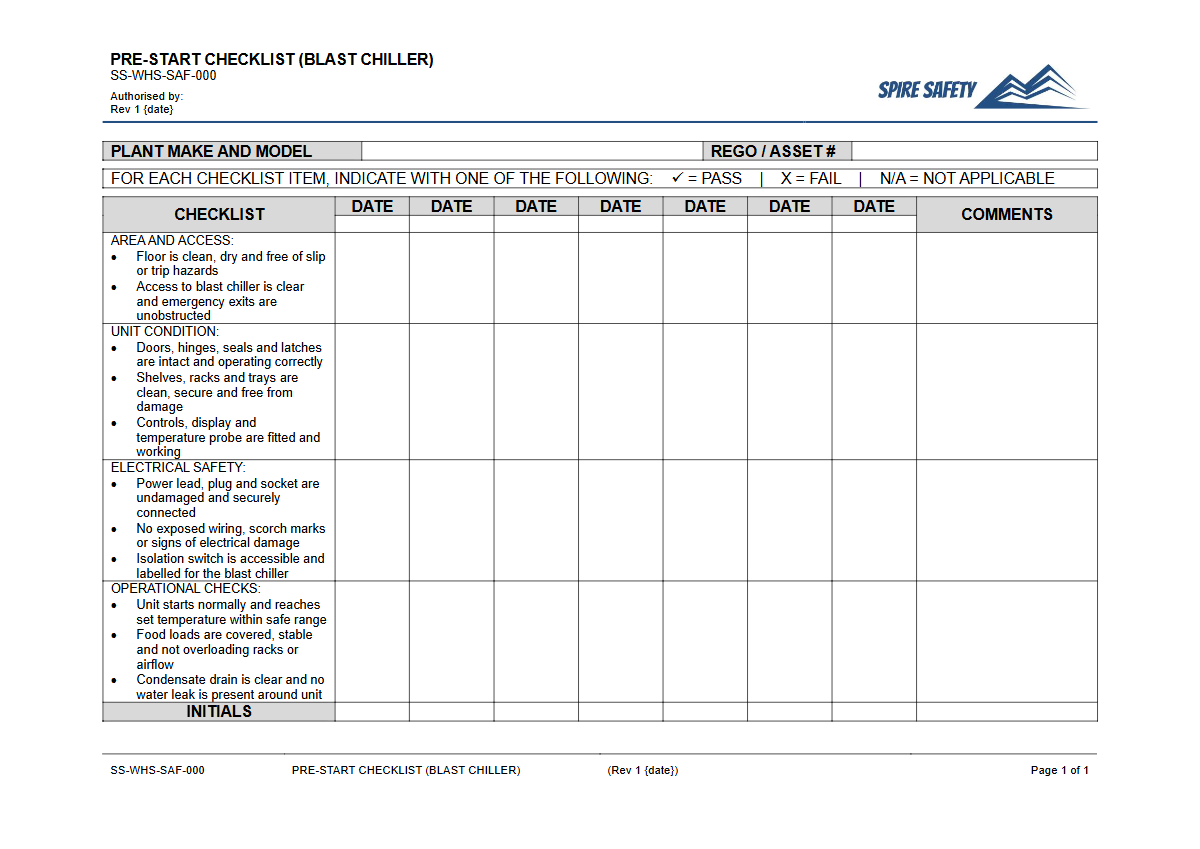
Download our free Pre-Start Checklist (Blast Chiller) Template. This customisable DOCX & PDF resource helps streamline WHS checks in Australian kitchens.
Free Pre-Start Checklist (Blast Chiller) Template
DOCX • 125 KB + PDF
Updated Oct 2026
No signup required
Purpose of the Free Pre-Start Checklist (Blast Chiller) Template
A blast chiller is a vital piece of equipment in any commercial kitchen, essential for food safety and quality. The primary purpose of this Free Pre-Start Checklist (Blast Chiller) Template is to formalise the process of inspecting the unit before each use.
It guides kitchen staff to systematically check for electrical safety, cleanliness, correct temperature settings, and any signs of wear or damage. By documenting these checks, you create a verifiable record of due diligence, which is a cornerstone of effective safety management.
This proactive approach helps prevent equipment failure, reduce the risk of foodborne illness, and safeguard workers from potential hazards like electrical faults or malfunctioning doors. It also supports consistent operational performance, ensuring your blast chiller functions as intended.
Video walkthrough
How to use the Free Pre-Start Checklist (Blast Chiller) Template
This template is provided as a fully editable DOCX file, with a PDF version available for easy printing. To get the most out of our Free Pre-Start Checklist (Blast Chiller) Template, you should first download the document and open it with your preferred word processor.
The checklist is designed as a foundation, aligned with Australian WHS principles, but it is not a one-size-fits-all solution.
Important: You must customise this template to your specific workplace. This includes adding your company branding, specifying the exact make and model of your blast chiller(s), and adapting the checklist items to reflect the unique features and risks of your equipment and operational environment.
We encourage you to involve the kitchen staff who operate the equipment in the customisation process to ensure the checklist is practical and comprehensive. Integrating these daily checks into your broader procedures is key; for larger organisations, this might form part of your comprehensive WHS management systems.
Once finalised, train all relevant personnel on its correct use. Ensure they understand not just what to check, but why each point is important and what the procedure is for reporting a 'fail' or defect.
When to use it
A pre-start check should be conducted before the blast chiller is used for the first time each day or at the beginning of each shift in a multi-shift operation. This frequency ensures that any issues that may have developed overnight or between shifts—such as a tripped circuit, a blocked drain, or damage from cleaning—are identified before the unit is loaded with food.
Conducting the check before operation is critical; discovering a fault after the unit is already in a cooling cycle can lead to significant food waste and operational delays. For a deeper dive into the principles of equipment checks, consider using our toolbox talk on pre-start checks to reinforce their importance with your team.
Who should use it
The responsibility for completing the blast chiller pre-start checklist should fall to the person or people who will be operating the equipment during the shift. This typically includes chefs, cooks, or designated kitchen hands.
Assigning direct responsibility fosters ownership and ensures the person using the machine is confident in its safe operational status.
Supervisors, kitchen managers, or Head Chefs have a crucial oversight role. They are responsible for ensuring the checks are completed consistently and accurately, reviewing the completed checklists, and taking prompt action on any reported defects or non-conformances.
They must also ensure records are properly filed and retained. Verifying that these procedures are followed effectively can be confirmed through regular WHS compliance audits.
If you need assistance in defining roles and responsibilities or embedding these practices into your daily operations, seeking advice through professional WHS consulting can provide clarity and expert guidance. For more ready-to-use templates and guides, explore our complete free resources library.
Common mistakes
Common mistakes to avoid
- Operator 'pencil-whipping' the checklist without physically inspecting the items.
- Using a generic checklist that doesn't match the specific make and model of the blast chiller.
- Failing to establish a clear procedure for reporting and rectifying faults identified during the check.
- Neglecting to train new staff members on how and why to complete the pre-start check correctly.
Legal references
Legal considerations
The following legal requirements may be relevant to this type of work.
- Work Health and Safety Act (Harmonised) — Provides the primary duties for protecting workers and other people from work health and safety risks.
- Work Health and Safety Regulations (Harmonised) — Sets out requirements supporting the management of workplace hazards and risks.
The following codes may be relevant to this type of work.
- Managing WHS Risks Code of Practice — Provides practical guidance on identifying hazards, assessing risks and applying effective controls.
- Work Health and Safety Consultation, Cooperation and Coordination Code of Practice — Provides practical guidance on consulting workers and coordinating with other duty holders.
- Managing the Work Environment and Facilities Code of Practice — Provides practical guidance on safe work environments, workplace facilities and related controls.
Did you know
The Temperature Danger Zone
The temperature 'danger zone' where bacteria multiply rapidly is between 5°C and 60°C. Blast chillers are designed to move food through this zone as quickly as possible to maintain food safety.
HACCP Critical Control Point
Proper chilling is a Critical Control Point (CCP) in most commercial kitchen HACCP (Hazard Analysis and Critical Control Points) plans. A functional blast chiller is essential for meeting this requirement.
FAQ
Frequently asked questions
01What should be included in a blast chiller pre-start check?
02Is a digital pre-start checklist better than a paper one?
03How often should a blast chiller pre-start inspection be done?
04Who is responsible for ensuring blast chiller pre-starts are completed?
Share this resource
Free Pre-Start Checklist (Blast Chiller) Template
Browse Categories
How To Use It
- 1Download and open in Word or PDF.
- 2Replace the placeholders with your business details.
- 3Get it reviewed by a WHS specialist before rollout.
Need it customised?
Our WHS consultants can adapt this template to your site, run a gap analysis, or audit what you already have in place.
Book a Free Consultation WHS consulting servicesor call 1300 156 382