
Free Pre-Start Checklist (Blood Mixer) Template
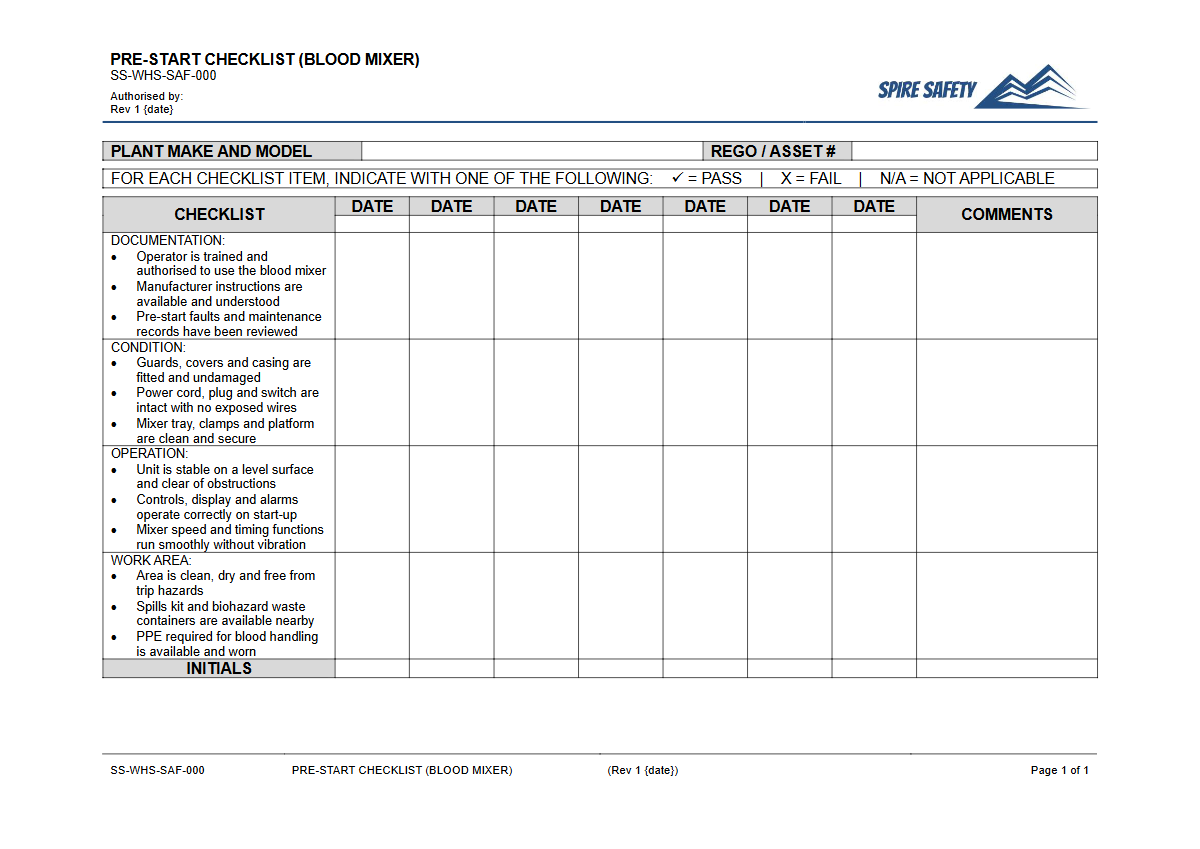
Download our free Pre-Start Checklist (Blood Mixer) Template. This DOCX & PDF resource helps ensure blood mixers are safe to operate. Customise it today.
Free Pre-Start Checklist (Blood Mixer) Template
DOCX • 125 KB + PDF
Updated Oct 2026
No signup required
Purpose of the Free Pre-Start Checklist (Blood Mixer) Template
Implementing a routine inspection process is crucial for safely operating specialised equipment in laboratory, pathology, and medical settings. Our Free Pre-Start Checklist (Blood Mixer) Template provides a structured starting point for organisations to formalise these essential checks.
Using this template helps identify potential faults, prevent equipment failure, and ensure the machinery is fit for purpose before each use. This protects both the operator from mechanical or electrical hazards and maintains the integrity of the sensitive samples being processed.
A documented pre-start check serves as a key part of an effective risk management strategy. It provides tangible evidence that a Person Conducting a Business or Undertaking (PCBU) is taking practicable steps to ensure the safety of their plant and equipment.
Consistent use of this checklist helps build a proactive safety culture where potential issues are identified and rectified before they can cause harm or lead to costly operational downtime. These daily checks are a foundational element of equipment safety, a topic further explored in our Pre-Start Checks and Plant Maintenance Toolbox Talk.
Video walkthrough
How to use the Free Pre-Start Checklist (Blood Mixer) Template
This template is provided in both DOCX and PDF formats for your convenience. To integrate it effectively into your safety procedures, follow these steps.
First, download the document and review the default checklist items. It is critical to adapt these items to your specific circumstances.
Consider the make, model, and unique features of the blood mixers used in your facility, as well as the specific environment in which they operate.
Please note: This template is a starting point. We strongly recommend you customise it to reflect the specific make and model of your blood mixer, your operational procedures, and the unique risks present in your workplace.
For guidance on tailoring safety documents, engaging professional WHS consulting can ensure your procedures are robust and fit-for-purpose. Once customised, train all relevant operators on how to complete the checklist correctly and what actions to take if a fault is found.
When to use it
A pre-start checklist for a blood mixer should be completed by the operator before the first use of the equipment on any given shift or day. This frequency ensures that the machine's condition is verified before it is put into operation, catching any damage or faults that may have occurred overnight or during a previous shift.
Establishing this routine is fundamental to preventative maintenance.
Completed checklists should be filed and retained as part of your organisation's safety records. These documents are vital evidence of due diligence and can be reviewed during safety meetings or incident investigations.
Regular reviews by supervisors also help verify that the checks are being performed diligently. During formal safety assessments, these records demonstrate procedural adherence, a key focus of WHS compliance auditing.
Who should use it
The checklist is designed to be completed by trained and competent operators who are authorised to use the blood mixer. These individuals have the hands-on familiarity needed to spot subtle changes in the equipment's condition or performance.
It is the responsibility of supervisors or laboratory managers to ensure that operators are adequately trained not only in the use of the mixer but also in the importance and correct procedure for completing the pre-start check.
Supervisors should periodically review the completed checklists to identify recurring issues and supports your compliance efforts. Integrating such checks into broader WHS management systems reinforces accountability and systematic risk control.
The same principles of operator checks apply to other types of mixing equipment; for a similar example, see our Free Pre-Start Checklist (Agitator) Template. Verifying that staff can perform these checks correctly is also a key part of assessing overall operator competence.
Common mistakes
Common mistakes to avoid
- Using the generic template without customising it for the specific make and model of the blood mixer.
- "Pencil-whipping" the form—ticking boxes without performing a genuine physical inspection of the equipment.
- Failing to immediately report faults or remove defective equipment from service, creating significant risk.
- Poor record-keeping, making it impossible to track recurring faults or prove due diligence during an audit.
Legal references
Legal considerations
The following legal requirements may be relevant to this type of work.
- Work Health and Safety Act (Harmonised) — Provides the primary duties for protecting workers and other people from work health and safety risks.
- Work Health and Safety Regulations (Harmonised) — Sets out requirements supporting the management of workplace hazards and risks.
The following codes may be relevant to this type of work.
- Managing WHS Risks Code of Practice — Provides practical guidance on identifying hazards, assessing risks and applying effective controls.
- Work Health and Safety Consultation, Cooperation and Coordination Code of Practice — Provides practical guidance on consulting workers and coordinating with other duty holders.
- Managing the Work Environment and Facilities Code of Practice — Provides practical guidance on safe work environments, workplace facilities and related controls.
Did you know
Sample Integrity
Blood mixers use a gentle but thorough motion (like rocking or rolling) to prevent coagulation and ensure specimens remain homogenous, which is critical for accurate results in haematology and coagulation studies.
Risk of Haemolysis
Using a blood mixer with an incorrect speed or a faulty mechanism can cause haemolysis—the rupture of red blood cells. This can significantly skew laboratory test results, potentially leading to misdiagnosis.
FAQ
Frequently asked questions
01What should be included in a blood mixer pre-start checklist?
02Why are pre-start checks for laboratory equipment important?
03How often should a blood mixer pre-start check be completed?
04Is this blood mixer checklist template suitable for all models?
Share this resource
Free Pre-Start Checklist (Blood Mixer) Template
Browse Categories
How To Use It
- 1Download and open in Word or PDF.
- 2Replace the placeholders with your business details.
- 3Get it reviewed by a WHS specialist before rollout.
Need it customised?
Our WHS consultants can adapt this template to your site, run a gap analysis, or audit what you already have in place.
Book a Free Consultation WHS consulting servicesor call 1300 156 382