
Free Pre-Start Checklist (Binding Machine) Template
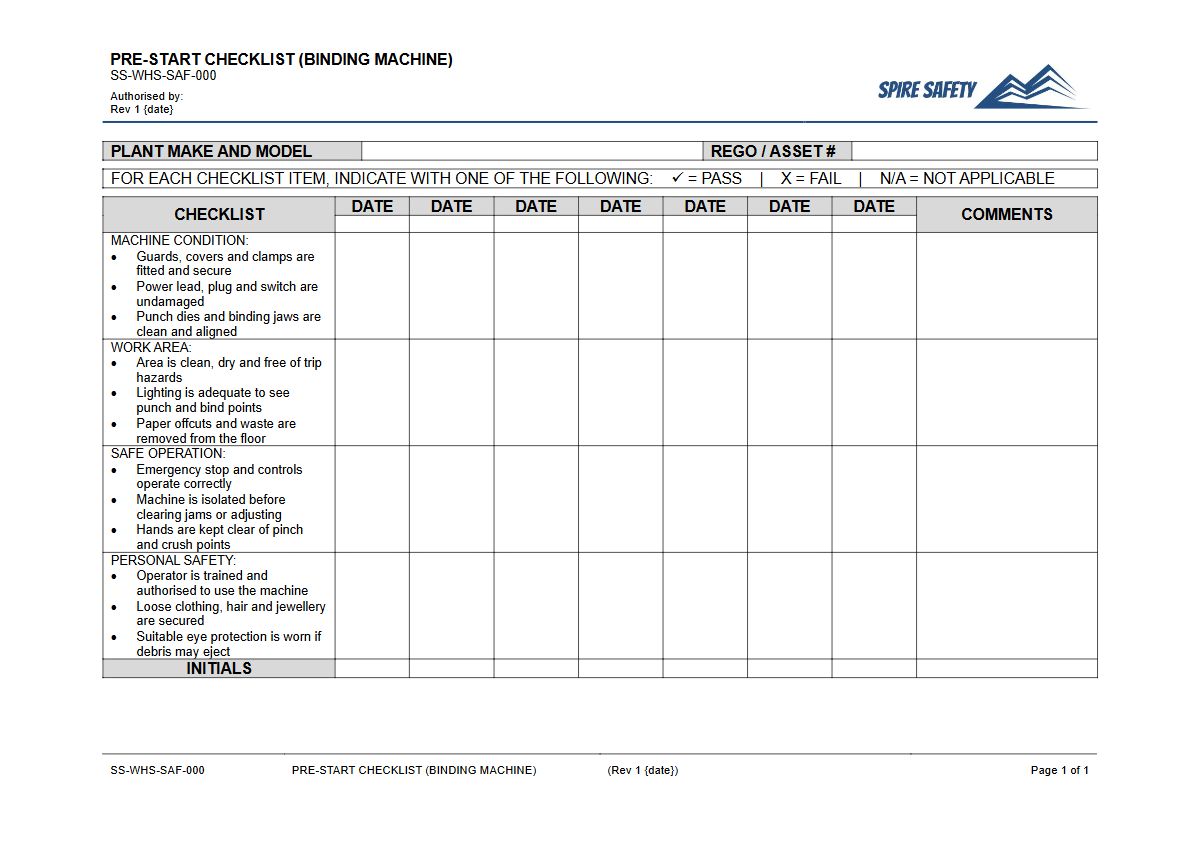
Download our free Pre-Start Checklist (Binding Machine) Template to formalise daily equipment checks. Aligned with Australian WHS standards.
Free Pre-Start Checklist (Binding Machine) Template
DOCX • 125 KB + PDF
Updated Oct 2026
No signup required
Purpose of the Free Pre-Start Checklist (Binding Machine) Template
A binding machine, while common in office and print shop environments, poses risks from moving parts, sharp components, and electrical hazards. Implementing a routine safety check is essential for preventing incidents and ensuring operator safety.
This Free Pre-Start Checklist (Binding Machine) Template provides a structured starting point for your organisation to formalise daily or pre-use inspections, ensuring equipment is safe before operation begins.
Using this checklist consistently helps identify potential faults, wear, or damage before they lead to equipment failure or injury. It serves as a practical tool to meet your duty of care obligations under Australian WHS legislation by systematically managing the risks associated with plant.
Integrating this process into your daily routine fosters a proactive safety culture and provides documented evidence of your safety management efforts. For broader team engagement, you can reinforce these principles with our Pre-Start Checks and Plant Maintenance Toolbox Talk Template.
Video walkthrough
How to use the Free Pre-Start Checklist (Binding Machine) Template
This document is provided in both DOCX and PDF formats for your convenience. The DOCX version is fully editable, allowing you to tailor it to your specific operational needs. Follow these steps to implement it effectively:
- Download: Select the DOCX or PDF version to download the template.
- Customise: Add your company branding and specific details of your binding machine(s). Adjust the checklist items to reflect the actual components, controls, and safety features of your model.
- Review: Have a competent person, such as a manager or safety officer, review and approve the customised checklist.
- Train: Ensure all operators are trained on how to properly conduct the pre-start check and what to do if a fault is discovered.
- Implement: Integrate the checklist into your daily procedures, making it a mandatory step before any operator uses the binding machine.
IMPORTANT NOTE: This is a template and not a complete safety solution. It is your responsibility to customise it to suit the specific make and model of your equipment, the tasks performed, and the unique risks present in your workplace.
We recommend a competent person adapts this document to ensure it is comprehensive for your needs. This checklist should form part of your overall robust WHS management systems.
Key Inspection Points to Consider
When customising your checklist, ensure you include checks relevant to your machine. General points to cover for most binding machines include:
- Guards & Shields: Check that all safety guards are in place, secure, and not damaged.
- Emergency Stop: Test the E-stop button (if fitted) to ensure it functions correctly and immediately stops the machine.
- Power Cord & Plug: Inspect the electrical cord and plug for any signs of fraying, cracking, or exposed wires.
- Controls & Switches: Verify that all operating controls, buttons, and switches are clearly labelled and working as intended.
- Punching Mechanism: Ensure the punching dies are sharp, clear of debris, and operating smoothly.
- Binding Elements: Check that the binding mechanism (e.g., comb opener, wire closer) is functioning correctly without jamming.
- General Condition: Look for any loose parts, fluid leaks, or signs of structural damage.
- Work Area: Ensure the area around the machine is clear of clutter, trip hazards, and flammable materials.
These checks should be documented alongside other critical safety documents. For example, a Safe Operating Procedure (SOP) outlines the step-by-step process for using equipment safely, and you might have a Milling Machine SOP for other workshop plant.
When to use the Pre-Start Checklist
The Pre-Start Checklist should be completed by the operator at the beginning of each shift or before the first use of the machine each day. If the binding machine is used infrequently, the check should be performed before every use.
Completed checklists should be filed and retained as part of your safety records. These records are crucial for demonstrating compliance and can be reviewed during internal or external WHS compliance auditing.
Who should use the Pre-Start Checklist
The checklist should be completed by the person who will be operating the binding machine. All operators must be trained not only on how to use the equipment safely but also on the importance of conducting a thorough pre-start inspection.
Supervisors or managers have a responsibility to ensure these checks are being completed correctly and to follow up on any reported defects. If you require assistance in defining these roles and establishing clear safety responsibilities, consider seeking professional WHS consulting.
Common mistakes
Common mistakes to avoid
- Using a generic checklist without customising it for the specific machine model.
- Operators completing the checklist as a 'tick-and-flick' exercise without physically checking the items.
- Failing to remove faulty equipment from service immediately after a defect is found.
- Poor record-keeping, making it difficult to track recurring faults or prove due diligence.
Legal references
Legal considerations
The following legal requirements may be relevant to this type of work.
- Work Health and Safety Act (Harmonised) — Provides the primary duties for protecting workers and other people from work health and safety risks.
- Work Health and Safety Regulations (Harmonised) — Sets out requirements supporting the management of workplace hazards and risks.
The following codes may be relevant to this type of work.
- Managing WHS Risks Code of Practice — Provides practical guidance on identifying hazards, assessing risks and applying effective controls.
- Work Health and Safety Consultation, Cooperation and Coordination Code of Practice — Provides practical guidance on consulting workers and coordinating with other duty holders.
- Managing the Work Environment and Facilities Code of Practice — Provides practical guidance on safe work environments, workplace facilities and related controls.
Did you know
Hidden Dangers
While often seen as minor office equipment, industrial binding machines can cause serious injuries, including lacerations, amputations, and crushing injuries if guards are missing or bypassed.
Electrical Hazard
Like all powered equipment, binding machines carry an electrical risk. Regular inspection of cords and plugs for damage is a critical part of the pre-start process to prevent electric shock or fire.
FAQ
Frequently asked questions
01Is a pre-start checklist legally required for a binding machine in Australia?
02How often should a binding machine pre-start check be completed?
03What happens if a fault is found during a pre-start check?
04Can this checklist template be used for any type of binding machine?
Share this resource
Free Pre-Start Checklist (Binding Machine) Template
Browse Categories
How To Use It
- 1Download and open in Word or PDF.
- 2Replace the placeholders with your business details.
- 3Get it reviewed by a WHS specialist before rollout.
Need it customised?
Our WHS consultants can adapt this template to your site, run a gap analysis, or audit what you already have in place.
Book a Free Consultation WHS consulting servicesor call 1300 156 382