
Free Pre-Start Checklist (Cable Machine) Template
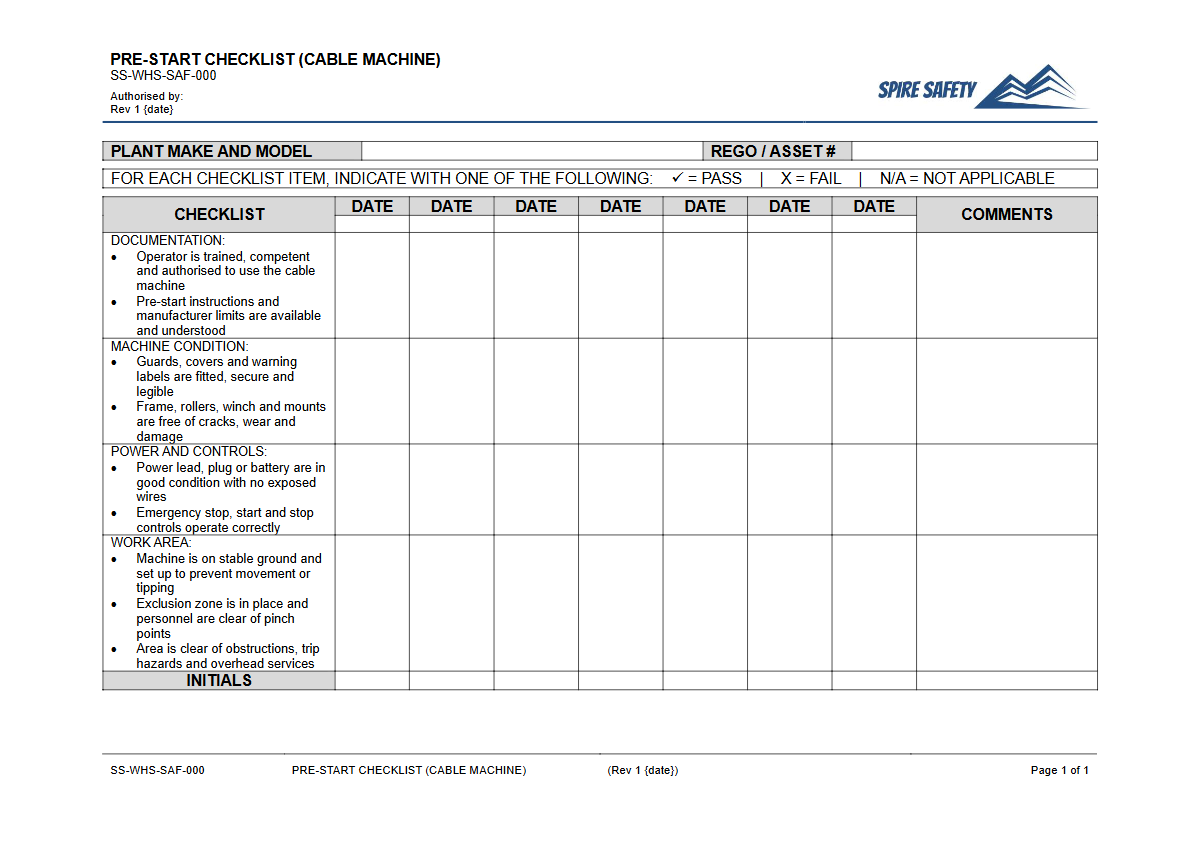
Download our Free Pre-Start Checklist (Cable Machine) Template for Australian workplaces. This DOCX & PDF resource helps formalise equipment safety inspections.
Free Pre-Start Checklist (Cable Machine) Template
DOCX • 125 KB + PDF
Updated Oct 2026
No signup required
Purpose of the Free Pre-Start Checklist (Cable Machine) Template
Regularly inspecting plant and equipment is a cornerstone of a safe workplace. Using a formal checklist before operating a cable machine helps identify potential faults or damage that could lead to equipment failure, property damage, or serious injury.
This Free Pre-Start Checklist (Cable Machine) Template provides a structured framework for conducting and recording these crucial daily checks.
Implementing a consistent pre-start process demonstrates a commitment to workplace safety and helps meet due diligence obligations. It creates a clear record of equipment condition, assists in scheduling maintenance, and empowers operators to take ownership of their safety. These checks are a practical way to manage risks associated with mechanical plant and are a key topic in any effective Pre-Start Checks and Plant Maintenance Toolbox Talk.
Video walkthrough
How to use the Free Pre-Start Checklist (Cable Machine) Template
This resource is available for download in both DOCX and PDF formats. The DOCX file is fully editable, allowing you to tailor the checklist to your specific operational needs. To use the template effectively, follow these steps:
- Download: Choose the format that best suits your needs.
- Customise: This is the most critical step. You must adapt the template to include the specific make, model, and configuration of the cable machine in your workplace. Add or remove checklist items based on the manufacturer’s instructions and your own risk assessments.
- Integrate: Incorporate the customised checklist into your daily procedures. Ensure it aligns with your broader WHS management systems and any related safe work procedures.
- Train: Ensure all operators are trained on how to properly complete the checklist, what each item means, and the procedure for reporting any identified faults.
Note: This document is a starting point. To ensure it is effective for your organisation, we strongly recommend that you customise this template to reflect the specific hazards and control measures relevant to your site.
This process should be undertaken in consultation with your workers and other relevant stakeholders.
When to use it
A pre-start check should be conducted at the beginning of every shift or before the cable machine is used for the first time each day. It should also be performed if a new operator takes over the machine during a shift.
The goal is to verify that the equipment is in a safe condition before work commences, preventing issues from escalating during operation.
If a machine is used intermittently, a check should still be performed before each use. Consistent use of the checklist ensures no check is missed and provides a continuous record of the machine's condition over time.
For more complex equipment, these checks may supplement, but not replace, scheduled preventative maintenance programs.
Who should use it
The pre-start checklist should be completed by the person operating the cable machine. They are best placed to notice subtle changes or defects in the equipment they use daily.
Operators must be deemed competent and have received adequate training not only on the machine's operation but also on the pre-start inspection process itself.
Supervisors and managers have a responsibility to ensure these checks are being carried out correctly and consistently. They should periodically review the completed checklists to identify recurring faults, ensure maintenance actions are being completed, and verify that the safety system is functioning as intended.
If you need assistance developing competency frameworks, seeking specialist WHS consulting can provide valuable guidance. The process of confirming operator skills is often formalised using tools like a Verification of Competency for a portable welding machine, and a similar approach can be applied to cable machine operation.
Integrating Checklists with Safe Operating Procedures
A pre-start checklist is most effective when used alongside a Safe Operating Procedure (SOP). While the checklist focuses on equipment condition, the SOP outlines the step-by-step process for performing a task safely.
For example, a workshop might have a CNC Machine SOP (Safe Operating Procedure) Template that references the completion of a pre-start check as the first step before powering on the machine. This creates a comprehensive system where both machine and process safety are addressed. You can explore many other templates like this in our free WHS resources library.
Common mistakes
Common mistakes to avoid
- "Pencil-whipping" the checklist without physically inspecting the machine.
- Failing to tag out and report faulty equipment found during the check.
- Using a generic checklist that doesn't cover the specific hazards of the machine's make and model.
- Neglecting to keep completed checklists as a record of inspection and maintenance.
Legal references
Legal considerations
The following legal requirements may be relevant to this type of work.
- Work Health and Safety Act (Harmonised) — Provides the primary duties for protecting workers and other people from work health and safety risks.
- Work Health and Safety Regulations (Harmonised) — Sets out requirements supporting the management of workplace hazards and risks.
The following codes may be relevant to this type of work.
- Managing WHS Risks Code of Practice — Provides practical guidance on identifying hazards, assessing risks and applying effective controls.
- Work Health and Safety Consultation, Cooperation and Coordination Code of Practice — Provides practical guidance on consulting workers and coordinating with other duty holders.
- Managing the Work Environment and Facilities Code of Practice — Provides practical guidance on safe work environments, workplace facilities and related controls.
Did you know
Mechanical Advantage
Cable machines, also known as pulley machines, use a system of cables and pulleys to create resistance, providing a significant mechanical advantage for lifting and pulling tasks.
Not Just for Gyms
While common in fitness centres, industrial cable machines are workhorses in manufacturing, auto repair, and assembly lines for pulling, tensioning, and lifting components.
FAQ
Frequently asked questions
01Is this pre-start checklist WHS-aligned in Australia?
02How often should a cable machine pre-start check be done?
03What happens if a fault is found during the check?
04Who is responsible for ensuring pre-start checks are completed?
Share this resource
Free Pre-Start Checklist (Cable Machine) Template
Browse Categories
How To Use It
- 1Download and open in Word or PDF.
- 2Replace the placeholders with your business details.
- 3Get it reviewed by a WHS specialist before rollout.
Need it customised?
Our WHS consultants can adapt this template to your site, run a gap analysis, or audit what you already have in place.
Book a Free Consultation WHS consulting servicesor call 1300 156 382