
Free Pre-Start Checklist (Carton Clamp) Template
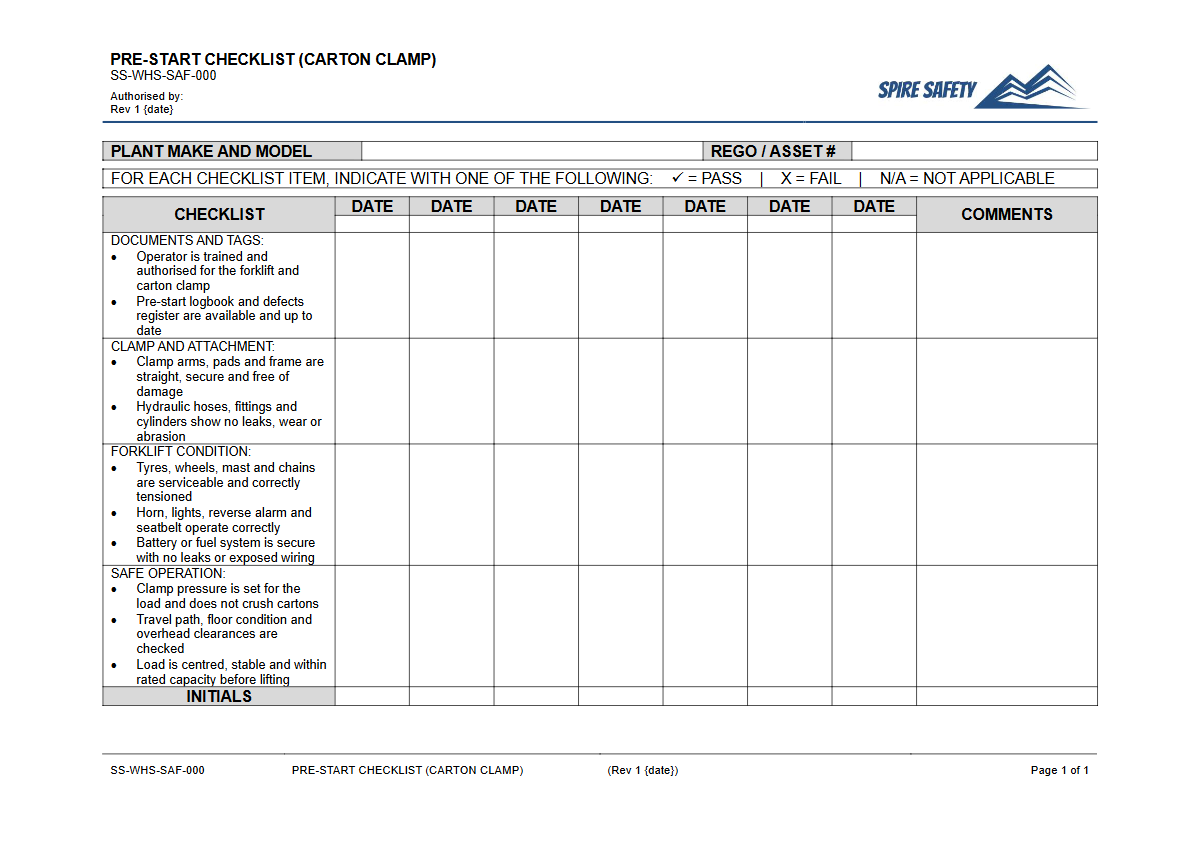
Download our Free Pre-Start Checklist (Carton Clamp) Template for Australian workplaces. This DOCX & PDF resource helps formalise daily equipment checks.
Free Pre-Start Checklist (Carton Clamp) Template
DOCX • 125 KB + PDF
Updated Oct 2026
No signup required
Purpose of the Free Pre-Start Checklist (Carton Clamp) Template
Regularly inspecting plant and equipment is a cornerstone of a safe workplace. This Free Pre-Start Checklist (Carton Clamp) Template provides a structured framework for operators to conduct daily inspections on carton clamp forklift attachments before use.
Using a checklist helps formalise the inspection process, ensuring that key safety and operational components are checked consistently every time. The primary goal is to identify any faults, damage, or wear and tear that could lead to an incident, equipment failure, or property damage.
By implementing a routine inspection process, your organisation can proactively manage risks associated with powered mobile plant. This not only helps in meeting your duty of care under Australian WHS laws but also improves equipment reliability and longevity.
A well-documented check is a critical record in your safety management system, demonstrating due diligence. For broader insights into daily checks, our pre-start checks and plant maintenance toolbox talk provides additional training material.
Video walkthrough
How to use the Free Pre-Start Checklist (Carton Clamp) Template
Using this template is straightforward. After downloading the DOCX or PDF file, you can integrate it into your daily operations. We recommend following these steps to ensure effective implementation:
- Customise the Template: It is essential that you customise this template to suit your specific carton clamp models, workplace environment, and operational risks. We have provided a solid foundation, but you must adapt it to ensure it is relevant and effective for your business. This may involve adding or removing checklist items based on manufacturer specifications and your own risk assessments.
- Train Your Operators: Ensure all operators are trained not just on how to use the carton clamp, but on how to properly complete the pre-start checklist. They must understand what each item means, what to look for, and the procedure for reporting faults.
- Implement and Monitor: Make the pre-start check a mandatory step before any operator uses a carton clamp for the first time in their shift. Supervisors should periodically monitor that checks are being completed correctly and not just “pencil-whipped”.
This checklist should be a key component within your organisation's broader safety framework. Integrating such procedures into comprehensive WHS management systems ensures that safety is managed systematically rather than reactively.
When to use a Carton Clamp Pre-Start Checklist
A pre-start checklist for a carton clamp should be completed at the beginning of every shift before the equipment is used for the first time. It should also be completed if a new operator takes over control of the forklift during a shift.
The check is designed to be a quick yet thorough inspection to verify that the equipment was safe when the shift began and remains safe for continued operation.
If the forklift and clamp have been idle for an extended period, or after any maintenance or repair work has been performed, an additional pre-start check is a good practice to ensure everything is in correct working order. The principle is simple: confirm the equipment is safe before you apply a load.
Who should use this Pre-Start Checklist
This Pre-Start Checklist should be completed by a competent person who is trained and licenced to operate the specific type of forklift and carton clamp attachment. Competency involves having the knowledge and skill to identify potential hazards and wear and tear.
This is typically the forklift operator assigned to the equipment for that shift.
Supervisors and managers also have a role. They are responsible for ensuring operators are conducting the checks correctly and that any reported faults are addressed promptly.
Completed checklists should be reviewed and filed, forming an important part of your equipment maintenance records. Regular WHS compliance audits can help verify that these procedures are being followed effectively across your organisation.
While this template is for a carton clamp, the principle of pre-start inspections applies to all plant and equipment. For example, operators of other machinery should use a specific document like a pre-start checklist for an articulated loader. You can find more templates in our free WHS resources library to build out your safety systems.
If you require assistance adapting this template or developing a more customised solution for your specific workplace needs, consider engaging professional support. Seeking expert WHS consulting can provide tailored advice and help ensure your safety procedures are robust and practical for your operations.
Common mistakes
Common mistakes to avoid
- "Pencil-whipping" the checklist without physically performing each inspection item.
- Ignoring small hydraulic fluid weeps or drips, which can indicate a developing and potentially catastrophic failure.
- Failing to check the condition and security of the clamp arm pads, leading to load instability and damaged goods.
- Using a generic forklift checklist that doesn't cover specific carton clamp functions and hazards.
Legal references
Legal considerations
The following legal requirements may be relevant to this type of work.
- Work Health and Safety Act (Harmonised) — Provides the primary duties for protecting workers and other people from work health and safety risks.
- Work Health and Safety Regulations (Harmonised) — Sets out requirements supporting the management of workplace hazards and risks.
The following codes may be relevant to this type of work.
- Managing WHS Risks Code of Practice — Provides practical guidance on identifying hazards, assessing risks and applying effective controls.
- Work Health and Safety Consultation, Cooperation and Coordination Code of Practice — Provides practical guidance on consulting workers and coordinating with other duty holders.
- Managing the Work Environment and Facilities Code of Practice — Provides practical guidance on safe work environments, workplace facilities and related controls.
Did you know
Hydraulic Pressure
The hydraulic systems on carton clamps can exert immense pressure, often customised for specific products. Incorrect pressure settings are a leading cause of product damage in warehouses.
Attachment Weight
A carton clamp attachment can weigh several hundred kilograms, significantly altering the forklift's centre of gravity and reducing its safe lifting capacity. This change must be reflected on the forklift's load rating plate.
FAQ
Frequently asked questions
01What are the most critical items on a carton clamp pre-start checklist?
02Is a digital pre-start checklist better than a paper one for carton clamps?
03How often should carton clamp pre-start checklists be reviewed and updated?
04What should an operator do if they find a fault during a carton clamp pre-start check?
Share this resource
Free Pre-Start Checklist (Carton Clamp) Template
Browse Categories
How To Use It
- 1Download and open in Word or PDF.
- 2Replace the placeholders with your business details.
- 3Get it reviewed by a WHS specialist before rollout.
Need it customised?
Our WHS consultants can adapt this template to your site, run a gap analysis, or audit what you already have in place.
Book a Free Consultation WHS consulting servicesor call 1300 156 382