
Free Pre-Start Checklist (Crack Sealer) Template
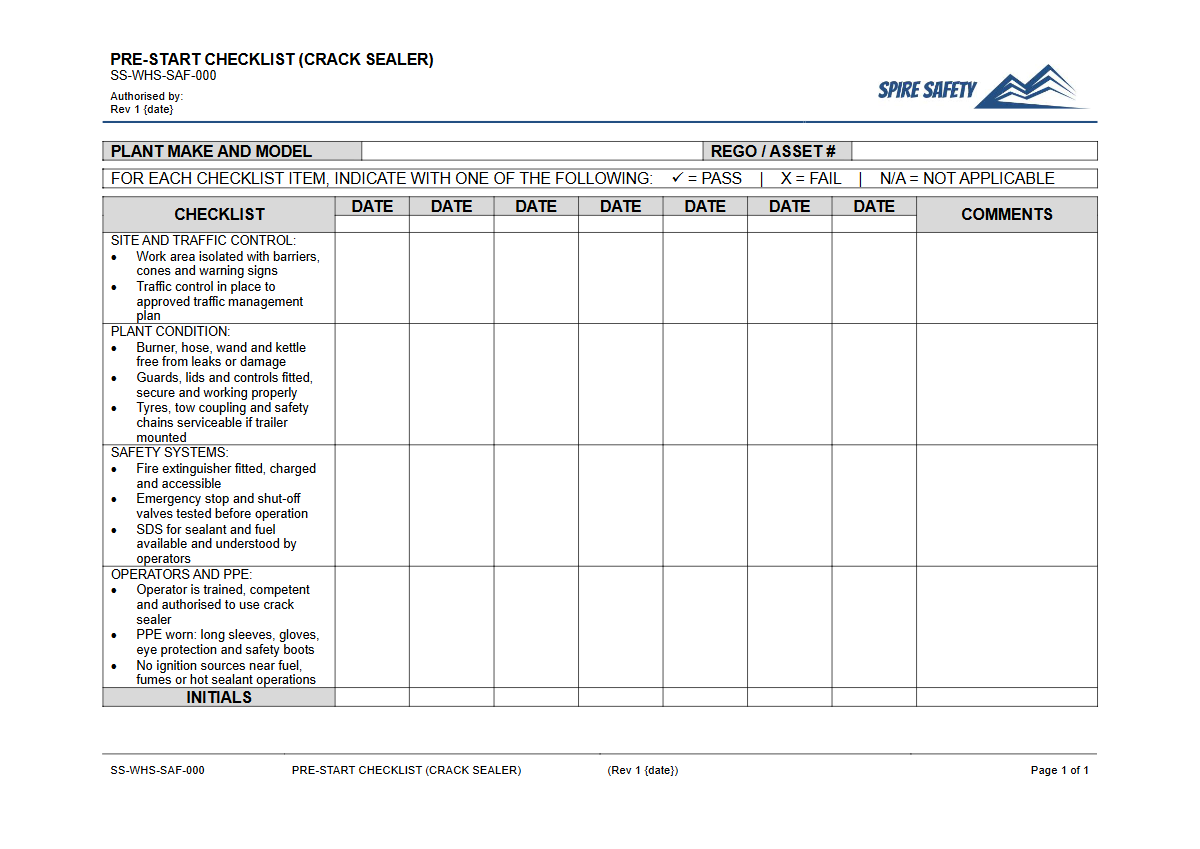
Download our Free Pre-Start Checklist (Crack Sealer) Template to formalise your equipment inspections. This DOCX & PDF resource is a great starting point.
Free Pre-Start Checklist (Crack Sealer) Template
DOCX • 125 KB + PDF
Updated Oct 2026
No signup required
Purpose of the Free Pre-Start Checklist (Crack Sealer) Template
A crack sealer is a vital piece of plant for road maintenance and civil construction, but it also introduces significant hazards, including high temperatures, pressurised systems, and flammable materials. Using this Free Pre-Start Checklist (Crack Sealer) Template helps your organisation systematically identify potential faults or safety issues before work begins.
Regular, documented inspections are a cornerstone of proactive safety management, helping to prevent equipment failure, reduce the risk of injury, and ensure the machine is in a safe operating condition.
This template provides a structured starting point for developing a site-specific checklist. It prompts operators to inspect critical components such as burners, hoses, gauges, and safety shut-offs.
Formalising this process helps demonstrate due diligence and supports the development of robust, safe systems of work. A well-maintained checklist also serves as an important record for maintenance scheduling and incident investigations.
Video walkthrough
How to Use the Free Pre-Start Checklist (Crack Sealer) Template
To effectively implement the Free Pre-Start Checklist (Crack Sealer) Template, download the DOCX file and adapt it to your specific workplace needs. This document is a template, not a finished safety document.
You must customise it to reflect the exact make and model of the crack sealer in use, your site conditions, and your organisation's specific procedures. We recommend a Person Conducting a Business or Undertaking (PCBU) consults with operators, maintenance staff, and WHS professionals during this customisation process.
Once tailored, the checklist should be integrated into your daily operations. Operators must be trained on how to properly complete the check and what actions to take if a fault is identified.
This includes understanding the 'tag out' and reporting procedures for unsafe equipment. Keeping completed checklists on file is essential for building a history of the equipment's condition and demonstrating procedural adherence, which can be reviewed during a WHS compliance audit.
When to Use This Checklist
A pre-start checklist for a crack sealer should be completed before the equipment is used for the first time each day or at the beginning of each shift. It is a pre-operational check designed to catch issues that may have developed overnight or during previous use.
Additionally, a brief post-operational check is also good practice to identify any faults that occurred during the shift, allowing for timely repairs before the next use. This proactive approach to equipment inspection is a key theme in our Pre-Start Checks and Plant Maintenance Toolbox Talk.
Who Should Use This Pre-Start Checklist
The pre-start check must be carried out by a competent person who is trained and authorised to operate the specific crack sealer. This is typically the machine operator assigned to the task for the shift.
Their familiarity with the equipment's normal operating state makes them best placed to notice abnormalities. Supervisors should also be familiar with the checklist to ensure it is being completed correctly and to review any reported defects.
Verifying operator competency is a critical step, and for some plant, you might use a resource like our Verification of Competency (Pipe Threader) Template as a framework.
Integrating Pre-Start Checks into Your WHS System
Pre-start checklists are not standalone documents; they are a vital component of broader comprehensive WHS management systems. The information gathered from these checks should feed into your maintenance schedules, risk assessments, and training programs. For example, recurring minor faults noted on checklists might indicate a need for a deeper mechanical review or a change in operating procedure. Consistently documenting these checks is as important as the activity itself, especially when managing high-risk activities often governed by a SWMS for Concrete Truck Operation.
By making documented pre-start inspections a non-negotiable part of your daily routine, you foster a positive safety culture where everyone is responsible for maintaining a safe working environment. For more templates and safety resources, browse our complete free resources library.
Common mistakes
Common mistakes to avoid
- Skipping checks on 'minor' items like tyre pressure or fire extinguisher charge.
- Failing to physically tag out and report faulty equipment, assuming someone else will notice.
- Conducting the check from memory instead of using the formal checklist, leading to missed steps.
- Not checking for sufficient and appropriate Personal Protective Equipment (PPE), such as heat-resistant gloves and face shields, before starting.
Legal references
Legal considerations
The following legal requirements may be relevant to this type of work.
- Work Health and Safety Act (Harmonised) — Provides the primary duties for protecting workers and other people from work health and safety risks.
- Work Health and Safety Regulations (Harmonised) — Sets out requirements supporting the management of workplace hazards and risks.
The following codes may be relevant to this type of work.
- Managing WHS Risks Code of Practice — Provides practical guidance on identifying hazards, assessing risks and applying effective controls.
- Work Health and Safety Consultation, Cooperation and Coordination Code of Practice — Provides practical guidance on consulting workers and coordinating with other duty holders.
- Managing the Work Environment and Facilities Code of Practice — Provides practical guidance on safe work environments, workplace facilities and related controls.
Did you know
Extreme Temperatures
The bituminous sealant used in crack sealing is typically heated to temperatures between 180°C and 200°C. This makes checking for leaks and ensuring all safety guards are in place a critical part of any pre-start inspection.
Equipment Failure Statistics
Studies have shown that a significant percentage of workplace incidents involving mobile plant can be attributed to mechanical failure. Many of these failures could have been detected and prevented through diligent pre-start checks.
FAQ
Frequently asked questions
01Why is a pre-start check necessary for a crack sealer?
02What are the key areas to inspect on a crack sealer?
03Can I use a generic checklist for a crack sealer?
04How often should pre-start checks for a crack sealer be conducted?
Share this resource
Free Pre-Start Checklist (Crack Sealer) Template
Browse Categories
How To Use It
- 1Download and open in Word or PDF.
- 2Replace the placeholders with your business details.
- 3Get it reviewed by a WHS specialist before rollout.
Need it customised?
Our WHS consultants can adapt this template to your site, run a gap analysis, or audit what you already have in place.
Book a Free Consultation WHS consulting servicesor call 1300 156 382