
Free Pre-Start Checklist (Cultivator) Template
Download our free Pre-Start Checklist (Cultivator) Template. This structured DOCX & PDF resource helps formalise safety checks for agricultural machinery.
Free Pre-Start Checklist (Cultivator) Template
DOCX • 125 KB + PDF
Updated Oct 2026
No signup required
Purpose of the Free Pre-Start Checklist (Cultivator) Template
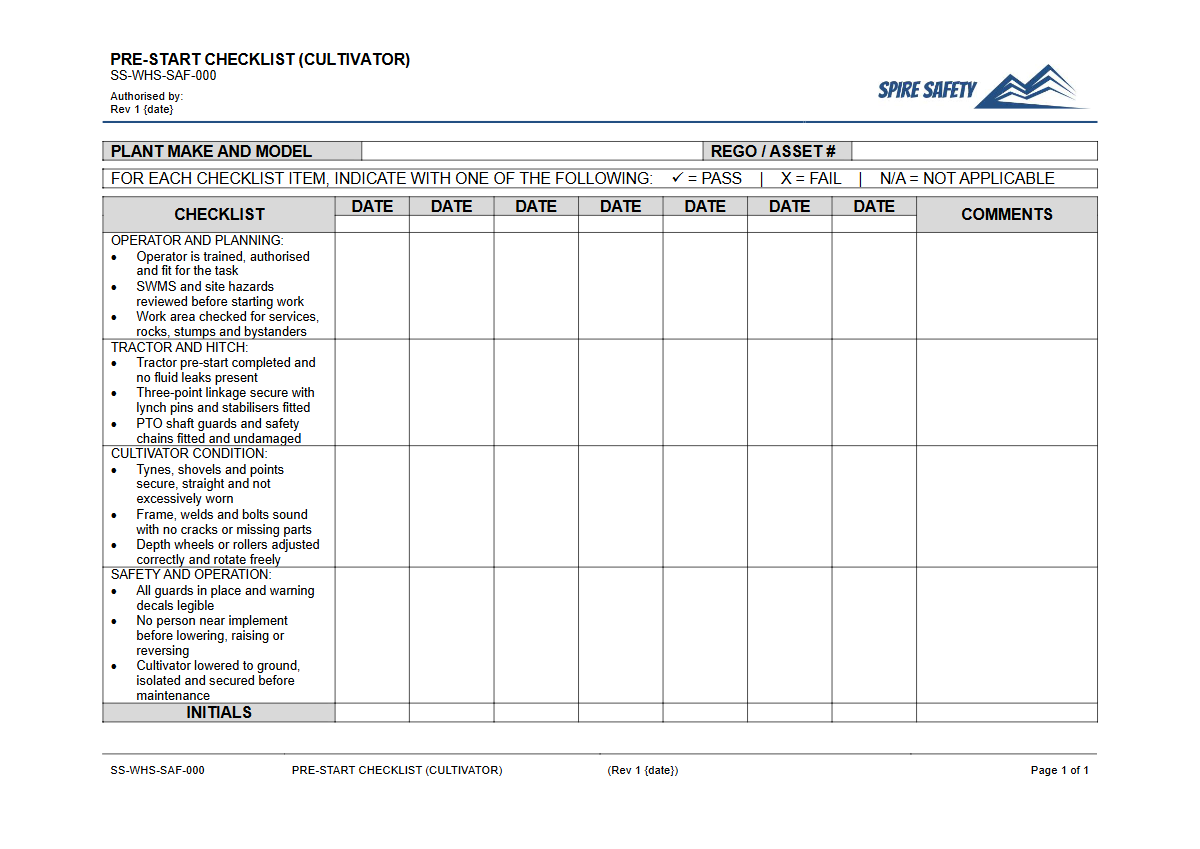
Our Free Pre-Start Checklist (Cultivator) Template provides a structured framework for conducting essential safety inspections on agricultural cultivators before use. This document helps operators in the farming, horticulture, and landscaping industries systematically identify potential hazards, defects, or damage that could compromise the safe operation of the machinery.
Using this checklist helps formalise your safety procedures and demonstrates a proactive approach to risk management.
Regular equipment inspections are a critical component of any effective plant safety program. Cultivators present significant risks, including entanglement in rotating parts (tines, shafts), hydraulic system failures, and instability on uneven ground.
This pre-start checklist prompts a thorough visual and functional inspection of critical components like guards, hydraulic hoses, tyre condition, and attachment security. Systematically conducting these checks helps meet the primary duty of care for a Person Conducting a Business or Undertaking (PCBU) to provide and maintain safe plant. Reinforce this message with our Pre-Start Checks and Plant Maintenance Toolbox Talk.
Video walkthrough
How to use the Free Pre-Start Checklist (Cultivator) Template
This resource is available for immediate download in both DOCX and PDF formats. The DOCX version is fully editable, allowing you to tailor the checklist to your specific operational needs.
The PDF is ideal for quick printing and distribution.
To implement the checklist, operators should be trained to walk through each item before starting the cultivator for their shift. The process involves visually inspecting components, checking fluid levels, and confirming safety features are functional.
Any 'No' answer, indicating a fault or defect, should trigger a clear follow-up procedure, such as reporting the issue to a supervisor and taking the equipment out of service until it is repaired by a qualified person.
Important: We have developed this template as a starting point based on general safety principles. You must customise this document to suit the specific makes and models of cultivators used in your workplace, your unique operating environment (e.g., soil type, terrain), and your existing safety procedures.
Integrating these checks into your broader WHS management systems ensures a consistent and documented approach to safety.
When to use it
A pre-start check for a cultivator should be conducted at the beginning of each day or shift before the equipment is operated for the first time. It should also be completed if a new operator takes over the machinery midway through a shift.
The purpose is to catch any faults or damage that may have occurred overnight, during transport, or during previous use.
This routine check is a preventative measure that complements, but does not replace, scheduled maintenance or more detailed risk assessments. For high-risk activities, this checklist should be used alongside documents like a Safe Work Method Statement for Concrete Truck Operation, which outlines procedural controls for managing specific hazards.
Who should use it
The primary person responsible for completing the Pre-Start Checklist is the trained and competent operator assigned to use the cultivator. They have the most immediate control over the equipment and are best placed to identify any operational abnormalities.
A signature field is included to create a formal record of who completed the inspection and when.
Supervisors and managers also have a key role. They are responsible for ensuring operators are trained to conduct the checks correctly, that the procedure is consistently followed, and that a clear process exists for reporting and rectifying defects.
Periodically reviewing completed checklists can be a valuable data source during a WHS compliance audit, helping to verify that safety procedures are being implemented effectively.
For other common agricultural or groundskeeping equipment, you might also find our Free Pre-Start Checklist (Aerator) Template useful. Spire Safety provides an extensive free WHS resources library to support your organisation's safety goals.
Common mistakes
Common mistakes to avoid
- "Pencil-whipping" the form without physically inspecting the equipment.
- Failing to take the cultivator out of service after identifying a serious defect.
- Using a generic plant checklist that doesn't cover cultivator-specific components like tines or PTOs.
- Not providing adequate training to operators on what to look for during the inspection.
Legal references
Legal considerations
The following legal requirements may be relevant to this type of work.
- Work Health and Safety Act (Harmonised) — Provides the primary duties for protecting workers and other people from work health and safety risks.
- Work Health and Safety Regulations (Harmonised) — Sets out requirements supporting the management of workplace hazards and risks.
The following codes may be relevant to this type of work.
- Managing WHS Risks Code of Practice — Provides practical guidance on identifying hazards, assessing risks and applying effective controls.
- Work Health and Safety Consultation, Cooperation and Coordination Code of Practice — Provides practical guidance on consulting workers and coordinating with other duty holders.
- Managing the Work Environment and Facilities Code of Practice — Provides practical guidance on safe work environments, workplace facilities and related controls.
Did you know
Machinery Guarding
According to Safe Work Australia, inadequate machinery guarding is a leading cause of workplace injury, with entanglement being a primary mechanism of harm in the agriculture sector.
Hydraulic Pressure
A pinhole leak in a high-pressure hydraulic hose can release fluid at a velocity high enough to penetrate skin, causing severe and often irreversible injuries. This is a critical check item.
FAQ
Frequently asked questions
01What should be included in a cultivator pre-start check?
02Why are pre-start checks for agricultural machinery like cultivators important?
03How often should cultivator pre-start checks be completed?
04Who is responsible for completing a cultivator pre-start checklist?
Share this resource
Free Pre-Start Checklist (Cultivator) Template
Browse Categories
How To Use It
- 1Download and open in Word or PDF.
- 2Replace the placeholders with your business details.
- 3Get it reviewed by a WHS specialist before rollout.
Need it customised?
Our WHS consultants can adapt this template to your site, run a gap analysis, or audit what you already have in place.
Book a Free Consultation WHS consulting servicesor call 1300 156 382