
Free Pre-Start Checklist (Deep Fryer) Template
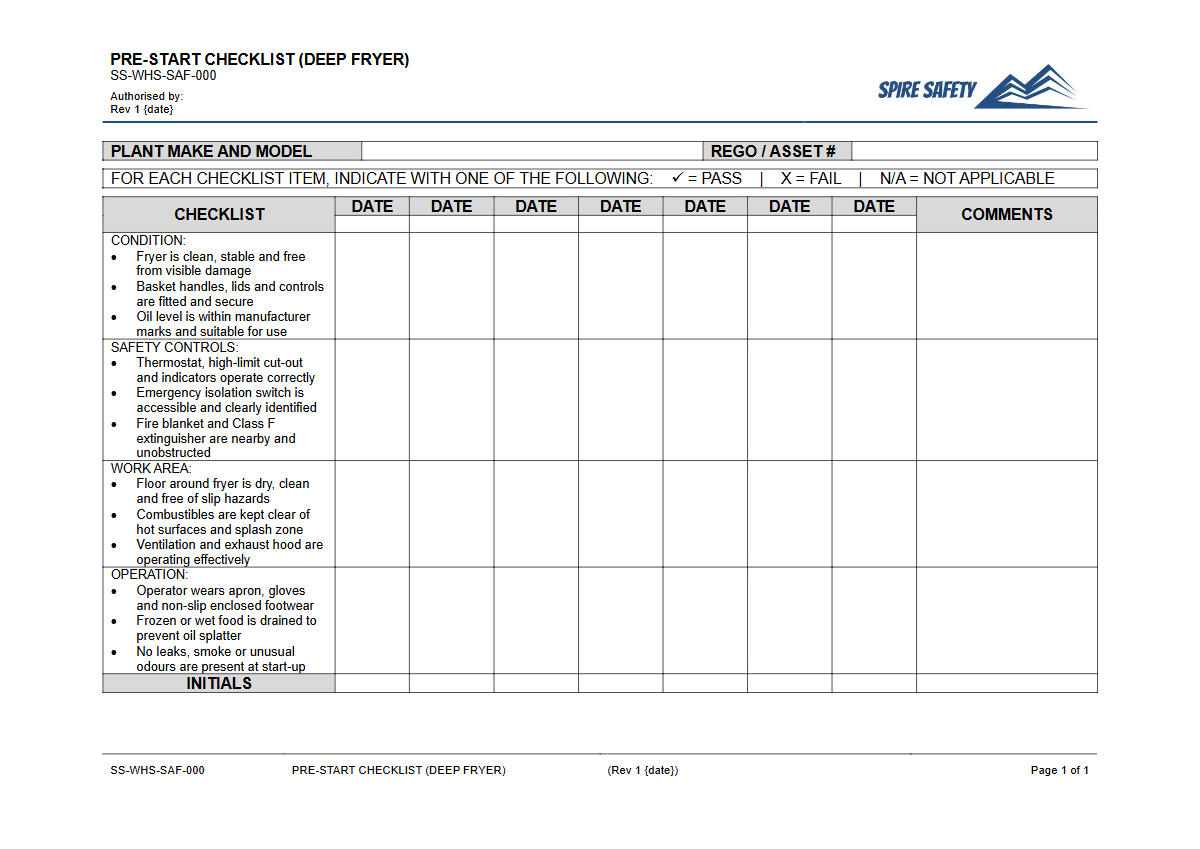
Download our Free Pre-Start Checklist (Deep Fryer) Template in DOCX and PDF. A structured starting point for formalising daily equipment safety inspections.
Free Pre-Start Checklist (Deep Fryer) Template
DOCX • 125 KB + PDF
Updated Oct 2026
No signup required
Purpose of the Free Pre-Start Checklist (Deep Fryer) Template
Operating a commercial deep fryer involves significant risks, including severe burns from hot oil, fires, and slip hazards from spills. Implementing a routine inspection process is a critical control measure to ensure the equipment is safe to use.
This Free Pre-Start Checklist (Deep Fryer) Template provides a structured format to guide workers through essential safety and operational checks before they begin cooking. Using this checklist helps to formalise your safety procedures, create a consistent record of inspections, and demonstrate due diligence in managing workplace hazards.
Regular equipment checks are a cornerstone of any proactive safety culture. They help identify potential faults or unsafe conditions before they can cause an incident, protecting your workers and your business.
Integrating these checks into daily operations can be reinforced with regular team discussions, using resources like a Pre-Start Checks and Plant Maintenance Toolbox Talk to highlight their importance.
Video walkthrough
How to Use the Free Pre-Start Checklist (Deep Fryer) Template
This resource is available as a DOCX file for easy editing and a PDF for straightforward printing. The checklist is designed as a comprehensive starting point aligned with Australian WHS principles.
To use it effectively, download the document and integrate it into your kitchen's opening procedures. The DOCX version allows you to add your company branding and modify the checklist items to suit your specific deep fryer model and workplace environment.
Important: This template is a guide only. Every workplace is different, and you must customise this document to address the specific hazards associated with your equipment, tasks, and environment.
We are not liable for any incidents that may occur from the use of this template. It is your responsibility to ensure your safety procedures are robust and tailored to your site-specific needs. A well-customised checklist is an effective tool within broader WHS management systems.
Key Inspection Points for a Deep Fryer
While your customised checklist will be more detailed, a thorough deep fryer inspection should always cover several key areas. These checks ensure the appliance is mechanically sound, clean, and ready for safe operation.
Physical and Environmental Checks
- Surrounding Area: Ensure the floor around the fryer is clean, dry, and free from grease or clutter that could cause slips, trips, or falls.
- Ventilation and Fire Suppression: Check that the exhaust hood and filters are clean and the fire suppression system is armed and accessible, with nozzles correctly positioned over the fryer.
- Cords and Connections: For electric fryers, inspect power cords for damage. For gas fryers, check that gas lines and connections appear secure and undamaged.
Operational and Safety Checks
- Oil Level and Quality: Verify the oil is at the correct level—not overfilled or underfilled. Check the oil's condition for degradation, which can lower its flash point and increase fire risk.
- Thermostat and Controls: Confirm that the thermostat and temperature controls are functioning correctly to prevent the oil from overheating.
- Safety Features: Test any available safety features, such as high-limit shut-off controls, to ensure they are operational.
- Baskets and Utensils: Inspect fryer baskets for damage and ensure long-handled utensils are available to keep staff at a safe distance from the hot oil. When changing large, heavy containers of oil, it is also important to consider risks associated with manual tasks, a topic covered in resources like the Aged Care Manual Handling Toolbox Talk.
When to Use This Pre-Start Checklist
A deep fryer pre-start check should be completed at the beginning of every shift or day before the appliance is used for the first time. It is also best practice to perform another quick inspection after the oil has been filtered or changed and after any maintenance has been performed.
Consistency is key to creating a reliable safety habit. A similar daily approach should be taken for all kitchen equipment, as outlined in our Pre-Start Checklist (Coffee Grinder) Template.
Who Should Use It
The checklist should be completed by the person operating the deep fryer, such as a chef, cook, or kitchen hand. Supervisors and managers are responsible for ensuring these checks are being performed consistently and correctly, and for reviewing the completed records.
These documents provide valuable evidence of proactive safety management during safety consultations or a formal WHS compliance auditing process. Maintaining these records helps demonstrate that the organisation is taking practical steps to manage known risks.
By embedding this checklist into your daily routine, you empower your team to take ownership of safety. For more tools to support your safety framework, browse our complete free WHS resources library for a wide range of templates and guides.
Common mistakes
Common mistakes to avoid
- Skipping the check during busy periods, assuming the equipment is fine.
- Failing to check the surrounding floor area for grease and spills, creating slip hazards.
- Not customising the generic checklist for the specific deep fryer model in use.
- Neglecting to check the functionality of the high-limit temperature shut-off, a critical fire prevention feature.
Legal references
Legal considerations
The following legal requirements may be relevant to this type of work.
- Work Health and Safety Act (Harmonised) — Provides the primary duties for protecting workers and other people from work health and safety risks.
- Work Health and Safety Regulations (Harmonised) — Sets out requirements supporting the management of workplace hazards and risks.
The following codes may be relevant to this type of work.
- Managing WHS Risks Code of Practice — Provides practical guidance on identifying hazards, assessing risks and applying effective controls.
- Work Health and Safety Consultation, Cooperation and Coordination Code of Practice — Provides practical guidance on consulting workers and coordinating with other duty holders.
- Managing the Work Environment and Facilities Code of Practice — Provides practical guidance on safe work environments, workplace facilities and related controls.
Did you know
Flash Point
The flash point of fresh cooking oil is typically around 315°C. As oil degrades with use, its flash point drops, making it ignite more easily and increasing the risk of a fire.
Common Injuries
According to Safe Work Australia data, burns are one of the most common injuries in the accommodation and food services industry, with hot oil and fats being a primary source of serious incidents.
FAQ
Frequently asked questions
01Why are pre-start checks for deep fryers important?
02What are the main hazards of using a commercial deep fryer?
03Can I use this template for any brand of deep fryer?
04How often should deep fryer oil be filtered or changed?
Share this resource
Free Pre-Start Checklist (Deep Fryer) Template
Browse Categories
How To Use It
- 1Download and open in Word or PDF.
- 2Replace the placeholders with your business details.
- 3Get it reviewed by a WHS specialist before rollout.
Need it customised?
Our WHS consultants can adapt this template to your site, run a gap analysis, or audit what you already have in place.
Book a Free Consultation WHS consulting servicesor call 1300 156 382