
Free Pre-Start Checklist (Defibrillator) Template
Ensure your Automated External Defibrillator (AED) is ready for an emergency.
Free Pre-Start Checklist (Defibrillator) Template
DOCX • 125 KB + PDF
Updated Oct 2026
No signup required
Purpose of the Free Pre-Start Checklist (Defibrillator) Template
An Automated External Defibrillator (AED) is a critical piece of first aid equipment that can save a life during a sudden cardiac arrest. However, it is only effective if it is in perfect working order when needed.
A dead battery, expired pads, or a hidden fault can have tragic consequences. This Free Pre-Start Checklist (Defibrillator) Template provides a structured framework for documenting these essential visual and functional checks, ensuring your device is always ready for an emergency.
Using a formal checklist helps your organisation demonstrate proactive safety management. It creates a consistent record of inspections, which is vital for maintaining your equipment and aligning with your duties under WHS legislation.
Formalising this process is a key component of robust WHS management systems that prioritise emergency preparedness.
Video walkthrough
How to use the Free Pre-Start Checklist (Defibrillator) Template
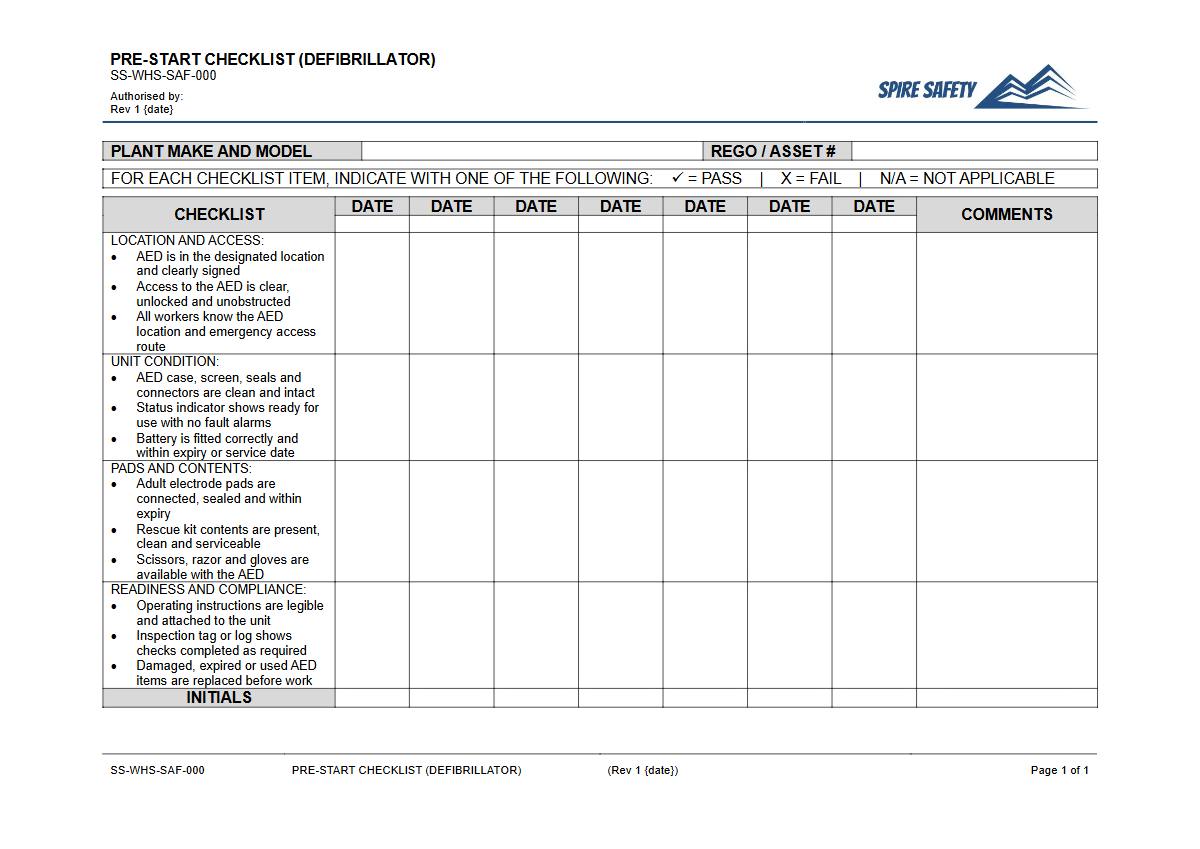
This resource is available as a DOCX file for easy editing and as a PDF for immediate printing. The checklist includes key items for inspection, such as checking the device's status indicator, ensuring pads are within their expiry date, and verifying the battery is functional.
It also provides space to record the date, inspector's name, and any corrective actions taken.
Important: It is essential that you customise this template for your specific workplace and the defibrillator models you use. We have provided a solid starting point, but you must adapt it to reflect the manufacturer's specific recommendations, your device's location, and your unique operational context and risk profile.
This includes adding serial numbers and specific check requirements from the device manual.
Regularly discussing the importance of these inspections can significantly improve workplace safety culture. You can use our Pre-Start Checks and Plant Maintenance Toolbox Talk Template to reinforce these principles with your team.
When to conduct defibrillator checks
The frequency of defibrillator checks should be determined by a workplace risk assessment and, most importantly, the manufacturer's instructions. As a general guide:
- Weekly Checks: A quick visual inspection to ensure the AED is in its designated location, is unobstructed, and that the status indicator shows it is ready for use.
- Monthly Checks: A more thorough inspection as outlined in this checklist. This includes checking the expiry dates of the electrode pads and battery, inspecting for any signs of damage or wear, and ensuring all supplementary supplies (like razors, shears, and wipes) are present.
- After Each Use: A full inspection is required after the AED has been used. This involves cleaning the unit, replacing the used electrode pads, and confirming the battery has sufficient charge for future use.
These recorded checks form part of the evidence base that can be reviewed during a formal WHS compliance auditing process.
Who should use this checklist
This checklist should be completed by a person or persons who have been designated and trained for the task. This could include:
- Designated First Aid Officers
- WHS Committee Members or Representatives
- Emergency Wardens or Response Team Members
- Facility or Office Managers
The responsible person must be familiar with the specific AED model and understand what each check entails. While modern AEDs are designed for use by untrained rescuers during an emergency, the maintenance checks require diligence and a clear understanding of the equipment's requirements.
If you need assistance defining these roles and responsibilities, engaging external WHS consulting can provide clarity and expert guidance.
In high-risk environments like health or aged care, the rigour of these checks is even more critical. Ensuring staff are trained on all aspects of emergency preparedness, including using and maintaining equipment, is paramount. This can be supported with specific training resources such as an Aged Care Manual Handling Toolbox Talk Template.
Beyond this checklist, a wide range of documents can help strengthen your safety framework. Explore our complete free WHS resources library for more templates and tools designed for Australian workplaces.
Common mistakes
Common mistakes to avoid
- Ignoring the expiry dates for defibrillator pads and batteries.
- Storing the AED in a locked cabinet or an inaccessible location.
- Failing to replace used pads and check the device after an incident.
- Assuming the device is functional simply because the green light is flashing, without performing periodic detailed checks.
Legal references
Legal considerations
The following legal requirements may be relevant to this type of work.
- Work Health and Safety Act (Harmonised) — Provides the primary duties for protecting workers and other people from work health and safety risks.
- Work Health and Safety Regulations (Harmonised) — Sets out requirements supporting the management of workplace hazards and risks.
The following codes may be relevant to this type of work.
- Managing WHS Risks Code of Practice — Provides practical guidance on identifying hazards, assessing risks and applying effective controls.
- Work Health and Safety Consultation, Cooperation and Coordination Code of Practice — Provides practical guidance on consulting workers and coordinating with other duty holders.
- Managing the Work Environment and Facilities Code of Practice — Provides practical guidance on safe work environments, workplace facilities and related controls.
Did you know
The Survival Window
For every minute that passes without defibrillation, the chance of survival from sudden cardiac arrest decreases by about 10%.
User-Friendly Design
Modern Automated External Defibrillators (AEDs) provide clear voice prompts and visual guides, making them usable by individuals with no prior medical training.
FAQ
Frequently asked questions
01How often should a defibrillator be checked in a workplace?
02What should a basic defibrillator checklist include?
03Is special training required to check a defibrillator?
04Where is the best place to keep a workplace defibrillator?
Share this resource
Free Pre-Start Checklist (Defibrillator) Template
Browse Categories
How To Use It
- 1Download and open in Word or PDF.
- 2Replace the placeholders with your business details.
- 3Get it reviewed by a WHS specialist before rollout.
Need it customised?
Our WHS consultants can adapt this template to your site, run a gap analysis, or audit what you already have in place.
Book a Free Consultation WHS consulting servicesor call 1300 156 382