
Free Pre-Start Checklist (Dental Chair) Template
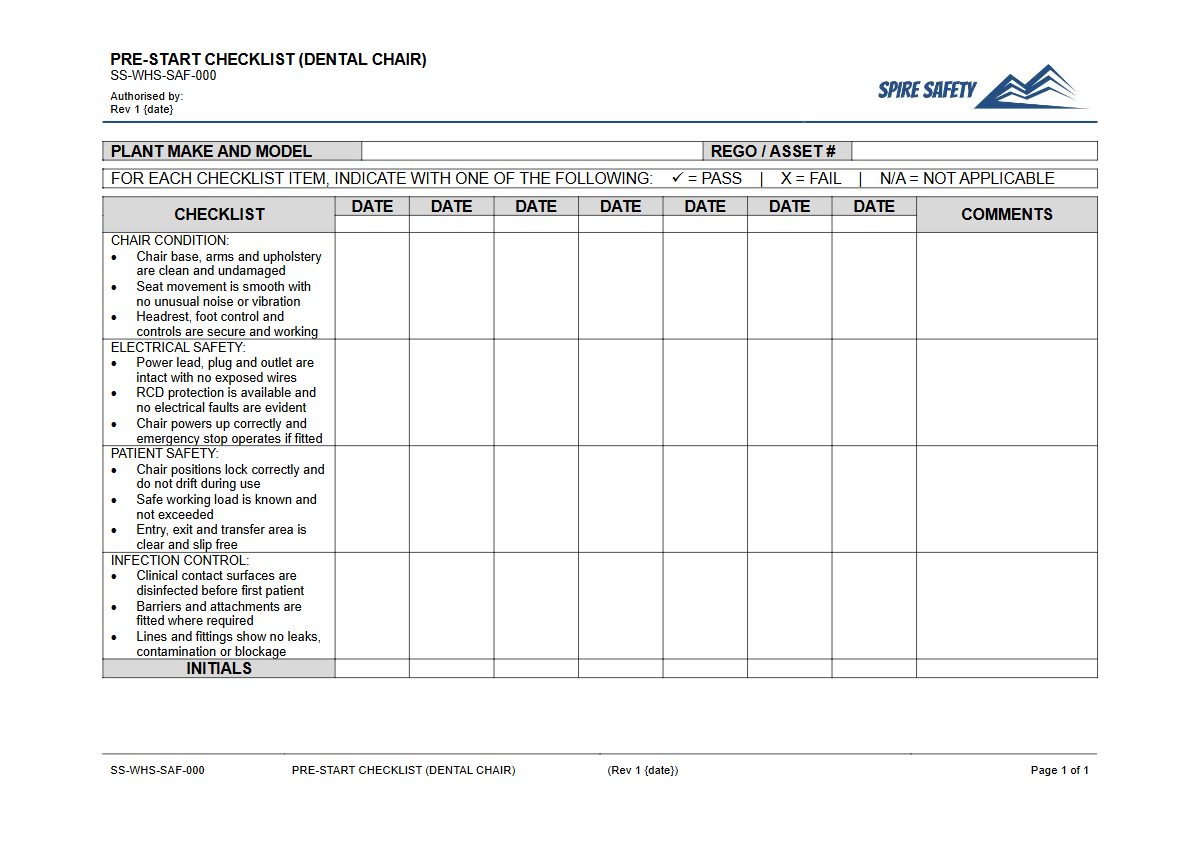
Download our Free Pre-Start Checklist (Dental Chair) Template in Word and PDF. A structured starting point for formalising your dental equipment safety checks.
Free Pre-Start Checklist (Dental Chair) Template
DOCX • 125 KB + PDF
Updated Oct 2026
No signup required
Purpose of the Free Pre-Start Checklist (Dental Chair) Template
Ensuring the safety and functionality of specialised equipment is a critical part of daily operations in any dental practice. This Free Pre-Start Checklist (Dental Chair) Template provides a structured starting point for dental practitioners and assistants to formalise daily equipment inspections, helping to identify potential hazards before they cause harm to patients or staff.
A consistent pre-start process helps maintain equipment in good working order, prevents unexpected breakdowns during procedures, and demonstrates a proactive approach to workplace health and safety.
Using this template helps create a verifiable record that routine checks are being performed. This documentation is invaluable for maintenance scheduling, incident investigations, and demonstrating due diligence.
The goal is to embed safety checks into the daily workflow, making them a non-negotiable part of opening the clinic. For a broader discussion on the importance of these routines, a Pre-Start Checks and Plant Maintenance Toolbox Talk can help reinforce these principles with your team.
A systematic pre-start check is a fundamental component of a safe system of work. It helps your practice meet its duties under Australian WHS laws to provide and maintain safe plant and equipment.
By identifying and controlling risks associated with the dental chair—such as electrical faults, hydraulic failures, or patient positioning issues—you protect both your team and your patients. These daily checks are a practical element within larger comprehensive WHS management systems that protect the entire organisation.
Video walkthrough
How to use the Free Pre-Start Checklist (Dental Chair) Template
This Pre-Start Checklist is designed for ease of use. First, download the template in your preferred format (DOCX for easy editing or PDF for straightforward printing).
The next critical step is to adapt the checklist to the specific make and model of the dental chairs used in your practice. Different chairs have unique features, such as integrated intraoral cameras, specific lighting systems, or computerised controls, which should have their own check items added.
Walk through the operation of your chair and list all key functions and safety features. This includes checking the base for stability, testing the full range of motion (height, backrest tilt, and trendelenburg position), verifying foot and hand controls, and ensuring emergency stops are functional.
Also, inspect upholstery for tears that could pose an infection control risk and check that water, air, and suction lines are secure and operating correctly. When customising, consider patient-specific risks, a topic also relevant to resources like the Aged Care Manual Handling Toolbox Talk.
Once customised, train all relevant staff on how to complete the checklist thoroughly and consistently. The checklist should be completed, signed, and dated at the beginning of each day or shift before the first patient.
Establish a clear procedure for reporting and addressing any faults identified during the check. Defective equipment should be immediately tagged out of service and reported to the practice manager or designated maintenance coordinator for repair.
IMPORTANT: This is a template only
This document is a template and not a complete solution. It is designed to be a starting point that you must adapt to your specific workplace, equipment, and operational risks.
We are not liable for any incidents or compliance breaches that may arise from the use of this template. It is your responsibility to ensure your pre-start process is comprehensive and addresses all relevant hazards and legal requirements for your practice.
When to use it
A dental chair pre-start check should be conducted before the equipment is used for the first time each day or at the beginning of every clinical shift. This frequency ensures that any issues that may have developed overnight or between shifts are caught before a patient is in the chair.
Integrating the check into the clinic's opening procedures helps build it as a consistent habit.
Documented checklists should be filed and retained as part of your safety management records. These records provide evidence of your safety procedures and can be crucial during internal reviews or external assessments like WHS compliance audits. They also create a valuable maintenance history for each piece of equipment, helping to identify recurring problems.
Who should use it
This checklist should be used by any person who operates the dental chair or is responsible for preparing the treatment room. This typically includes:
- Dental Assistants
- Oral Health Therapists
- Hygienists
- Dentists
- Practice Managers responsible for WHS oversight
Ultimately, the Person Conducting a Business or Undertaking (PCBU), such as the clinic owner, is responsible for ensuring that safe systems of work, including equipment inspections, are implemented and followed. This template serves as a practical tool to help meet that obligation. For more tools to support your safety framework, you can browse our complete free WHS resources library.
Common mistakes
Common mistakes to avoid
- Ignoring minor operational faults, like slow chair movement or flickering lights, which can be early signs of a larger failure.
- Using a generic checklist that doesn't account for the specific features and functions of the chair model in use.
- Skipping checks during busy periods, which undermines the entire purpose of a preventative safety routine.
- Failing to document identified faults or not having a clear process for tagging equipment out of service for repair.
Legal references
Legal considerations
The following legal requirements may be relevant to this type of work.
- Work Health and Safety Act (Harmonised) — Provides the primary duties for protecting workers and other people from work health and safety risks.
- Work Health and Safety Regulations (Harmonised) — Sets out requirements supporting the management of workplace hazards and risks.
The following codes may be relevant to this type of work.
- Managing WHS Risks Code of Practice — Provides practical guidance on identifying hazards, assessing risks and applying effective controls.
- Work Health and Safety Consultation, Cooperation and Coordination Code of Practice — Provides practical guidance on consulting workers and coordinating with other duty holders.
- Managing the Work Environment and Facilities Code of Practice — Provides practical guidance on safe work environments, workplace facilities and related controls.
Did you know
Ergonomic Impact
Poorly adjusted or malfunctioning dental chairs are a significant contributor to musculoskeletal disorders (MSDs) among dental professionals. Regular checks ensure ergonomic features are working correctly, protecting the long-term health of the clinical team.
Infection Control Link
A damaged or torn upholstery on a dental chair is not just a cosmetic issue; it creates crevices where bacteria and viruses can thrive, making proper disinfection difficult and posing a significant infection control risk.
FAQ
Frequently asked questions
01Why are pre-start checks for dental chairs important?
02How often should a dental chair pre-start check be done?
03What key items should be on a dental chair checklist?
04Can this template be used for other dental equipment?
Share this resource
Free Pre-Start Checklist (Dental Chair) Template
Browse Categories
How To Use It
- 1Download and open in Word or PDF.
- 2Replace the placeholders with your business details.
- 3Get it reviewed by a WHS specialist before rollout.
Need it customised?
Our WHS consultants can adapt this template to your site, run a gap analysis, or audit what you already have in place.
Book a Free Consultation WHS consulting servicesor call 1300 156 382