
Free Pre-Start Checklist (Escalator) Template
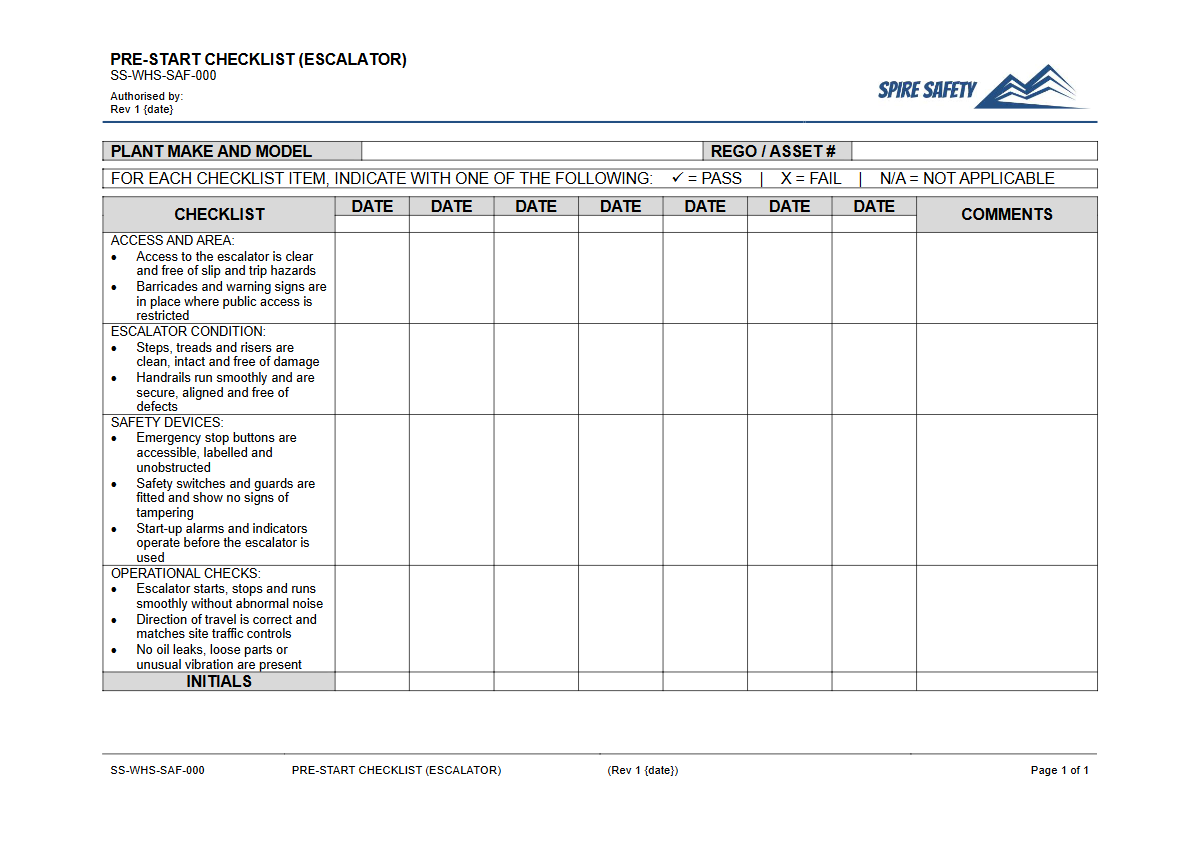
Download our Free Pre-Start Checklist (Escalator) Template to formalise daily equipment inspections. This structured DOCX & PDF helps manage risks.
Free Pre-Start Checklist (Escalator) Template
DOCX • 125 KB + PDF
Updated Oct 2026
No signup required
Purpose of the Free Pre-Start Checklist (Escalator) Template
Operating an escalator involves significant risks, from slips and trips to more serious entrapment hazards. A systematic pre-start inspection is a fundamental safety measure for any person conducting a business or undertaking (PCBU).
This Free Pre-Start Checklist (Escalator) Template provides a structured starting point for formalising your daily safety checks, helping you meet your duty of care under Australian WHS laws.
Regularly using this checklist helps to proactively identify potential faults, wear and tear, or environmental hazards before they lead to incidents or costly breakdowns. It creates a documented record of due diligence and forms a critical component of a comprehensive WHS management system. By standardising the inspection process, you ensure that key safety features like emergency stops, comb plates, and handrails are verified as functional every day.
Video walkthrough
How to use the Free Pre-Start Checklist (Escalator) Template
This template is designed for easy adoption into your safety procedures. First, download the DOCX file and adapt it to your specific workplace.
It is crucial to add, remove, or modify checklist items to reflect the make, model, and location of your escalators. This customisation ensures the checks are relevant and effective.
Once customised, train the relevant personnel on how to complete the inspection accurately. This training should be practical and highlight what constitutes a defect.
The completed checklists should be filed as a record of your safety activities, which can be reviewed during WHS compliance audits to verify that procedures are being followed. Any identified faults must be reported immediately through your organisation's maintenance and hazard reporting channels.
Customisation is Essential
Please note: This document is a template and must be customised to suit the specific make and model of the escalator, your operational environment, and relevant state or territory WHS regulations. We are not responsible for the implementation of this document, and it is your responsibility to ensure it is fit for your specific purpose.
When to use it
The escalator pre-start checklist should be completed before the equipment is made available for public or worker use at the start of each day or shift. It should also be used after any period of shutdown, maintenance, or repair work to ensure the escalator is safe to return to service.
Consistent daily checks are the best way to catch developing issues early.
Regular safety discussions also reinforce the importance of these checks. You can use a Pre-Start Checks and Plant Maintenance Toolbox Talk to brief staff on the procedure, discuss recent findings, and emphasise the importance of not operating faulty equipment.
Who should use it
This checklist should be used by a competent person who has been authorised and trained to inspect the escalator. This may include:
- Facilities Managers
- Building Operations Staff
- Qualified Maintenance Technicians
- Designated and Trained Operators
The person performing the check must have sufficient knowledge to recognise deviations from normal operating conditions. If your team requires assistance in developing safe operating procedures or competency frameworks, our WHS consulting services can provide tailored support for your organisation.
By equipping the right people with the right tools, you foster a proactive safety culture. For more templates and safety guides, you can browse our complete free WHS resources library.
Common mistakes
Common mistakes to avoid
- "Pencil-whipping" the checklist without actually performing the checks.
- Failing to report and rectify identified defects in a timely manner.
- Using a generic checklist that doesn't cover the specific hazards of the escalator model.
- Not training staff on how to properly conduct the inspection and what to look for.
Legal references
Legal considerations
The following legal requirements may be relevant to this type of work.
- Work Health and Safety Act (Harmonised) — Provides the primary duties for protecting workers and other people from work health and safety risks.
- Work Health and Safety Regulations (Harmonised) — Sets out requirements supporting the management of workplace hazards and risks.
The following codes may be relevant to this type of work.
- Managing WHS Risks Code of Practice — Provides practical guidance on identifying hazards, assessing risks and applying effective controls.
- Work Health and Safety Consultation, Cooperation and Coordination Code of Practice — Provides practical guidance on consulting workers and coordinating with other duty holders.
- Managing the Work Environment and Facilities Code of Practice — Provides practical guidance on safe work environments, workplace facilities and related controls.
Did you know
Escalator Origins
The first working escalator was installed as a novelty ride at the Old Iron Pier at Coney Island, New York, in 1896. It was a moving staircase with a conveyor belt-style design.
Handrail Speed
Escalator handrails are designed to move at the same speed or slightly faster than the steps. This encourages passengers to keep their hands on the rail and helps maintain balance.
FAQ
Frequently asked questions
01What should be included in an escalator pre-start check?
02How often should an escalator pre-start inspection be done?
03Who is responsible for conducting escalator pre-start checks?
04Is this escalator checklist a legal document?
Share this resource
Free Pre-Start Checklist (Escalator) Template
Browse Categories
How To Use It
- 1Download and open in Word or PDF.
- 2Replace the placeholders with your business details.
- 3Get it reviewed by a WHS specialist before rollout.
Need it customised?
Our WHS consultants can adapt this template to your site, run a gap analysis, or audit what you already have in place.
Book a Free Consultation WHS consulting servicesor call 1300 156 382