
Free Pre-Start Checklist (Excavator) Template
Download our Free Pre-Start Checklist (Excavator) Template.
Free Pre-Start Checklist (Excavator) Template
DOCX • 125 KB + PDF
Updated Oct 2026
No signup required
Purpose of the Free Pre-Start Checklist (Excavator) Template
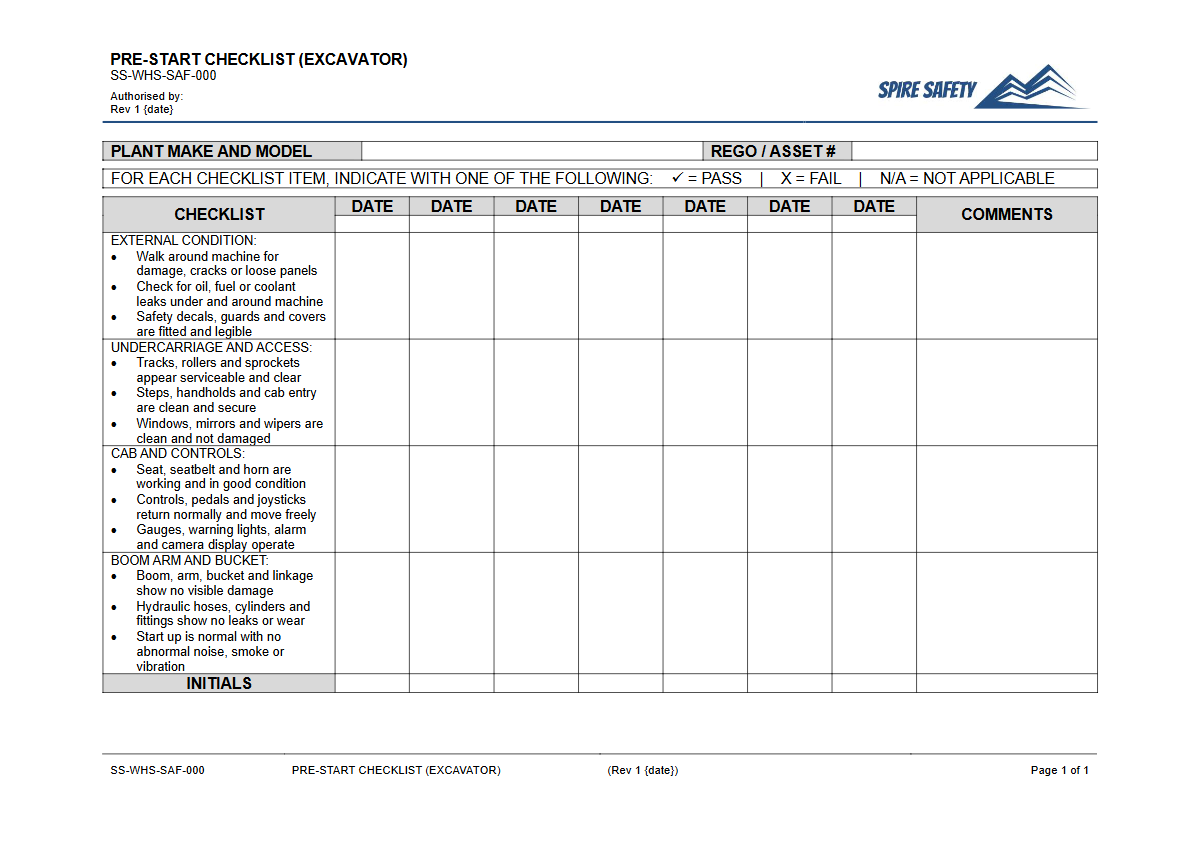
A systematic pre-start inspection is a critical safety measure for any high-risk plant, and excavators are no exception. This Free Pre-Start Checklist (Excavator) Template provides a structured framework to guide operators through a comprehensive daily inspection before work begins.
Using a formal checklist helps standardise safety procedures, ensuring that no critical checks are overlooked. It formalises the process of identifying, documenting, and reporting potential faults or damage that could lead to equipment failure, property damage, or serious injury.
Consistent use helps create a historical record of the machine’s condition, which is invaluable for maintenance planning and demonstrating due diligence.
Integrating these daily checks into your broader safety framework is essential for effective risk management. A robust safety system ensures that procedures like pre-start inspections are consistently implemented, monitored, and improved upon.
Properly managed, these checklists become a key component of your overall WHS management system, contributing to a safer work environment for everyone on site.
Video walkthrough
How to use the Free Pre-Start Checklist (Excavator) Template
This template is a comprehensive starting point designed to be adapted to your specific operational needs. Follow these steps to implement it effectively:
- Download: Select the DOCX or PDF version of the checklist.
- Customise: This is the most important step. Modify the checklist to include items specific to the make, model, and configuration of your excavator(s). Consider the unique attachments used (e.g., buckets, hammers, grabs), the working environment, and any manufacturer-specific recommendations. Please note: we provide this template as a starting point. You must customise it to suit the specific equipment, hazards, and procedures in your workplace to ensure it is fit for purpose.
- Train: Ensure all operators are trained on how to properly complete the checklist, what each item means, and the procedure for reporting defects.
- Implement: Integrate the checklist into your daily routine. Establish a clear process for where completed forms are stored and who reviews them.
The principles of a pre-start check apply to a wide range of machinery, from construction equipment to forestry vehicles. The process of inspecting critical components before use is a universal safety practice, similar to what you would find in our free checklist for forwarders.
When to use it
An excavator pre-start check must be completed before the start of every shift or before the equipment is used for the first time on any given day. It is a proactive inspection intended to catch issues before they escalate.
It should also be performed after any significant maintenance event or if there is reason to believe the machine may have been damaged. Establishing a non-negotiable routine where the check is the first task of the day helps embed this critical safety behaviour into your organisation's culture.
These daily checks are distinct from, but complementary to, periodic maintenance schedules. While a mechanic performs in-depth servicing at set intervals, the operator's daily check is the first line of defence against hazards arising from wear and tear or sudden damage. For other types of high-risk plant, similar daily checks are necessary, such as those detailed in our free checklist for floor saws.
Who should use it
The pre-start checklist should be completed by a competent person—typically the trained and authorised operator assigned to the excavator for that shift. They have the most hands-on familiarity with the machine's normal operation and are best placed to notice subtle changes, strange noises, or minor faults.
Supervisors also have a role in verifying that the checks are being completed correctly and that any reported issues are addressed promptly. The Person Conducting a Business or Undertaking (PCBU) holds the ultimate responsibility for providing and maintaining safe plant and systems of work.
Ensuring these procedures are followed correctly is a key part of workplace safety assurance. Periodically reviewing completed checklists and observing operators can be integrated into regular site safety inspections and formal WHS compliance auditing to verify the system is working as intended. For organisations needing assistance in establishing such procedures, engaging external expertise can be beneficial. Expert advisors can provide targeted support for your specific operational needs and help develop robust safety protocols, a service covered under general WHS consulting. You can also explore our full free WHS resources library for other useful templates and guides.
Common mistakes
Common mistakes to avoid
- Using a generic checklist that doesn't match the specific excavator model and its attachments.
- "Pencil-whipping" the form without physically inspecting each item.
- Failing to report, isolate, and tag out faulty equipment identified during the check.
- Poor record-keeping, making it difficult to track defect history or prove due diligence.
Legal references
Legal considerations
The following legal requirements may be relevant to this type of work.
- Work Health and Safety Act (Harmonised) — Provides the primary duties for protecting workers and other people from work health and safety risks.
- Work Health and Safety Regulations (Harmonised) — Sets out requirements supporting the management of workplace hazards and risks.
The following codes may be relevant to this type of work.
- Managing WHS Risks Code of Practice — Provides practical guidance on identifying hazards, assessing risks and applying effective controls.
- Work Health and Safety Consultation, Cooperation and Coordination Code of Practice — Provides practical guidance on consulting workers and coordinating with other duty holders.
- Managing the Work Environment and Facilities Code of Practice — Provides practical guidance on safe work environments, workplace facilities and related controls.
Did you know
Quick-Hitch Dangers
Unintended detachment of buckets from quick-hitches has been a major cause of serious incidents in Australia. A pre-start check must always include verifying the quick-hitch pins and safety systems are securely engaged.
Hydraulic Pressure
Excavator hydraulic systems operate at extreme pressures. A pinhole leak can inject hydraulic fluid into the skin, causing severe injury or death, which highlights the importance of checking all hoses and fittings for leaks.
FAQ
Frequently asked questions
01What should be included in an excavator pre-start checklist?
02How often should an excavator pre-start check be done?
03Who is responsible for ensuring excavator pre-starts are completed?
04Is a digital pre-start checklist better than a paper one?
Share this resource
Free Pre-Start Checklist (Excavator) Template
Browse Categories
How To Use It
- 1Download and open in Word or PDF.
- 2Replace the placeholders with your business details.
- 3Get it reviewed by a WHS specialist before rollout.
Need it customised?
Our WHS consultants can adapt this template to your site, run a gap analysis, or audit what you already have in place.
Book a Free Consultation WHS consulting servicesor call 1300 156 382