
Free Pre-Start Checklist (Hydrant Pump) Template
Formalise your safety checks with our Free Pre-Start Checklist (Hydrant Pump) Template.
Free Pre-Start Checklist (Hydrant Pump) Template
DOCX • 125 KB + PDF
Updated Oct 2026
No signup required
Purpose of the Free Pre-Start Checklist (Hydrant Pump) Template
Hydrant pumps are a critical component of a facility’s fire protection system. Ensuring they are operational and ready for immediate use is a non-negotiable aspect of workplace safety.
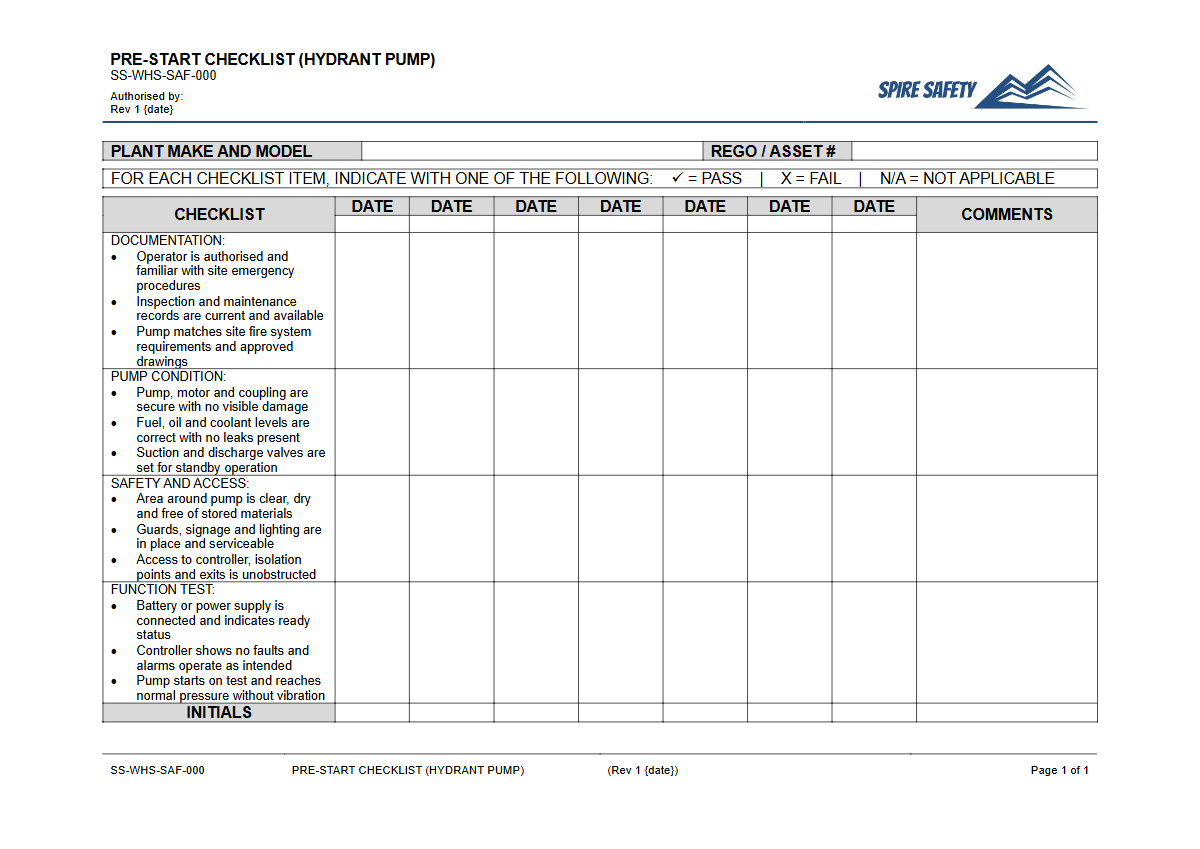
This free Pre-Start Checklist (Hydrant Pump) Template provides a structured framework for operators to conduct consistent and thorough checks before routine testing or maintenance. Its primary purpose is to help identify potential faults, leaks, or damage that could compromise the pump's performance during an emergency.
Using a formal checklist helps create a verifiable record of inspections, demonstrates due diligence, and supports a proactive safety culture within your organisation.
The checklist encourages a methodical inspection of key components, including the pump casing, gauges, valves, power supply, and fuel levels (for diesel engines). Systematically identifying and addressing these issues early helps prevent catastrophic failures and ensures the equipment remains in a state of readiness.
This process aligns with the fundamental WHS duty to identify hazards and manage risks. For a more comprehensive look at hazards associated with this type of equipment, consider reviewing our free Water Pump Risk Assessment template.
Video walkthrough
How to use the Free Pre-Start Checklist (Hydrant Pump) Template
This document serves as a comprehensive starting point, designed to be adapted to your specific operational needs. To use the template effectively, download the DOCX version and begin by customising it with your company’s branding and specific details.
Walk through the checklist items at the location of your hydrant pump system, adding, removing, or modifying checks to match your particular model, configuration (e.g., electric, diesel), and site-specific requirements. It is critical that you do not use this template as-is; we have created it as a guide, and it must be customised to your workplace to be effective.
Once tailored, the checklist should be integrated into your standard procedures. Operators should be trained on how to correctly perform each check and what actions to take if a fault is discovered.
This might involve tagging the equipment out of service, notifying a supervisor, or initiating a maintenance request. For a complete operational picture, this checklist can be used alongside other procedural documents, such as our free Pump SOP (Safe Operating Procedure) template, to ensure a safe and documented system of work.
When to use it
A hydrant pump pre-start checklist should be completed before any planned operation or routine test run of the pump. For fire hydrant systems, this is often part of a scheduled maintenance and testing program mandated by Australian Standards (such as AS 1851).
Integrating this check into your weekly, monthly, or other periodic testing routines ensures that the equipment's condition is verified before it is pressurised and operated. It helps confirm the pump is safe to start and won't be damaged during the test.
For a valuable training resource on this topic, consider using our Pre-Start Checks and Plant Maintenance Toolbox Talk to reinforce the importance of these routines with your team.
Who should use it
This checklist is designed for use by competent personnel responsible for the site's fire protection systems. This may include facility maintenance staff, specialist fire service technicians, or designated operators who have received specific training on the hydrant pump system.
Supervisors and WHS managers can also use the completed checklists as a tool for auditing and verifying that inspection protocols are being followed correctly and consistently. Embedding such tools within a broader safety framework is key to achieving and maintaining high standards of workplace safety.
A well-structured approach is often part of a comprehensive WHS management system, which formalises all safety-related processes and responsibilities.
To ensure these procedures remain effective over time and continue to meet regulatory expectations, organisations should consider incorporating them into a program of regular WHS compliance auditing. This independent review helps identify any gaps between documented procedures and actual practice on the ground, providing valuable insights for continual improvement. This helps ensure that critical safety equipment like hydrant pumps are always managed effectively.
Common mistakes
Common mistakes to avoid
- Using a generic checklist without customising it for the specific pump model and site conditions.
- Failing to report and action minor faults or deficiencies discovered during the inspection.
- 'Pencil-whipping' the form by ticking boxes without physically performing the checks.
- Not providing adequate training to operators on what each check entails and why it is important.
Legal references
Legal considerations
The following legal requirements may be relevant to this type of work.
- Work Health and Safety Act (Harmonised) — Provides the primary duties for protecting workers and other people from work health and safety risks.
- Work Health and Safety Regulations (Harmonised) — Sets out requirements supporting the management of workplace hazards and risks.
The following codes may be relevant to this type of work.
- Managing WHS Risks Code of Practice — Provides practical guidance on identifying hazards, assessing risks and applying effective controls.
- Work Health and Safety Consultation, Cooperation and Coordination Code of Practice — Provides practical guidance on consulting workers and coordinating with other duty holders.
- Managing the Work Environment and Facilities Code of Practice — Provides practical guidance on safe work environments, workplace facilities and related controls.
Did you know
Australian Standards
Australian Standard AS 1851 mandates detailed and frequent routine servicing for fire protection systems, including hydrant pumps. These prescriptive requirements are designed to ensure this life-saving equipment functions as intended when needed.
Diesel vs. Electric
Diesel-driven hydrant pumps are often installed as a backup or primary system where a reliable electrical supply cannot be guaranteed. Their pre-start checks include unique items like verifying fuel levels, battery condition, and engine oil, which are not relevant to electric pumps.
FAQ
Frequently asked questions
01What is a hydrant pump pre-start checklist?
02Why are pre-start checks on hydrant pumps important?
03Can this template be used for all types of fire pumps?
04How often should a hydrant pump be tested?
Share this resource
Free Pre-Start Checklist (Hydrant Pump) Template
Browse Categories
How To Use It
- 1Download and open in Word or PDF.
- 2Replace the placeholders with your business details.
- 3Get it reviewed by a WHS specialist before rollout.
Need it customised?
Our WHS consultants can adapt this template to your site, run a gap analysis, or audit what you already have in place.
Book a Free Consultation WHS consulting servicesor call 1300 156 382