
Free Pre-Start Checklist (Ice Crusher) Template
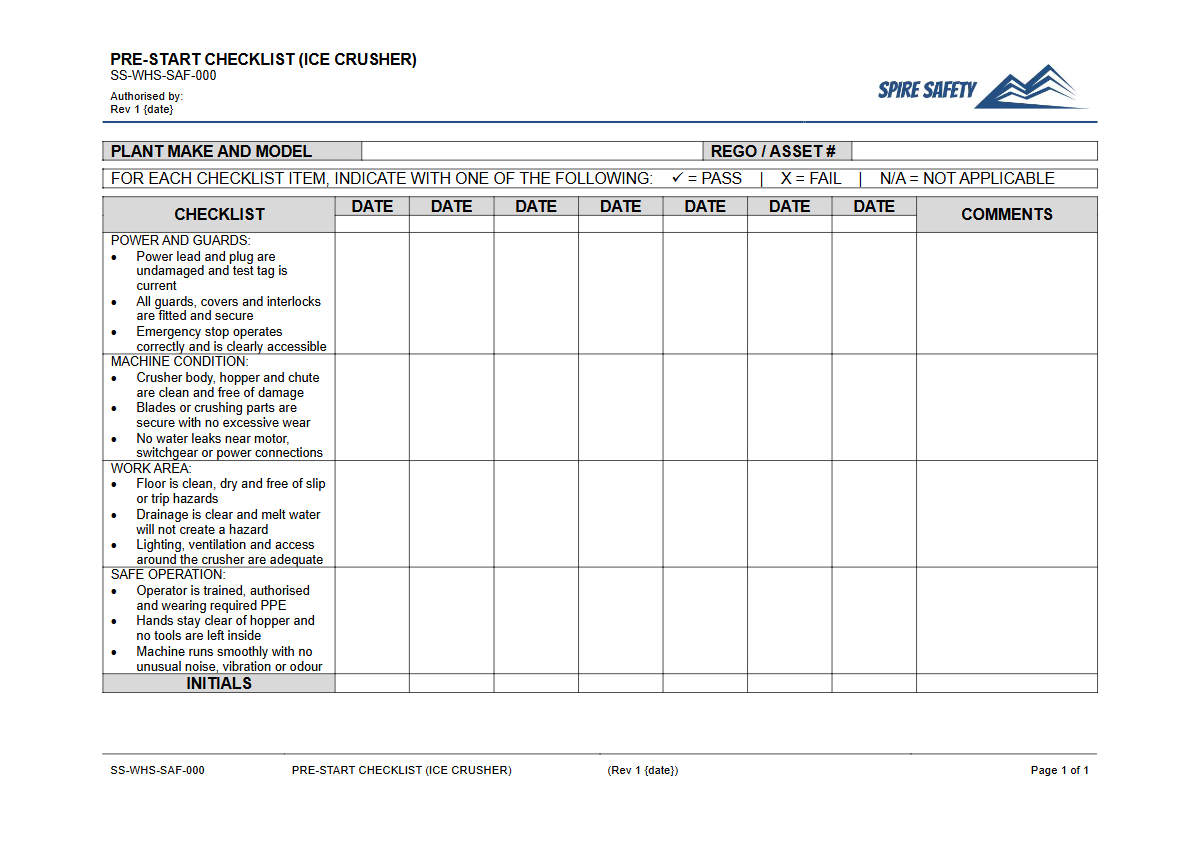
Download our Free Pre-Start Checklist (Ice Crusher) Template in DOCX and PDF. A structured starting point for formalising daily equipment safety checks.
Free Pre-Start Checklist (Ice Crusher) Template
DOCX • 125 KB + PDF
Updated Oct 2026
No signup required
Purpose of the Free Pre-Start Checklist (Ice Crusher) Template
Regularly inspecting equipment is a fundamental requirement for maintaining a safe workplace, particularly in fast-paced hospitality and food service environments. This Free Pre-Start Checklist (Ice Crusher) Template provides a structured format for operators to verify that an ice crusher is safe to use before they begin a shift.
Using this checklist helps formalise the inspection process, moving beyond ad-hoc checks to a documented, consistent safety procedure. It acts as a tool to identify potential defects, damage, or cleanliness issues before they can lead to equipment failure, contamination, or worker injury.
By implementing routine pre-start inspections, organisations can demonstrate a proactive approach to risk management. These checks are a simple yet effective way to embed safety into daily operations.
For a deeper understanding of the principles behind these checks, our Pre-Start Checks and Plant Maintenance Toolbox Talk provides valuable context for training your team on the importance of their role in equipment safety.
Video walkthrough
How to use the Free Pre-Start Checklist (Ice Crusher) Template
This checklist is provided in both DOCX and PDF formats for your convenience. The DOCX file is fully editable, allowing you to tailor the content to your specific needs.
The PDF version is ready for immediate printing and use. Key inspection points include checking the power cord and plug for damage, ensuring safety guards and interlocks are in place and functional, verifying the blades are sharp and free from nicks, and confirming the machine is clean and sanitised.
Important: This template is a starting point. It is essential that you customise it to align with the specific make and model of your ice crusher, your workplace's unique operational risks, and any specific requirements from the manufacturer.
We cannot guarantee it covers every possible hazard for your situation. Just as with our Free Pre-Start Checklist (Coffee Grinder) Template, this resource should be adapted to become an integral part of your safety procedures for small appliances.
Effective pre-start checks do not exist in isolation. They are a critical component of a comprehensive safety framework.
Integrating this checklist into your daily routines helps support your broader WHS management systems, providing tangible evidence that safety procedures are being consistently applied at an operational level.
When to use the Pre-Start Checklist
The Pre-Start Checklist for an ice crusher should be completed before the first use of the machine on any given day or shift. This ensures that any issues that may have developed overnight or between shifts are identified before the equipment is put into operation.
For equipment that is used infrequently, the check should be performed before each use.
Incorporating this check into the daily opening procedures for a bar, cafe, or kitchen is an effective way to ensure it becomes a routine habit. It can be run alongside other opening tasks and discussed briefly in daily team huddles.
Using a tool like our Free Pre-Start Meeting Template can help formalise these daily safety conversations and ensure all team members are aware of the status of critical equipment.
Who should use the Pre-Start Checklist
The person operating the ice crusher is typically responsible for completing the Pre-Start Checklist. This empowers workers to take ownership of the safety of their own tools and work environment.
It ensures that the individual most familiar with the day-to-day performance of the machine is the one inspecting it. They are best placed to notice subtle changes in performance, noise, or condition that might indicate a developing fault.
Supervisors and managers are responsible for ensuring these checks are being completed correctly and consistently. They must also take action to rectify any faults or defects identified during the inspection, which includes taking the equipment out of service until it can be safely repaired.
The completed checklists serve as a record that can be reviewed during safety meetings or internal audits. These records are often examined during a formal WHS compliance auditing process to verify that safety procedures are being followed as required.
If you need assistance integrating this process or developing more comprehensive safety documentation for your workplace, engaging professional support can be highly beneficial. Spire Safety's WHS consulting services can help you refine your procedures and ensure they are practical and effective for your specific business needs.
You can also explore our free WHS resources library for a wide range of other templates and guides to support your safety management efforts.
Common mistakes
Common mistakes to avoid
- Failing to disconnect the power source before cleaning or attempting to clear a jam.
- Using hands or improper utensils to clear ice blockages, leading to contact with blades.
- Ignoring unusual noises or vibrations, which often indicate a mechanical fault.
- Neglecting regular cleaning and sanitisation, allowing mould and bacteria to grow.
Legal references
Legal considerations
The following legal requirements may be relevant to this type of work.
- Work Health and Safety Act (Harmonised) — Provides the primary duties for protecting workers and other people from work health and safety risks.
- Work Health and Safety Regulations (Harmonised) — Sets out requirements supporting the management of workplace hazards and risks.
The following codes may be relevant to this type of work.
- Managing WHS Risks Code of Practice — Provides practical guidance on identifying hazards, assessing risks and applying effective controls.
- Work Health and Safety Consultation, Cooperation and Coordination Code of Practice — Provides practical guidance on consulting workers and coordinating with other duty holders.
- Managing the Work Environment and Facilities Code of Practice — Provides practical guidance on safe work environments, workplace facilities and related controls.
Did you know
Hidden Contamination
Ice machines and crushers are a common source of health code violations. A study found that bacteria and mould, including E. coli, can thrive in poorly maintained machines, posing a significant risk of foodborne illness.
FAQ
Frequently asked questions
01What are the main hazards associated with using an ice crusher?
02How often should a pre-start check for an ice crusher be performed?
03Can this template be used for a large commercial ice machine?
04Who is responsible for ensuring pre-start checks are completed?
Share this resource
Free Pre-Start Checklist (Ice Crusher) Template
Browse Categories
How To Use It
- 1Download and open in Word or PDF.
- 2Replace the placeholders with your business details.
- 3Get it reviewed by a WHS specialist before rollout.
Need it customised?
Our WHS consultants can adapt this template to your site, run a gap analysis, or audit what you already have in place.
Book a Free Consultation WHS consulting servicesor call 1300 156 382