
Free Pre-Start Checklist (Hydraulic Pump) Template
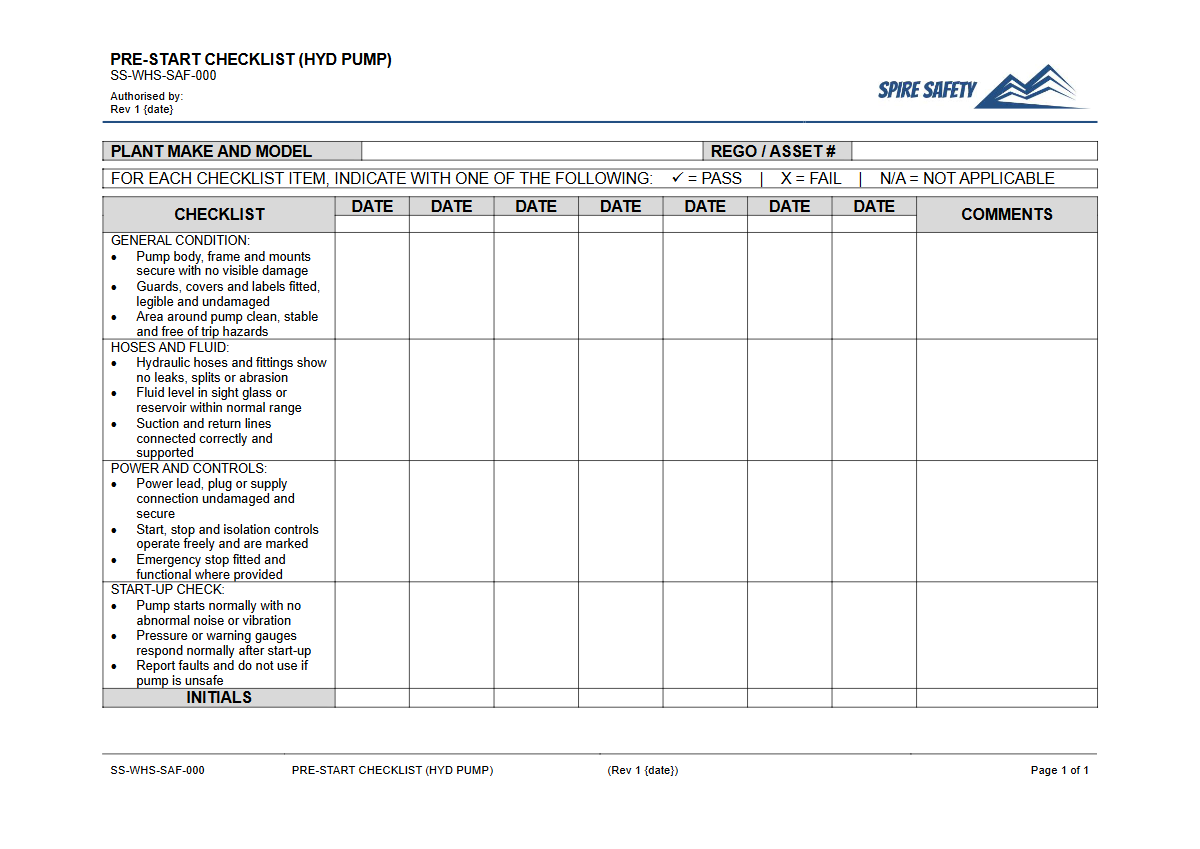
Formalise safety checks on your hydraulic equipment with our free Pre-Start Checklist (Hydraulic Pump) Template, available in DOCX and PDF formats.
Free Pre-Start Checklist (Hydraulic Pump) Template
DOCX • 125 KB + PDF
Updated Oct 2026
No signup required
Purpose of the Free Pre-Start Checklist (Hydraulic Pump) Template
Hydraulic pumps are fundamental to a vast range of industrial machinery, converting mechanical power into hydraulic energy. Their operation involves high pressures and potentially hazardous fluids, making regular safety inspections essential.
This free Pre-Start Checklist (Hydraulic Pump) Template provides a structured framework for conducting and recording these crucial daily checks. Using a formal checklist helps your organisation standardise safety procedures, identify potential faults before they lead to catastrophic failure, prevent fluid injection injuries, and minimise the risk of environmental contamination from leaks.
A systematic pre-start inspection is a core component of managing plant and equipment risks under Australian WHS laws. It serves as a proactive measure to ensure the pump is fit for service, protecting both operators and nearby workers from hazards like hose bursts, pressure loss, or unexpected equipment movement.
This process helps create a documented history of the equipment's condition, which is invaluable for maintenance planning and demonstrating due diligence. Similar principles apply to other specialised equipment, and documented procedures like fire pump pre-start checklists are equally important for emergency systems.
Video walkthrough
How to use the Free Pre-Start Checklist (Hydraulic Pump) Template
This template is provided in both DOCX and PDF formats for your convenience. The DOCX file is fully editable, allowing you to tailor the checklist to the specific makes and models of hydraulic pumps used in your workplace.
The PDF version is ready for immediate printing and use. Simply download the format that best suits your needs, and integrate it into your daily operational procedures.
The goal is to make the pre-start check a consistent, non-negotiable part of your team's routine before any hydraulic system is energised.
Important: This document is a template, not a finished safety document. The checklist items provided are general and based on common industry practice.
To ensure it is effective for your site, we strongly advise you to customise this template to reflect the specific hydraulic pumps, tasks, and risks in your workplace. This process of customisation is a key part of building an effective WHS management system that addresses your unique operational hazards.
When to use it
A hydraulic pump pre-start checklist should be completed before the equipment is first used at the beginning of each shift or work day. If a pump is used intermittently, a check should be performed before each use.
This frequency ensures that any damage or issues that may have occurred overnight, during transport, or since its last operation are identified before the system is put under pressure. It creates a clear point-in-time assessment of the equipment's state, preventing the use of unsafe plant and providing a clear record of accountability.
For organisations that use a wide variety of plant, integrating this check into a broader schedule is key. Just as you would perform a pre-start check for forwarders or other heavy machinery, pump inspections must be routine.
Regular checks are a vital part of proactive maintenance and can significantly reduce unplanned downtime and costly repairs.
Who should use it
The pre-start checklist should be completed by a person who is trained and competent to operate the specific hydraulic pump and its associated machinery. This individual must be able to recognise the signs of wear, damage, or malfunction, such as frayed hoses, weeping fittings, unusual noises, or incorrect fluid levels.
They must also have the authority to tag the equipment out of service and report any identified defects to a supervisor or the maintenance department immediately.
Ensuring that operators have the right skills and knowledge to perform these checks effectively is a primary duty of care for any PCBU (Person Conducting a Business or Undertaking). If you need assistance developing training programs or competency frameworks for your workers, seeking professional WHS consulting can provide valuable guidance and support.
The effectiveness of any checklist is directly tied to the competency of the person using it.
Documenting these checks is also a key activity that supports periodic WHS compliance audits. A consistent record of completed pre-starts demonstrates that the organisation has a system in place for managing plant safety, which is a fundamental expectation of regulators. You can find more templates for different equipment types in our free WHS resources library to build out your safety program.
Common mistakes
Common mistakes to avoid
- Ignoring small 'weeps' or minor leaks, which are early warnings of seal or fitting failure.
- Failing to check the hydraulic fluid for correct level, contamination, or discolouration.
- Conducting checks with the system pressurised, which is extremely dangerous.
- Using the checklist as a tick-and-flick exercise without performing a genuine physical inspection.
Legal references
Legal considerations
The following legal requirements may be relevant to this type of work.
- Work Health and Safety Act (Harmonised) — Provides the primary duties for protecting workers and other people from work health and safety risks.
- Work Health and Safety Regulations (Harmonised) — Sets out requirements supporting the management of workplace hazards and risks.
The following codes may be relevant to this type of work.
- Managing WHS Risks Code of Practice — Provides practical guidance on identifying hazards, assessing risks and applying effective controls.
- Work Health and Safety Consultation, Cooperation and Coordination Code of Practice — Provides practical guidance on consulting workers and coordinating with other duty holders.
- Managing the Work Environment and Facilities Code of Practice — Provides practical guidance on safe work environments, workplace facilities and related controls.
Did you know
Injection Hazard
A pinhole leak in a high-pressure hydraulic line can eject fluid at a velocity high enough to penetrate human skin, causing severe tissue damage and poisoning. This is a life-threatening injury that requires immediate specialist medical attention.
FAQ
Frequently asked questions
01What should be included in a hydraulic pump pre-start check?
02How often should hydraulic pump pre-starts be conducted?
03Who is responsible for completing a hydraulic pump pre-start checklist?
04Why is it so important to check for hydraulic fluid leaks?
Share this resource
Free Pre-Start Checklist (Hydraulic Pump) Template
Browse Categories
How To Use It
- 1Download and open in Word or PDF.
- 2Replace the placeholders with your business details.
- 3Get it reviewed by a WHS specialist before rollout.
Need it customised?
Our WHS consultants can adapt this template to your site, run a gap analysis, or audit what you already have in place.
Book a Free Consultation WHS consulting servicesor call 1300 156 382