
Free Pre-Start Checklist (Line Marker) Template
Download our free Pre-Start Checklist (Line Marker) Template.
Free Pre-Start Checklist (Line Marker) Template
DOCX • 125 KB + PDF
Updated Oct 2026
No signup required
Purpose of the Free Pre-Start Checklist (Line Marker) Template
A line marker is a common piece of equipment in construction, road works, warehousing, and sports field maintenance. While seemingly simple, it presents numerous risks if not properly inspected and maintained.
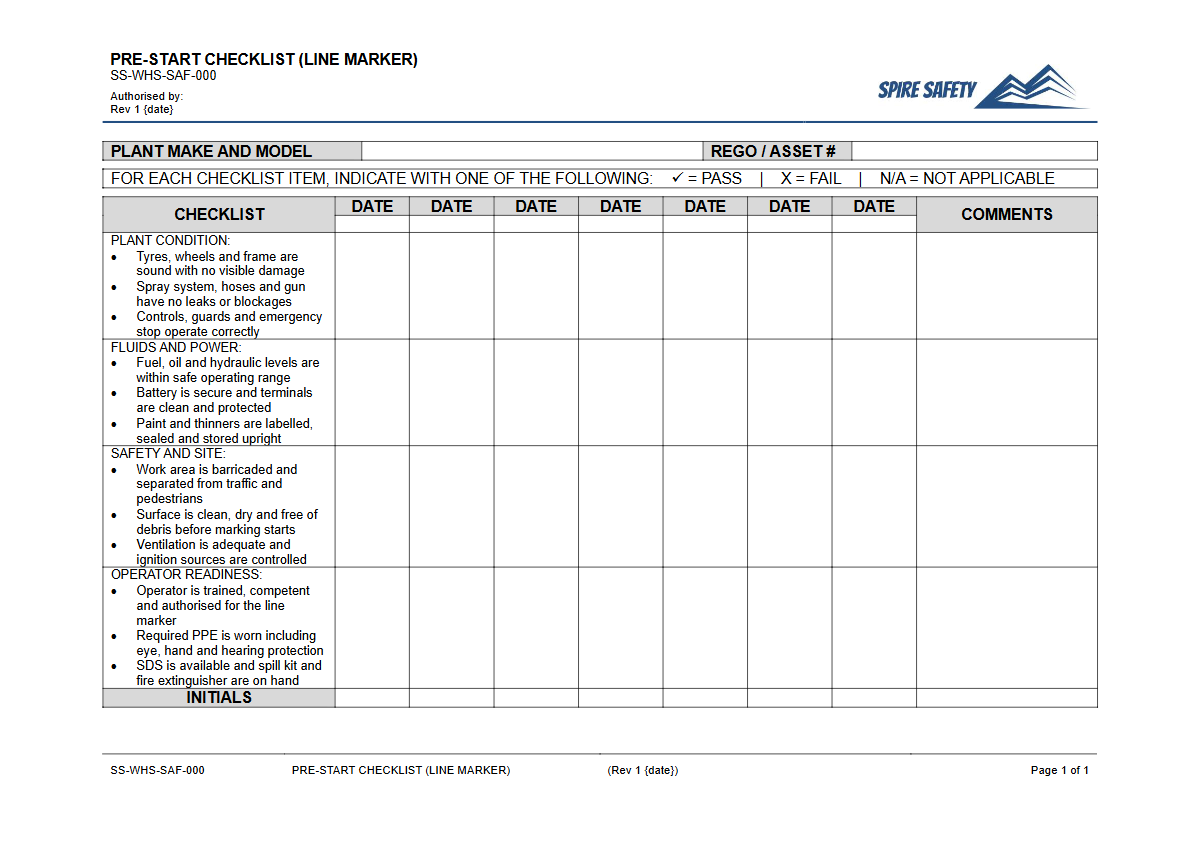
This Free Pre-Start Checklist (Line Marker) Template provides a structured framework for operators to conduct thorough, documented inspections before each use. The primary purpose is to proactively identify mechanical faults, fluid leaks, damaged components, or other safety hazards that could lead to an incident, injury, or subpar work quality.
Using a formal checklist helps embed a safety-first culture and shifts maintenance from a reactive to a proactive model. It creates a documented record that demonstrates an organisation's commitment to plant safety.
Consistent pre-start inspections are fundamental to any effective plant and equipment safety program. For a broader discussion on this topic with your team, our Pre-Start Checks and Plant Maintenance Toolbox Talk Template provides an excellent resource.
Video walkthrough
How to Use the Free Pre-Start Checklist (Line Marker) Template
Our line marker pre-start checklist is provided as a starting point in both DOCX and PDF formats. The DOCX file is fully editable, allowing you to tailor it to the specific makes and models of line marking equipment used in your workplace.
This customisation is crucial for ensuring all relevant safety features and potential failure points are covered.
Follow these steps for effective implementation:
- Download: Choose the DOCX format for customisation.
- Customise: Add your company branding. Most importantly, review and adapt the checklist items to reflect the specific controls and components of your line markers (e.g., petrol engine vs. battery, specific nozzle types, spray guards). We cannot stress this enough: you must customise this document for your specific workplace needs, equipment, and operational risks.
- Train: Ensure all operators are trained not just on how to use the line marker, but how to properly complete the pre-start inspection. They must understand what they are looking for and why it matters.
- Implement: Integrate the checklist into your daily start-of-shift procedures. Completed checklists should be reviewed by a supervisor and filed as part of your safety records. This documentation is a vital component of well-organised WHS management systems.
When to Use This Pre-Start Checklist
A pre-start checklist for a line marker should be completed by the operator at the beginning of every shift or before its first use on any given day. It should not be treated as a weekly or monthly task.
The goal is to catch any faults that may have occurred overnight, during transport, or were missed at the end of the previous shift. A machine that was safe yesterday may not be safe today. This daily discipline is as critical for mobile equipment like line markers as it is for high-risk activities covered by a Safe Work Method Statement (SWMS) for Concrete Truck Operation.
In addition to routine daily checks, this checklist can also be used after significant events, such as after the machine has undergone maintenance, been dropped, or been transported to a new site. These events can introduce new risks that a quick pre-use inspection will identify.
Who Should Use It
The primary user of this checklist is the equipment operator. They are in the best position to conduct a hands-on inspection and are ultimately responsible for operating the machine safely.
Empowering operators with the tool and the authority to tag out unsafe equipment is a cornerstone of a positive safety culture.
Supervisors and managers also have a role. They are responsible for ensuring operators are trained and are completing the checks diligently.
They should periodically review completed checklists to identify recurring issues that might indicate a need for more intensive maintenance or operator retraining. If you require assistance defining roles and responsibilities within your safety framework, consider engaging our WHS consulting services for expert guidance.
Maintenance personnel may also use the information from completed checklists to schedule preventative maintenance and troubleshoot recurring faults. A well-documented history of pre-start checks provides valuable data for managing the lifecycle of your plant and equipment.
For a tool to help formalise your pre-shift safety briefings, you can also download our Free Pre-Start Meeting Template to complement your documentation. By combining these tools, you build a more robust and documented safety process.
Explore our full free WHS resources library for more templates to support your organisation.
Common mistakes
Common mistakes to avoid
- 'Pencil-whipping' the checklist without physically inspecting each item.
- Failing to report and tag out faulty equipment, allowing it to be used.
- Using a generic checklist that doesn't cover model-specific features or hazards.
- Not training operators on what to look for during each check.
Legal references
Legal considerations
The following legal requirements may be relevant to this type of work.
- Work Health and Safety Act (Harmonised) — Provides the primary duties for protecting workers and other people from work health and safety risks.
- Work Health and Safety Regulations (Harmonised) — Sets out requirements supporting the management of workplace hazards and risks.
The following codes may be relevant to this type of work.
- Managing WHS Risks Code of Practice — Provides practical guidance on identifying hazards, assessing risks and applying effective controls.
- Work Health and Safety Consultation, Cooperation and Coordination Code of Practice — Provides practical guidance on consulting workers and coordinating with other duty holders.
- Managing the Work Environment and Facilities Code of Practice — Provides practical guidance on safe work environments, workplace facilities and related controls.
Did you know
Fume Hazards
Line marking paints can release Volatile Organic Compounds (VOCs). Inadequate ventilation during use in enclosed spaces like car parks can lead to respiratory issues and other health effects.
Historical Lines
The first road line marker, a hand-pushed cart, was invented by June McCarroll in California in 1924 after a near-miss with a truck, inspiring the concept of a centre line.
FAQ
Frequently asked questions
01What should be included in a line marker pre-start checklist?
02Is this line marker checklist a legal requirement?
03How often should line marker pre-start checks be done?
04Who is responsible for completing the pre-start checklist?
Share this resource
Free Pre-Start Checklist (Line Marker) Template
Browse Categories
How To Use It
- 1Download and open in Word or PDF.
- 2Replace the placeholders with your business details.
- 3Get it reviewed by a WHS specialist before rollout.
Need it customised?
Our WHS consultants can adapt this template to your site, run a gap analysis, or audit what you already have in place.
Book a Free Consultation WHS consulting servicesor call 1300 156 382