
Free Pre-Start Checklist (Mobile X Ray) Template
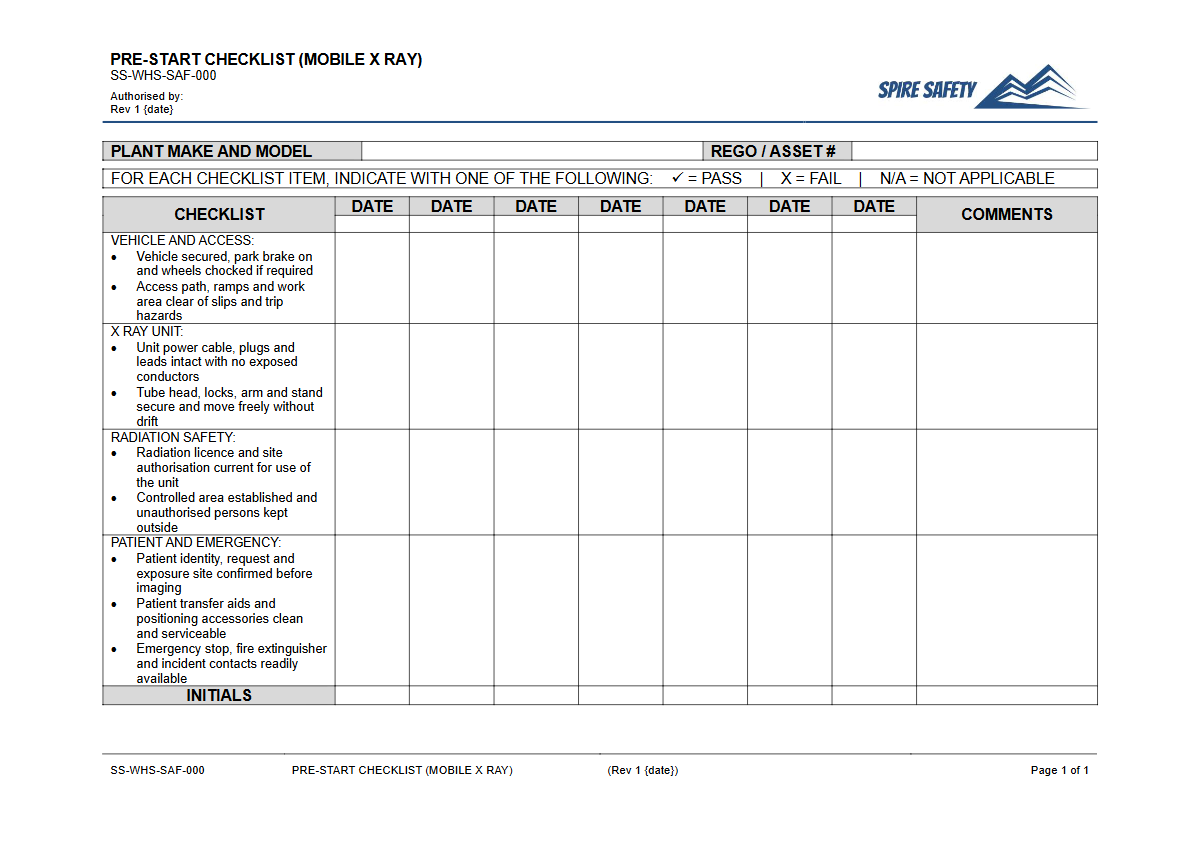
Download our Free Pre-Start Checklist (Mobile X Ray) Template to formalise pre-use equipment inspections.
Free Pre-Start Checklist (Mobile X Ray) Template
DOCX • 125 KB + PDF
Updated Oct 2026
No signup required
Purpose of the Free Pre-Start Checklist (Mobile X Ray) Template
Using a mobile x-ray unit introduces significant hazards, including ionising radiation, electrical risks, and ergonomic strains. This Free Pre-Start Checklist (Mobile X Ray) Template provides a structured starting point for formalising the essential safety checks required before each use.
A consistent pre-start inspection process is a critical control measure that helps a Person Conducting a Business or Undertaking (PCBU) meet their primary duty of care to provide safe plant and equipment.
By systematically verifying the condition of key components—from the x-ray tube head and collimator to cables, controls, and mechanical stability—operators can identify potential faults or damage before they lead to an incident. This checklist encourages a proactive safety culture, helping to prevent equipment failure, reduce unplanned downtime, and most importantly, protect workers, patients, and others from harm.
Implementing this process is a practical way to demonstrate due diligence and is a core component of preventative maintenance. For more ideas on how to embed this practice into your daily operations, our Pre-Start Checks and Plant Maintenance Toolbox Talk can help guide your team discussions.
Video walkthrough
How to use the Free Pre-Start Checklist (Mobile X Ray) Template
This document is provided as a foundational template in both DOCX and PDF formats. It is designed to be adapted to the specific needs and risks of your workplace.
Successful implementation requires more than just downloading the file; it requires careful customisation and integration into your existing safety procedures.
Follow these steps to get the most value from this resource:
- Download and Review: Start by downloading the DOCX version and thoroughly reviewing the checklist items provided. Compare them against the manufacturer’s operating manual for your specific mobile x-ray unit(s).
- Customise for Your Workplace: This is the most critical step. You must add, remove, or modify checks to reflect the exact models of equipment you use, the environment they are used in (e.g., hospital wards, veterinary clinics, industrial sites), and your organisation's specific procedures. We cannot know your unique operational context, so you must tailor this document to make it relevant and effective.
- Consult with Workers: Under WHS law, you must consult with your workers and any Health and Safety Representatives (HSRs). The radiographers and technicians who use the equipment daily have invaluable practical knowledge. Involve them in the customisation process to ensure the checklist is practical, comprehensive, and user-friendly.
- Train and Implement: Once finalised, train all relevant operators on how to use the checklist correctly. Stress the importance of performing a physical check for each item rather than just ticking boxes. Integrate the checklist into your daily workflow and ensure it forms part of your robust WHS management systems.
When to use it
A pre-start checklist for high-risk equipment like a mobile x-ray unit should be completed with disciplined consistency. The frequency of checks helps ensure that any deterioration or damage is identified at the earliest opportunity. The checklist should be used:
- Before the start of every shift: The operator coming on duty should conduct a full pre-start inspection before using the equipment for the first time that day.
- Before every use: For equipment used intermittently, a quick visual inspection based on the checklist is advisable before each procedure.
- After maintenance or repair: Following any service, the checklist serves as a formal verification that the equipment has been returned to a safe operational state.
- When moved to a new environment: If the unit is transported to a different floor, building, or site, a check should be performed to ensure no damage occurred during transit.
Completed checklists provide a valuable record of equipment condition over time. Maintaining these records helps identify recurring faults and can be reviewed during a regular WHS compliance auditing process to verify that safety procedures are being followed.
Who should use it
The responsibility for using and overseeing the pre-start checklist falls to several roles within an organisation. A clear definition of duties ensures accountability and effectiveness.
- Operators: Trained and licensed radiographers or technicians who operate the mobile x-ray unit are the primary users. They are responsible for physically carrying out the checks before use and for taking immediate action if a fault is found.
- Supervisors and Managers: Line managers and department heads are responsible for ensuring operators are trained on the procedure, have access to the checklists, and are completing them diligently. They should also review completed forms periodically and ensure reported faults are addressed promptly.
- Maintenance Personnel: The checklist is a key communication tool. When an operator identifies a fault, the completed checklist provides clear information for the maintenance team to diagnose and repair the issue.
- PCBU / Employer: Ultimately, the PCBU has the overall responsibility to provide the resources, training, and systems necessary for a safe workplace, which includes implementing procedures like pre-start checks.
In many settings where these units are found, such as hospitals and clinics, discussions around equipment safety can be effectively integrated into daily pre-start meetings. Furthermore, the physical demands of moving these heavy units mean that an understanding of topics like aged care manual handling principles can be highly beneficial for operator safety. If you need help defining these roles and responsibilities within your safety framework, engaging with a specialist WHS consulting firm can provide clarity. To discover other templates that can support your safety processes, explore our full free WHS resources library.
Common mistakes
Common mistakes to avoid
- Using a generic checklist without customising it for specific x-ray machine models and workplace conditions.
- Operators 'pencil-whipping' the checklist without physically inspecting each item.
- Failing to immediately tag out and report faulty equipment identified during the check.
- Storing the checklist away from the equipment, making it difficult for operators to access and use before their shift.
Legal references
Legal considerations
The following legal requirements may be relevant to this type of work.
- Work Health and Safety Act (Harmonised) — Provides the primary duties for protecting workers and other people from work health and safety risks.
- Work Health and Safety Regulations (Harmonised) — Sets out requirements supporting the management of workplace hazards and risks.
The following codes may be relevant to this type of work.
- Managing WHS Risks Code of Practice — Provides practical guidance on identifying hazards, assessing risks and applying effective controls.
- Work Health and Safety Consultation, Cooperation and Coordination Code of Practice — Provides practical guidance on consulting workers and coordinating with other duty holders.
- Managing the Work Environment and Facilities Code of Practice — Provides practical guidance on safe work environments, workplace facilities and related controls.
Did you know
Radiation Safety Principle
The ALARA principle (As Low As Reasonably Achievable) is a cornerstone of radiation safety. It means every reasonable effort must be made to maintain exposures to ionising radiation as far below the dose limits as is practical.
Equipment Weight
Modern mobile x-ray units can still weigh over 400 kg, making manual handling a significant ergonomic hazard if not managed correctly with motorised assistance or appropriate team procedures.
FAQ
Frequently asked questions
01What hazards are associated with mobile x-ray equipment?
02Is a pre-start checklist a legal requirement in Australia?
03Who needs to be consulted when customising this mobile x-ray checklist?
04How long should we keep completed pre-start checklists?
Share this resource
Free Pre-Start Checklist (Mobile X Ray) Template
Browse Categories
How To Use It
- 1Download and open in Word or PDF.
- 2Replace the placeholders with your business details.
- 3Get it reviewed by a WHS specialist before rollout.
Need it customised?
Our WHS consultants can adapt this template to your site, run a gap analysis, or audit what you already have in place.
Book a Free Consultation WHS consulting servicesor call 1300 156 382