
Free Pre-Start Checklist (Mortar Mixer) Template
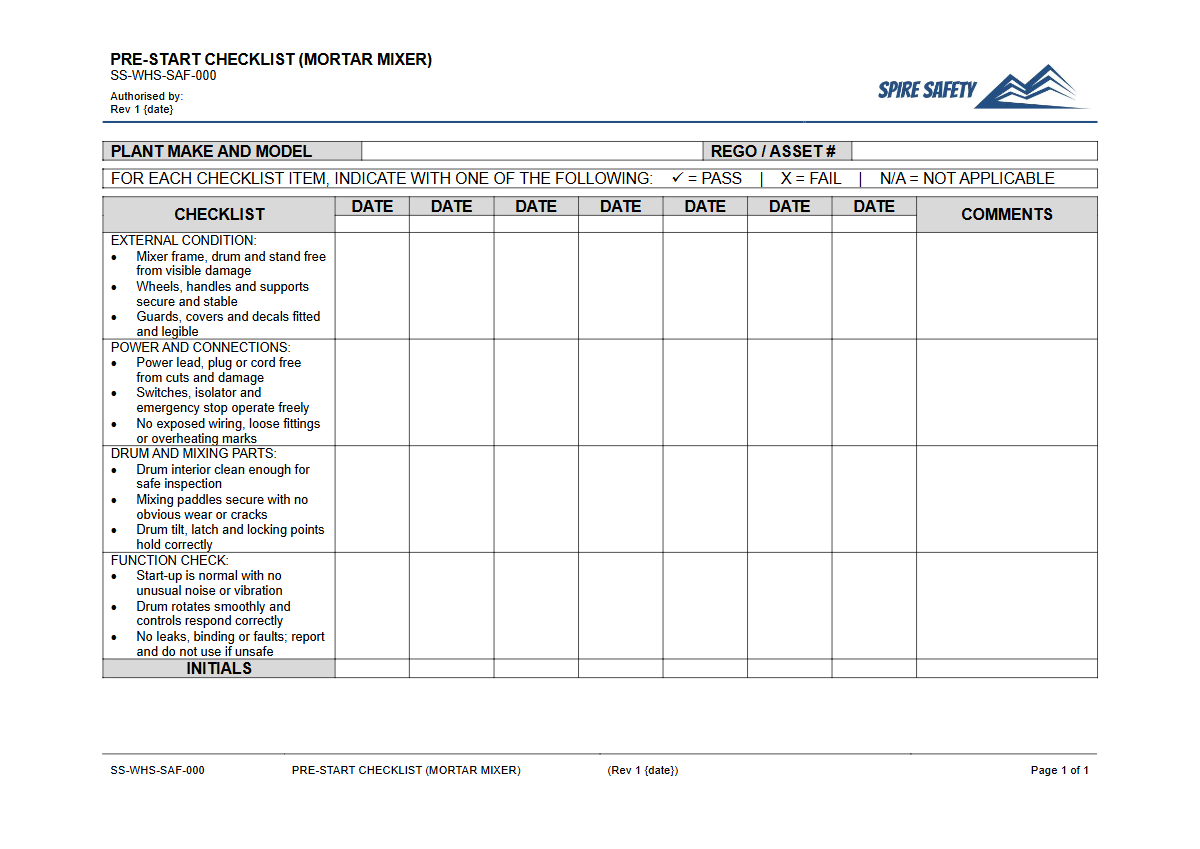
Download our free Pre-Start Checklist for Mortar Mixers. This customisable DOCX & PDF template helps formalise daily equipment checks and manage WHS risk.
Free Pre-Start Checklist (Mortar Mixer) Template
DOCX • 125 KB + PDF
Updated Oct 2026
No signup required
Purpose of the Free Pre-Start Checklist (Mortar Mixer) Template
Effectively managing plant and equipment safety is a cornerstone of workplace health and safety in the construction industry. This Free Pre-Start Checklist (Mortar Mixer) Template provides a structured starting point for organisations to formalise their daily equipment inspections.
Using a pre-start checklist helps operators systematically identify potential faults, damage, or operational issues before they lead to incidents, injuries, or costly downtime. It creates a consistent record of due diligence and encourages a proactive safety culture where equipment condition is checked before every use.
By documenting these daily checks, you create an auditable trail that demonstrates a commitment to safety and risk management. Integrating this Pre-Start Checklist into your broader WHS management systems helps ensure that plant safety is not an afterthought but a routine part of your daily operations.
This process supports compliance with Australian WHS regulations concerning the safe operation of plant and machinery.
Video walkthrough
How to use the Free Pre-Start Checklist (Mortar Mixer) Template
This resource is available as a fully editable DOCX file and a printable PDF. The DOCX version allows for complete customisation to align with your specific workplace needs.
The process is straightforward: download the template, add your company branding, and most importantly, modify the checklist items to suit the exact make and model of the mortar mixers used on your site. Different models have unique features, controls, and potential failure points that a generic checklist might miss.
Important: This document is a template, not a finished safety document. We have drafted it as a structured starting point, but you must customise it to reflect the specific mortar mixer models in your workplace, your site conditions, and your internal procedures.
It is crucial to ensure the checklist is practical and relevant to the equipment your team operates.
Just as you would detail checks specific to other high-risk equipment by using a pre-start checklist for a floor saw, you must tailor this document to capture the unique hazards of your mortar mixer. Once finalised, ensure all operators are trained on how to complete the checklist correctly and understand the 'tag out' or 'do not use' procedure for faulty equipment.
When to use this Pre-Start Checklist
This checklist is designed to be completed at the beginning of each shift or before the mortar mixer is used for the first time each day. A pre-start check ensures that the equipment was left in a safe state by the previous user and that no damage has occurred overnight.
It should also be used after any maintenance or repair work has been performed to verify that the mixer is safe to return to service. Regular, consistent use is key to its effectiveness as a risk control measure.
Who should use it
The pre-start check should be conducted by a person who is trained and competent to operate the mortar mixer. The operator is in the best position to notice subtle changes in the machine's performance or condition.
Supervisors should periodically review completed checklists to verify they are being filled out correctly and to identify recurring maintenance issues that may require attention. This review process provides valuable data for your ongoing safety and maintenance programs.
These principles of operator-led checks are common across various industries. The core safety requirements for rotating equipment, guarding, and power sources are similar whether in a construction setting or a food production facility using a dough mixer pre-start checklist.
The data gathered from these daily checks is an invaluable source of information. Regular reviews of completed checklists can be a key input for your internal WHS compliance auditing processes, helping to spot trends in equipment wear, operator behaviour, or gaps in your maintenance schedule before they escalate into more significant problems.
While the fundamental purpose of mixing is the same, the specific hazards and controls can vary significantly between materials and environments. The items on a checklist for a construction site mortar mixer will differ from those on a template for a feed mixer used in an agricultural setting, highlighting the need for customisation.
If you need other templates, you can browse our full free WHS resources library for more starting points.
Common mistakes
Common mistakes to avoid
- Skipping checks on electrical cords and plugs, leading to electrical shock hazards.
- Failing to check that safety guards are in place and not bypassed.
- Ignoring minor cracks or wear on the mixing paddles, which can lead to catastrophic failure during operation.
- Not properly cleaning the mixer after use, leading to hardened material buildup that can affect balance and performance.
Legal references
Legal considerations
The following legal requirements may be relevant to this type of work.
- Work Health and Safety Act (Harmonised) — Provides the primary duties for protecting workers and other people from work health and safety risks.
- Work Health and Safety Regulations (Harmonised) — Sets out requirements supporting the management of workplace hazards and risks.
The following codes may be relevant to this type of work.
- Managing WHS Risks Code of Practice — Provides practical guidance on identifying hazards, assessing risks and applying effective controls.
- Work Health and Safety Consultation, Cooperation and Coordination Code of Practice — Provides practical guidance on consulting workers and coordinating with other duty holders.
- Managing the Work Environment and Facilities Code of Practice — Provides practical guidance on safe work environments, workplace facilities and related controls.
Did you know
Manual Handling Risk
Lifting bags of cement and sand is a primary cause of musculoskeletal injuries on construction sites. Using a mortar mixer correctly reduces some manual handling, but loading it remains a significant ergonomic hazard.
Silica Dust Exposure
Dry-mixing cement, sand, and other materials can release hazardous crystalline silica dust. Using water suppression methods and appropriate respiratory protection during mixing is critical to protect workers from long-term lung disease.
FAQ
Frequently asked questions
01What are the most critical items to check on a mortar mixer before use?
02Why is a documented pre-start check important for a mortar mixer?
03How often should a mortar mixer pre-start inspection be completed?
04Who is responsible for conducting the pre-start check on a mortar mixer?
Share this resource
Free Pre-Start Checklist (Mortar Mixer) Template
Browse Categories
How To Use It
- 1Download and open in Word or PDF.
- 2Replace the placeholders with your business details.
- 3Get it reviewed by a WHS specialist before rollout.
Need it customised?
Our WHS consultants can adapt this template to your site, run a gap analysis, or audit what you already have in place.
Book a Free Consultation WHS consulting servicesor call 1300 156 382