
Free Pre-Start Checklist (Mud Bucket) Template
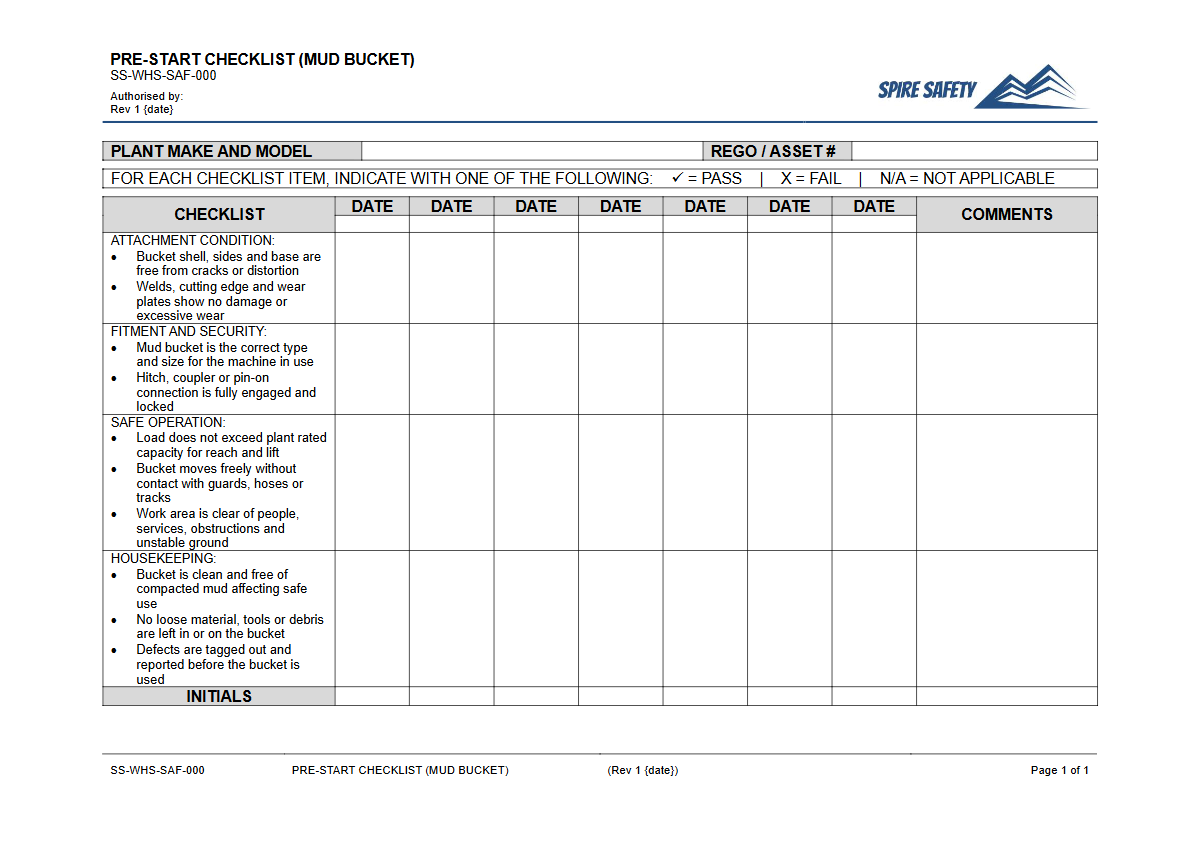
Download our free Pre-Start Checklist (Mud Bucket) Template. This structured Word and PDF resource helps formalise equipment checks and identify hazards.
Free Pre-Start Checklist (Mud Bucket) Template
DOCX • 125 KB + PDF
Updated Oct 2026
No signup required
Purpose of the Free Pre-Start Checklist (Mud Bucket) Template
Using a structured checklist before operating any piece of plant is a cornerstone of a safe work environment. This is especially true for excavator attachments.
Our Free Pre-Start Checklist (Mud Bucket) Template provides a formalised process for operators to verify that a mud bucket is in safe working order and correctly attached before use. Regularly completing these checks helps identify wear, damage, or connection faults that could lead to catastrophic failure, protecting both the operator and other workers on site.
A mud bucket, like any excavator attachment, can pose a serious risk if it detaches or fails during operation. Thoroughly inspecting the bucket's structure, welds, cutting edge, and, most importantly, its connection to the excavator, is a critical control measure. Documenting these checks demonstrates due diligence and helps track the condition of assets over time, preventing devastating incidents involving excavator attachments.
Video walkthrough
How to use the Free Pre-Start Checklist (Mud Bucket) Template
This Pre-Start Checklist is provided as a downloadable DOCX or PDF file. To get the most value and ensure it's effective for your specific operation, follow these steps:
- Download: Choose the format that works best for you. The DOCX file is fully editable.
- Customise: This is the most important step. This template is a structured starting point aligned with Australian WHS practice. You must adapt it to reflect the specific makes and models of mud buckets and excavators you use, your site's unique risks, and your organisation's procedures. We've designed it as a foundation, not a final, one-size-fits-all solution.
- Train: Ensure all relevant operators and supervisors are trained on how to use the finalised checklist correctly and what actions to take if a defect is found.
- Implement: Integrate the checklist into your daily routine. Completed checklists should be reviewed by a supervisor and stored as a record of your safety activities.
Integrating simple tools like this checklist into your daily operations is a practical step in building robust safety processes. These processes are the building blocks of comprehensive WHS management systems that protect your workers and your business.
When to use it
The pre-start checklist for a mud bucket should be completed at the beginning of every shift or before the first time the attachment is used that day. It should also be completed whenever an attachment is changed on the excavator.
If the machine has been idle for an extended period or has just returned from maintenance, a thorough pre-start inspection is essential.
Consistent pre-start inspections create a culture of safety and responsibility. Reinforcing these habits can be effectively achieved by holding regular safety sessions, for which a pre-start checks and plant maintenance toolbox talk can provide a useful guide.
Who should use it
The primary user of this checklist is the competent, trained, and authorised excavator operator. They have the hands-on responsibility for the equipment and are best placed to identify any issues.
Supervisors and managers also have a role; they should ensure operators are completing the checks correctly and review the completed forms to identify any recurring maintenance issues or operator knowledge gaps. These records can provide valuable evidence of safety procedures during formal WHS compliance audits.
Documenting these checks is a key part of daily site safety management. Information gathered from pre-start checks can be a valuable input for daily safety briefings, which can be structured using a pre-start meeting template to ensure all critical points are covered.
While this checklist focuses on the equipment itself, the overall task of using it must also be assessed. For high-risk activities, a more detailed risk assessment document is required.
A Safe Work Method Statement for concrete truck operations is a good example of the level of detailed planning required for other high-risk tasks common on construction sites.
Common mistakes
Common mistakes to avoid
- Assuming an attachment is secure without physically checking the quick hitch locking mechanism (the 'bucket rattle' check).
- Failing to document a check, which removes the record of due diligence and asset condition.
- Ignoring minor issues like small hydraulic fluid weeps or cracks, which can quickly escalate into major failures.
- Using a generic checklist that doesn't match the specific make and model of the bucket or excavator.
Legal references
Legal considerations
The following legal requirements may be relevant to this type of work.
- Work Health and Safety Act (Harmonised) — Provides the primary duties for protecting workers and other people from work health and safety risks.
- Work Health and Safety Regulations (Harmonised) — Sets out requirements supporting the management of workplace hazards and risks.
The following codes may be relevant to this type of work.
- Managing WHS Risks Code of Practice — Provides practical guidance on identifying hazards, assessing risks and applying effective controls.
- Work Health and Safety Consultation, Cooperation and Coordination Code of Practice — Provides practical guidance on consulting workers and coordinating with other duty holders.
- Managing the Work Environment and Facilities Code of Practice — Provides practical guidance on safe work environments, workplace facilities and related controls.
Did you know
Quick Hitch Hazards
A significant number of incidents involving excavator attachments are related to the failure of semi-automatic quick hitches, where operators neglect to manually insert the safety pin after connection.
Attachment Weight
Even a standard 2.4m mud bucket for a 20-tonne excavator can weigh over 800kg. An uncontrolled fall from even a small height can generate immense, life-threatening force.
FAQ
Frequently asked questions
01What is the main difference between a mud bucket and a digging bucket?
02Can I use this pre-start checklist for other excavator attachments?
03How often should a pre-start check for a mud bucket be completed?
04Who is responsible for ensuring pre-start checks are completed?
Share this resource
Free Pre-Start Checklist (Mud Bucket) Template
Browse Categories
How To Use It
- 1Download and open in Word or PDF.
- 2Replace the placeholders with your business details.
- 3Get it reviewed by a WHS specialist before rollout.
Need it customised?
Our WHS consultants can adapt this template to your site, run a gap analysis, or audit what you already have in place.
Book a Free Consultation WHS consulting servicesor call 1300 156 382