
Free Pre-Start Checklist (Multi Tyre) Template
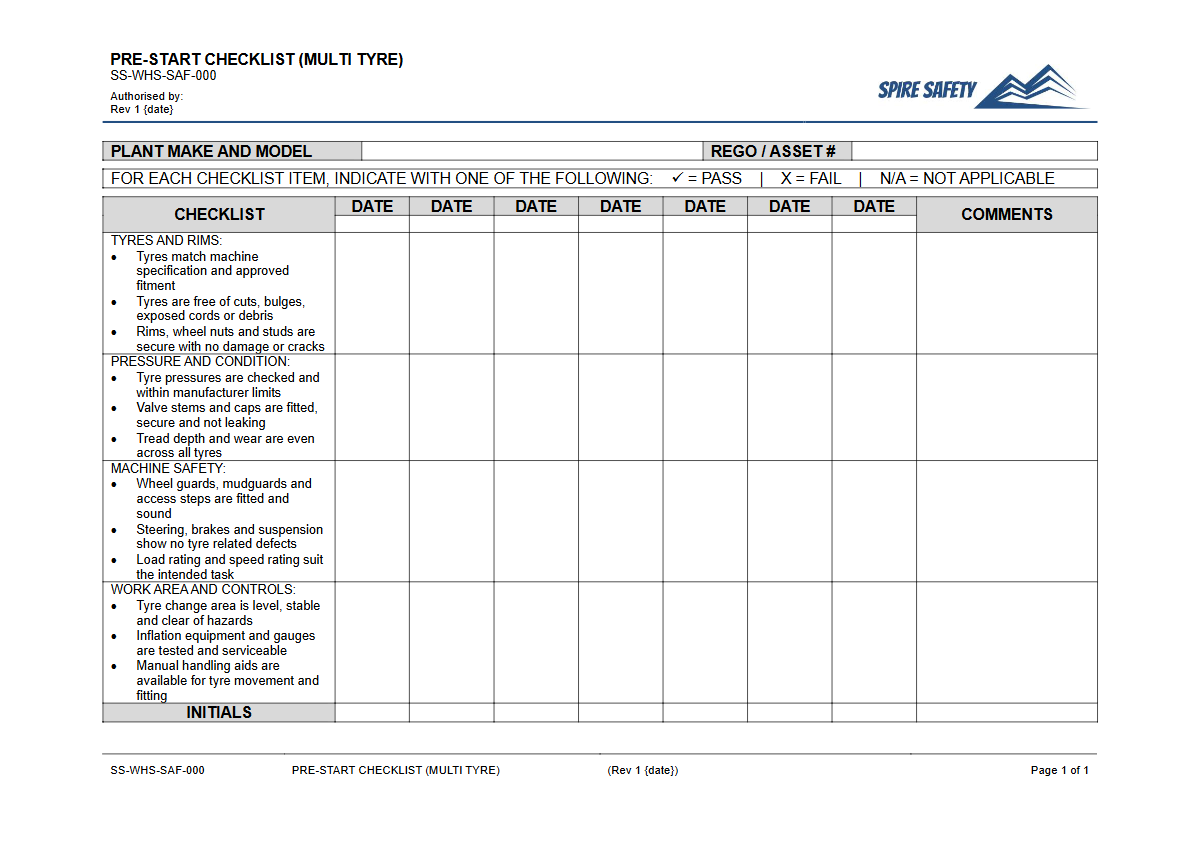
Download our Free Pre-Start Checklist (Multi Tyre) Template in DOCX and PDF. A structured starting point for formalising your daily equipment inspections.
Free Pre-Start Checklist (Multi Tyre) Template
DOCX • 125 KB + PDF
Updated Oct 2026
No signup required
Purpose of the Free Pre-Start Checklist (Multi Tyre) Template
Regularly inspecting heavy equipment like multi-tyre rollers is a fundamental part of maintaining a safe worksite. This Free Pre-Start Checklist (Multi Tyre) Template provides a structured framework for operators to conduct thorough, repeatable safety inspections before using the plant.
The primary purpose of this checklist is to identify potential faults, damage, or wear and tear that could lead to an incident, equipment failure, or injury. By formalising this process, you create a documented record of due diligence and empower operators to take ownership of their equipment's condition.
Using a pre-start checklist helps ensure the machine is operationally ready and that all safety-critical components—such as brakes, steering, lights, and safety guards—are functioning correctly. It forms a key part of your site's preventative maintenance program, helping to reduce costly downtime and extend the life of the asset. Consistent use of these checks can be reinforced through regular site meetings, such as those guided by our Pre-Start Checks and Plant Maintenance Toolbox Talk.
Video walkthrough
How to use the Free Pre-Start Checklist (Multi Tyre) Template
This template is available for instant download in both DOCX and PDF formats. The DOCX version is fully editable, allowing you to tailor it to your specific operational needs.
While this document is aligned with Australian WHS principles, it is a template and must be adapted to your unique context.
Important: We strongly advise that you customise this template to reflect the specific make and model of your multi-tyre equipment, your site conditions, and any state or territory-specific WHS regulations. This includes adding your company logo and details, and modifying the checklist items to cover all relevant components, such as specific hydraulic systems, articulation points, water spray systems, and tyre scraper configurations.
For high-risk tasks involving this type of plant, a pre-start check should be integrated with your overall risk management process. This often includes developing a task-specific risk assessment, which can be documented using a resource like our multi-tyre roller operation Safe Work Method Statement (SWMS).
When to use it
A pre-start inspection should be completed before the equipment is used for the first time on every shift. This ensures that any issues that may have developed overnight or since the last use are identified before work begins.
It should also be completed if there is a change of operator during a shift, as the incoming operator needs to verify the machine's condition for themselves.
Integrating this checklist into your daily operational procedures is a practical way to implement key components of a robust WHS management system. It creates a consistent, documented safety habit that becomes part of the daily routine for all plant operators.
Who should use it
This checklist should be completed by a worker who is trained, licensed (where required), and deemed competent to operate the specific multi-tyre plant. The operator has the most hands-on interaction with the machine and is best placed to notice subtle changes in its performance or condition.
Supervisors and managers are responsible for ensuring these checks are being carried out correctly and consistently, and that any reported faults are addressed promptly.
The effectiveness of your pre-start system relies on workers being competent and procedures being followed. The outcomes of these checks can be a valuable input for regular WHS compliance audits, helping to verify that your safety processes are working as intended on the ground.
Key Elements of a Multi Tyre Pre-Start Check
A thorough checklist for a multi-tyre roller should be divided into logical sections to ensure nothing is missed. Key areas to inspect include:
- General & Exterior: A walk-around inspection checking for leaks, structural damage, the condition of tyres (pressure, cuts, wear), and the security of panels and guards.
- Fluids & Engine Bay: Checking levels for engine oil, coolant, hydraulic fluid, and fuel. Look for any signs of leaks or contamination.
- Cabin & Controls: Inspecting the ROPS/FOPS for damage, ensuring the seat and seatbelt are in good condition, and checking that all controls, gauges, warning lights, and the horn are functional.
- Safety Equipment: Verifying the presence and condition of the fire extinguisher, reversing beeper/alarm, and mirrors.
- Operational Test: Briefly starting the machine in a safe, clear area to test steering, brakes (including the park brake), and the basic function of the compaction system (vibration, if applicable).
This template provides a foundation that you can build upon. For more tools to support your safety management system, explore our full free WHS resources library.
Common mistakes
Common mistakes to avoid
- Using a generic checklist that doesn't match the specific make and model of the equipment.
- Completing the checklist from memory or ticking boxes without physically verifying each item.
- Failing to formally tag out and report faulty equipment identified during an inspection.
- Overlooking 'walk-around' items like tyre condition, fluid leaks, or the security of guards and panels.
Legal references
Legal considerations
The following legal requirements may be relevant to this type of work.
- Work Health and Safety Act (Harmonised) — Provides the primary duties for protecting workers and other people from work health and safety risks.
- Work Health and Safety Regulations (Harmonised) — Sets out requirements supporting the management of workplace hazards and risks.
The following codes may be relevant to this type of work.
- Managing WHS Risks Code of Practice — Provides practical guidance on identifying hazards, assessing risks and applying effective controls.
- Work Health and Safety Consultation, Cooperation and Coordination Code of Practice — Provides practical guidance on consulting workers and coordinating with other duty holders.
- Managing the Work Environment and Facilities Code of Practice — Provides practical guidance on safe work environments, workplace facilities and related controls.
Did you know
Tyre Pressure is Key
On a multi-tyre roller, incorrect or uneven tyre pressure not only compromises compaction quality but can significantly affect machine stability and fuel efficiency, making it a critical safety and operational check.
Essential Records
Completed pre-start checklists are important business records. They serve as evidence in incident investigations and safety audits to demonstrate that a system for ensuring plant safety is implemented and maintained.
FAQ
Frequently asked questions
01What's the difference between a pre-start checklist and a SWMS?
02How often should a multi-tyre pre-start checklist be completed?
03Who is responsible for ensuring pre-start checks are done?
04What should I do if a fault is found during a pre-start check?
Share this resource
Free Pre-Start Checklist (Multi Tyre) Template
Browse Categories
How To Use It
- 1Download and open in Word or PDF.
- 2Replace the placeholders with your business details.
- 3Get it reviewed by a WHS specialist before rollout.
Need it customised?
Our WHS consultants can adapt this template to your site, run a gap analysis, or audit what you already have in place.
Book a Free Consultation WHS consulting servicesor call 1300 156 382