
Free Pre-Start Checklist (Overlocker) Template
Download our free Pre-Start Checklist (Overlocker) Template. This DOCX & PDF resource helps formalise equipment inspections and manage WHS risks.
Free Pre-Start Checklist (Overlocker) Template
DOCX • 125 KB + PDF
Updated Oct 2026
No signup required
Purpose of the Free Pre-Start Checklist (Overlocker) Template
Formalising equipment safety checks is a crucial part of any workplace safety program. This Free Pre-Start Checklist (Overlocker) Template provides a structured starting point for developing a consistent inspection routine for your industrial overlockers, helping you identify and control hazards before work begins.
Using this checklist helps operators verify that critical safety components are in place and functioning correctly, reducing the risk of injuries from moving parts like needles, loopers, and cutting blades.
Regularly completing these checks demonstrates a commitment to proactive risk management and creates a documented history of the machine's condition. Integrating such procedures is a fundamental component of effective WHS management systems, helping your organisation meet its duties under Australian WHS laws.
This template is designed to guide operators through a logical inspection sequence, covering everything from guards and electrical integrity to operational functions.
Video walkthrough
How to use the Free Pre-Start Checklist (Overlocker) Template
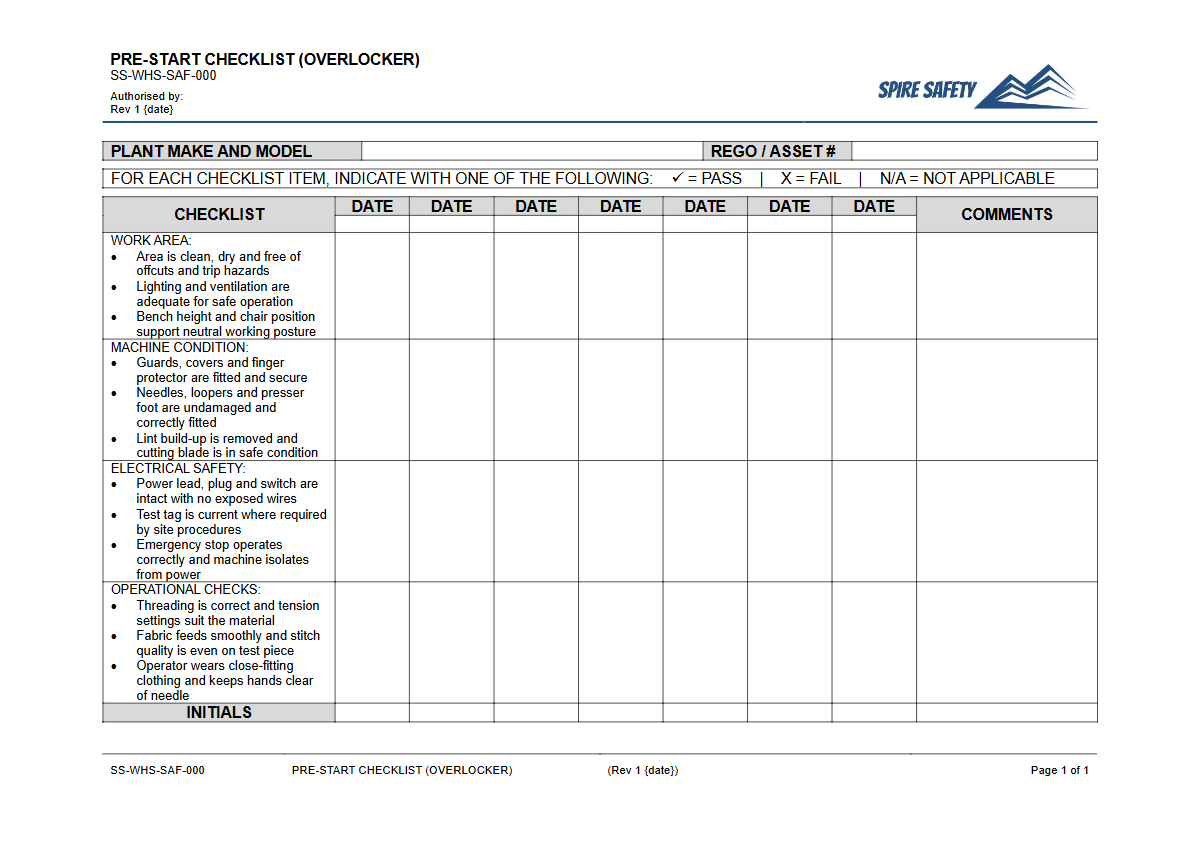
This resource is available as a fully editable DOCX file and a print-ready PDF. The checklist is structured into logical sections to guide the user through a thorough inspection of an overlocker sewing machine.
It includes prompts for checking emergency stops, guards, electrical components, and operational controls. There is also space to record details of the inspection, including the date, operator's name, and any corrective actions required.
Important: This template is a starting point. We recommend you customise it to reflect the specific make and model of overlocker used in your workplace, your operational procedures, and any unique environmental risks.
Communicating these customised procedures is vital, which can be effectively done using a targeted Pre-Start Checks and Plant Maintenance Toolbox Talk Template to ensure all operators understand the requirements.
When to use an Overlocker Pre-Start Checklist
A pre-start inspection should be conducted before the overlocker is used for the first time on any given day or at the beginning of each shift. This ensures that the machine is safe to operate before any production work commences.
It is also good practice to perform a check if a new operator is taking over the machine mid-shift, or after any maintenance, repairs, or adjustments have been made. Consistent daily checks create a safety habit and provide the earliest opportunity to detect developing faults.
Who should use it
This checklist is designed to be used by trained and competent machine operators. The person responsible for operating the overlocker is best placed to assess its immediate condition.
They should have received adequate training on the specific model, including its safety features and potential hazards. Any faults or deficiencies identified during the pre-start check must be reported immediately to a supervisor or manager for action. Findings and safety concerns can be formally discussed and minuted in team meetings with a Free Pre-Start Meeting Template.
Key Inspection Areas for an Overlocker
While your customised checklist will be specific, it should address several critical areas to ensure comprehensive safety coverage. These areas are fundamental to preventing common incidents associated with industrial sewing equipment.
- Guards and Shields: Confirm that the needle guard, finger guard, belt guard, and any other protective shields are securely in place and undamaged. These are the primary defence against contact with fast-moving parts.
- Electrical Safety: Inspect the power cord and plug for any signs of damage, fraying, or exposed wires. Ensure the machine's light is working correctly to provide adequate illumination of the work area.
- Mechanical Integrity: Check for any loose components, unusual vibrations, or strange noises during a brief test run without material. Ensure the foot pedal operates smoothly and does not stick. Similar to inspecting other complex equipment covered by our Free Pre-Start Checklist (CNC Router) Template, mechanical checks are vital.
- Operational Controls: Verify that the stitch length, differential feed, and cutting blade are set correctly for the task. The blade should be sharp and free from damage to ensure clean cuts and prevent fabric jamming. This focus on operational settings is also a key feature in checklists for newer technologies, such as our Free Pre-Start Checklist (3D Printer) Template.
By systematically reviewing these areas, operators can significantly mitigate risks. Once your system of checks is established, periodic reviews by an external party can help verify its effectiveness.
A WHS compliance auditing service can provide an independent assessment of your safety processes against legislative requirements and best practice standards.
Common mistakes
Common mistakes to avoid
- Failing to check that all guards (needle, finger, belt) are in place and secure before operating.
- Ignoring unusual noises, vibrations, or smells, which can indicate a developing mechanical or electrical fault.
- Using the machine with a dull or damaged cutting blade, increasing the risk of fabric jams and uncontrolled movement.
- Neglecting to document the pre-start check or failing to report identified issues to a supervisor.
Legal references
Legal considerations
The following legal requirements may be relevant to this type of work.
- Work Health and Safety Act (Harmonised) — Provides the primary duties for protecting workers and other people from work health and safety risks.
- Work Health and Safety Regulations (Harmonised) — Sets out requirements supporting the management of workplace hazards and risks.
The following codes may be relevant to this type of work.
- Managing WHS Risks Code of Practice — Provides practical guidance on identifying hazards, assessing risks and applying effective controls.
- Work Health and Safety Consultation, Cooperation and Coordination Code of Practice — Provides practical guidance on consulting workers and coordinating with other duty holders.
- Managing the Work Environment and Facilities Code of Practice — Provides practical guidance on safe work environments, workplace facilities and related controls.
Did you know
Needle and Blade Dangers
Injuries from industrial sewing machines, including overlockers, most commonly involve needles piercing fingers or cutting blades causing serious lacerations. Guards are a critical control that should never be removed.
FAQ
Frequently asked questions
01What are the main hazards associated with using an overlocker?
02How often should an overlocker pre-start check be performed?
03Is specific training required to use an industrial overlocker safely?
04What should an operator do if a fault is found during a pre-start check?
Share this resource
Free Pre-Start Checklist (Overlocker) Template
Browse Categories
How To Use It
- 1Download and open in Word or PDF.
- 2Replace the placeholders with your business details.
- 3Get it reviewed by a WHS specialist before rollout.
Need it customised?
Our WHS consultants can adapt this template to your site, run a gap analysis, or audit what you already have in place.
Book a Free Consultation WHS consulting servicesor call 1300 156 382