
Free Pre-Start Checklist (Pot Washer) Template
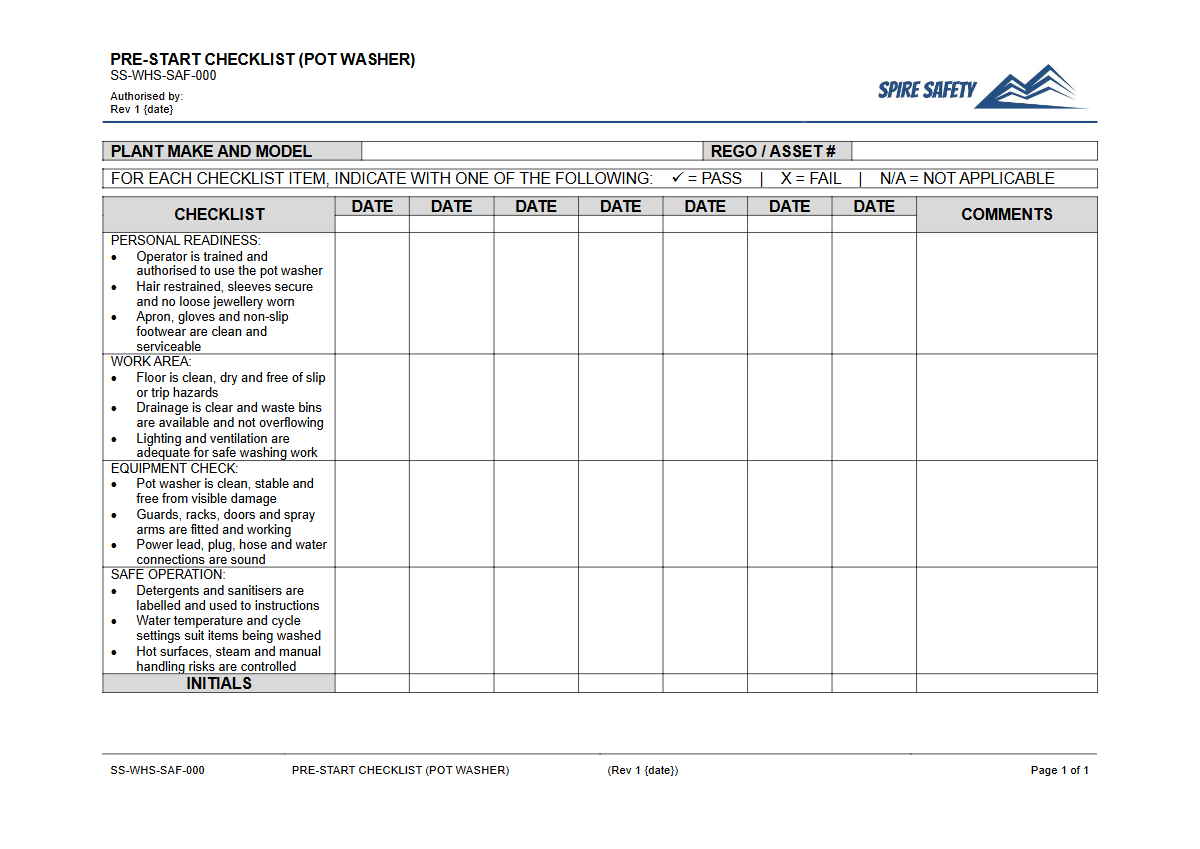
Download our free Pre-Start Checklist (Pot Washer) Template for commercial kitchens. This DOCX & PDF resource helps formalise safety checks. Get yours now.
Free Pre-Start Checklist (Pot Washer) Template
DOCX • 125 KB + PDF
Updated Oct 2026
No signup required
Purpose of the Free Pre-Start Checklist (Pot Washer) Template
Regularly inspecting kitchen equipment is a fundamental aspect of maintaining a safe working environment in any commercial kitchen, aged care facility, or hospitality venue. This Free Pre-Start Checklist (Pot Washer) Template provides a structured starting point for formalising your daily equipment inspections.
Using this checklist helps workers systematically identify potential hazards before they operate the machine, significantly reducing the risk of injury or equipment failure.
Commercial pot washers present several risks that must be managed. These include severe burns from high-temperature water and steam, chemical exposure from industrial-strength detergents and rinse aids, electrical shock from faulty components, and ergonomic injuries from incorrect loading and unloading techniques.
A thorough pre-start inspection ensures that safety features like door seals, emergency stops, and chemical supply lines are all in good working order. A similar focus on equipment integrity is vital for other machinery, as outlined in our free Pressure Washer SOP template.
Video walkthrough
How to use the Free Pre-Start Checklist (Pot Washer) Template
This resource is available as both a DOCX file for easy editing in Microsoft Word and a PDF for straightforward printing. To get started, simply download the template and integrate it into your daily operational procedures.
It is designed to be a clear, user-friendly tool that guides the operator through a logical inspection sequence, covering the machine's physical condition, operational controls, and surrounding environment.
It is crucial that you customise this template to suit your specific workplace. We've provided a solid foundation based on common Australian WHS principles, but you must adapt it to the make and model of your pot washer, the specific chemicals you use, and your site's unique operational context.
Adding machine-specific checks ensures all potential hazards are considered. Implementing such customised documents is a key part of building robust WHS management systems that effectively protect your team.
When to use it
The pre-start checklist should be completed before the first use of the pot washer on every shift. This simple five-minute routine establishes a proactive safety culture, shifting the focus from reacting to incidents to preventing them from happening in the first place.
Consistent daily checks ensure that any developing issues, such as a slow leak, a worn door gasket, or an unusual noise, are caught early before they escalate into a major hazard or a costly breakdown. This habit can be reinforced through regular safety discussions, such as those facilitated by our Pre-Start Checks and Plant Maintenance Toolbox Talk.
Who should use it
This checklist is designed for use by the primary operators of the pot washer, who are typically kitchen hands, stewards, or chefs. It is essential that anyone tasked with completing the checklist is properly trained not only on how to use the pot washer safely but also on how to conduct a thorough pre-start inspection.
Supervisors should review the completed checklists daily to supports your compliance efforts and address any reported faults promptly. Documenting these discussions can be done using a structured format like a Free Pre-Start Meeting Template to ensure all actions are recorded.
What to do if a fault is found
If an operator identifies a fault or any damage during the pre-start check, the equipment must not be used. The worker should immediately apply a 'Do Not Operate' or 'Out of Service' tag to the machine and report the issue to their supervisor or manager.
This clear procedure ensures that faulty equipment is isolated, preventing accidental use and allowing for timely repairs to be organised. For organisations needing assistance in developing these critical safety procedures, Spire Safety offers expert WHS consulting services.
Common mistakes
Common mistakes to avoid
- "Pencil-whipping" the checklist without performing the actual visual and physical inspections.
- Failing to customise the generic template for the specific pot washer model in use.
- Neglecting to tag out and report faulty equipment immediately after it is identified.
- Treating the check as a paperwork exercise instead of a critical WHS control measure.
Legal references
Legal considerations
The following legal requirements may be relevant to this type of work.
- Work Health and Safety Act (Harmonised) — Provides the primary duties for protecting workers and other people from work health and safety risks.
- Work Health and Safety Regulations (Harmonised) — Sets out requirements supporting the management of workplace hazards and risks.
The following codes may be relevant to this type of work.
- Managing WHS Risks Code of Practice — Provides practical guidance on identifying hazards, assessing risks and applying effective controls.
- Work Health and Safety Consultation, Cooperation and Coordination Code of Practice — Provides practical guidance on consulting workers and coordinating with other duty holders.
- Managing the Work Environment and Facilities Code of Practice — Provides practical guidance on safe work environments, workplace facilities and related controls.
Did you know
Hot Water Hazards
Water heated to 60°C can cause a third-degree burn in just five seconds. Commercial pot washers often operate at much higher temperatures, making pre-start checks of seals and doors critical.
Slips, Trips, and Falls
Slips, trips, and falls are a leading cause of injury in the hospitality industry. A leaking pot washer can create a significant slip hazard, which a pre-start check can help identify early.
FAQ
Frequently asked questions
01What are the main hazards of a commercial pot washer?
02Why is a pre-start check necessary for a pot washer?
03Can I use a generic checklist for all my kitchen equipment?
04Who is responsible for training staff on pot washer safety?
Share this resource
Free Pre-Start Checklist (Pot Washer) Template
Browse Categories
How To Use It
- 1Download and open in Word or PDF.
- 2Replace the placeholders with your business details.
- 3Get it reviewed by a WHS specialist before rollout.
Need it customised?
Our WHS consultants can adapt this template to your site, run a gap analysis, or audit what you already have in place.
Book a Free Consultation WHS consulting servicesor call 1300 156 382