
Free Pre-Start Checklist (Pothole Patch) Template
Download our free Pre-Start Checklist (Pothole Patch) template.
Free Pre-Start Checklist (Pothole Patch) Template
DOCX • 125 KB + PDF
Updated Oct 2026
No signup required
Purpose of the Free Pre-Start Checklist (Pothole Patch) Template
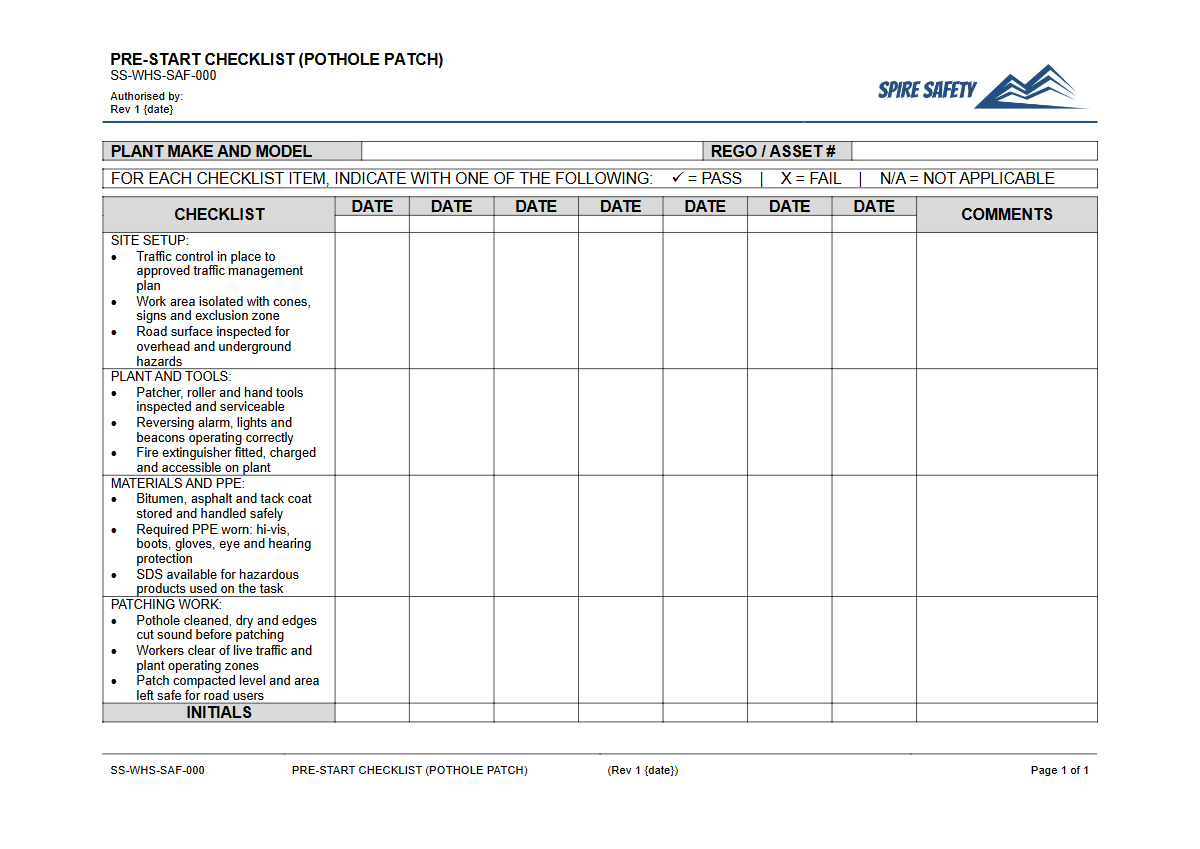
This free Pre-Start Checklist (Pothole Patch) Template provides a structured starting point for organisations undertaking road maintenance and repair activities. Using this template helps formalise the process of inspecting pothole patching equipment before use, ensuring it is safe to operate and identifying potential faults before they lead to incidents or costly breakdowns.
Consistent use of pre-start checks is a fundamental component of proactive safety management, helping to demonstrate due diligence and maintain a safe working environment for operators and the public.
A thorough pre-start inspection verifies that all critical safety and operational components—such as guards, emergency stops, hydraulic systems, and heating elements—are functioning correctly. Integrating this checklist into your daily procedures forms a critical part of broader WHS management systems, creating a documented record of equipment condition and maintenance needs over time.
Video walkthrough
How to use the Free Pre-Start Checklist (Pothole Patch) Template
To get started, download the template in your preferred format (DOCX or PDF). The DOCX version is fully editable, allowing for easy customisation to suit your specific operational needs and equipment models.
This checklist should be used as a practical tool by equipment operators at the start of their shift to guide them through a systematic inspection.
Important: This document is a template and must be customised for your workplace. We have designed it as a starting point, and it must be adapted to the specific make and model of your pothole patching equipment, your site conditions, and your organisation's unique safety procedures.
To ensure operators understand the importance and correct process for these checks, consider running a specific training session, which can be supported by our Pre-Start Checks and Plant Maintenance Toolbox Talk template.
What to do if a fault is identified
If an operator identifies any defects, faults, or damage during the pre-start inspection, the equipment must not be used. The issue should be immediately reported to a supervisor or manager.
The equipment should be isolated and tagged out of service according to your organisation's procedures to prevent inadvertent use until it has been inspected by a qualified person and certified as safe to return to service.
When to use it
A pre-start checklist for pothole patching equipment should be completed before every use. This typically means at the beginning of each shift or each time a new operator takes control of the machinery.
Regular checks are essential for identifying issues that may have developed during previous operation, transit, or overnight. This routine is a key part of daily site safety briefings, which can be documented using a free Pre-Start Meeting Template to ensure all team members are aware of the day's tasks and hazards.
Who should use it
This pre-start checklist is designed to be completed by the person operating the pothole patching equipment. Operators must be deemed competent, meaning they have received the necessary training, instruction, and information to use the machine safely.
Supervisors and managers also have a role in reviewing the completed checklists to monitor the condition of equipment, identify recurring issues, and ensure that safety procedures are being followed consistently. The information from a pre-start check helps inform other critical safety documents, such as a Safe Work Method Statement for Concrete Truck Operation or similar high-risk activities.
Implementing and maintaining these safety processes can be complex. If your organisation requires assistance in developing or reviewing your safety documentation and procedures, Spire Safety offers expert WHS consulting to help build practical and effective safety frameworks.
You can also explore our free WHS resources library for a wide range of other templates and guides to support your safety management efforts.
Common mistakes
Common mistakes to avoid
- Completing the checklist from memory without physically inspecting each item ('pencil-whipping').
- Failing to tag out and report faulty equipment, allowing it to remain in service.
- Using a generic plant checklist that doesn't cover the specific hazards of a pothole patcher (e.g., heating systems, augers, compactors).
- Not having supervisors review completed checklists to identify trends or recurring equipment issues.
Legal references
Legal considerations
The following legal requirements may be relevant to this type of work.
- Work Health and Safety Act (Harmonised) — Provides the primary duties for protecting workers and other people from work health and safety risks.
- Work Health and Safety Regulations (Harmonised) — Sets out requirements supporting the management of workplace hazards and risks.
The following codes may be relevant to this type of work.
- Managing WHS Risks Code of Practice — Provides practical guidance on identifying hazards, assessing risks and applying effective controls.
- Work Health and Safety Consultation, Cooperation and Coordination Code of Practice — Provides practical guidance on consulting workers and coordinating with other duty holders.
- Managing the Work Environment and Facilities Code of Practice — Provides practical guidance on safe work environments, workplace facilities and related controls.
Did you know
Cost of Poor Roads
In Australia, it's estimated that poorly maintained roads, including those with potholes, contribute significantly to vehicle wear and tear, costing motorists hundreds of dollars each year in extra maintenance and fuel consumption.
Asphalt Technology
Modern pothole patching technology often uses infrared heaters to heat the existing asphalt in and around the pothole, allowing it to be reworked and fused with new material for a more seamless and durable repair compared to traditional 'throw-and-go' methods.
FAQ
Frequently asked questions
01What is the main purpose of a pre-start checklist for pothole patching equipment?
02How often should a pothole patcher pre-start check be completed?
03Who is responsible for completing the pothole patcher pre-start checklist?
04Can this template be used for other types of road repair equipment?
Share this resource
Free Pre-Start Checklist (Pothole Patch) Template
Browse Categories
How To Use It
- 1Download and open in Word or PDF.
- 2Replace the placeholders with your business details.
- 3Get it reviewed by a WHS specialist before rollout.
Need it customised?
Our WHS consultants can adapt this template to your site, run a gap analysis, or audit what you already have in place.
Book a Free Consultation WHS consulting servicesor call 1300 156 382