
Free Pre-Start Checklist (Prime Mover) Template
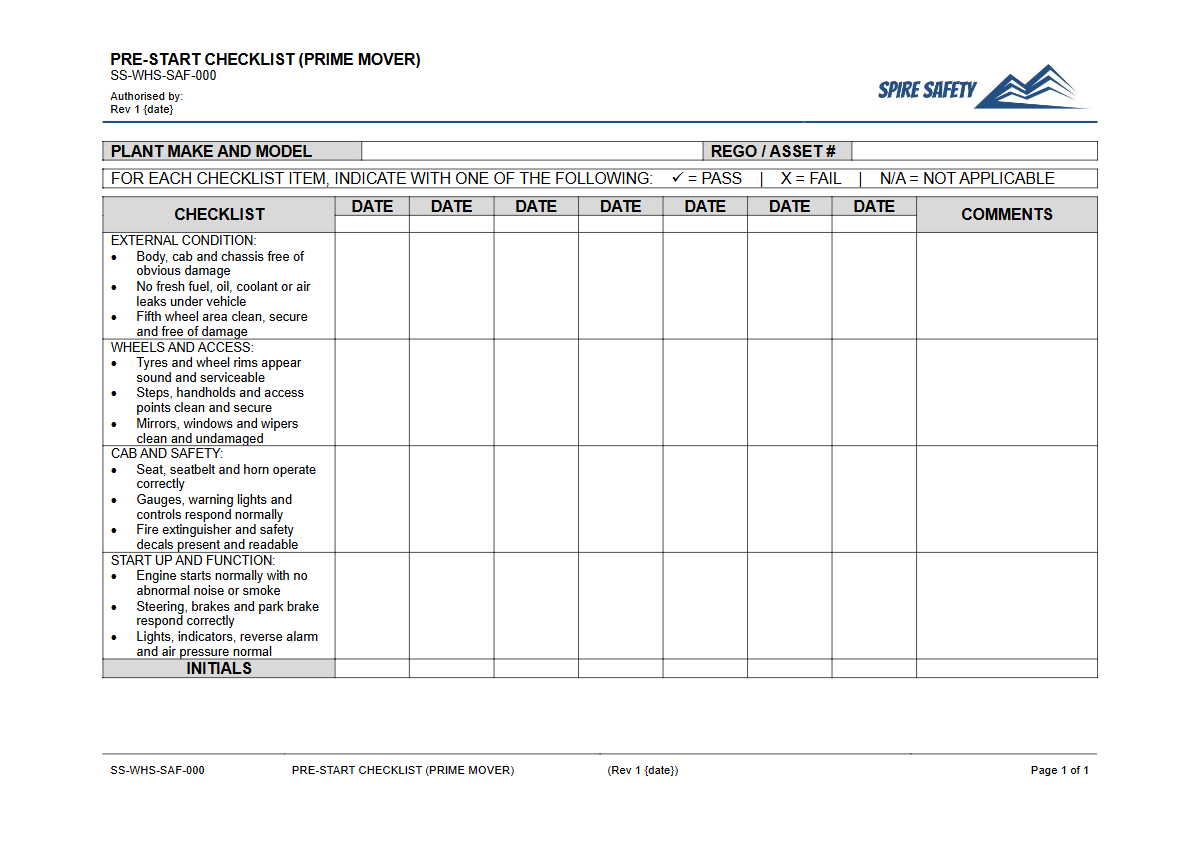
Download our free Pre-Start Checklist (Prime Mover) Template (DOCX & PDF). A structured starting point for formalising daily heavy vehicle inspections.
Free Pre-Start Checklist (Prime Mover) Template
DOCX • 125 KB + PDF
Updated Oct 2026
No signup required
Purpose of the Free Pre-Start Checklist (Prime Mover) Template
A prime mover is a significant piece of plant, and ensuring its safe operation is a critical WHS duty. This free Pre-Start Checklist (Prime Mover) Template provides a structured format for drivers and operators to conduct thorough, systematic inspections before starting a shift.
Using a checklist helps formalise the inspection process, ensuring that key safety components like brakes, steering, couplings, and tyres are checked consistently. It creates a documented record that the vehicle was in a safe condition at the start of operation, which is a key part of managing risks associated with heavy vehicles.
This process helps prevent accidents caused by mechanical failure and supports compliance with duties under the Heavy Vehicle National Law (HVNL).
Regularly completing a pre-start check demonstrates a proactive approach to safety. Identifying and addressing minor defects early can prevent them from becoming major, costly, and dangerous failures on the road.
The process is similar for other heavy mobile plant, like that covered in our pre-start checklist for a forwarder, where consistent checks are vital for operational safety.
Video walkthrough
How to use the Free Pre-Start Checklist (Prime Mover) Template
This template is provided in both DOCX and PDF formats for your convenience. The DOCX file is fully editable, allowing you to tailor the checklist to the specific requirements of your fleet and operations.
To implement it effectively, download the template and customise the items to match the make, model, and configuration of your prime movers. Consider adding items specific to your loads, routes, or work environment.
Important: This template is a starting point and must be adapted for your specific workplace. We recommend conducting a risk assessment on your prime movers to identify all relevant hazards.
You must customise this checklist to include inspection points that address those specific risks, ensuring it reflects the unique equipment and operational context of your business.
Once customised, integrate the checklist into your daily procedures. Train all operators on how to perform each check correctly and what the expected standards are.
This pre-start process should form a core component of a robust WHS management system, linking daily checks to broader maintenance and safety protocols.
When to use it
A pre-start check should be completed by the operator at the beginning of every shift or before the vehicle is used for the first time on any given day. It should become a non-negotiable part of the daily routine.
Additionally, a walk-around inspection is good practice if another driver takes over the vehicle mid-shift. The checklist should also be used after any significant maintenance or repair work to verify that the vehicle is safe to return to service.
Consistent use ensures that the safety status of the vehicle is known at all times and that any emerging issues are captured promptly. The records generated can also be a valuable input during a routine WHS compliance audit.
Who should use it
The checklist is designed to be used by trained, licensed, and competent prime mover operators. These are the individuals with hands-on control of the vehicle and are best placed to notice small changes or defects.
Supervisors and Fleet Managers should also be familiar with the checklist to ensure it is being completed correctly and to action any faults reported by drivers. Maintenance personnel can use the completed checklists to identify recurring issues and inform preventative maintenance schedules.
The fundamental principles of pre-start inspections are universal across different types of equipment, a concept also seen in our bench grinder pre-start checklist for workshop tools.
Integrating Pre-Start Checks into Your Safety System
A pre-start checklist is not a stand-alone document; it's an active part of your safety management system. The information it generates needs to flow into other processes.
When an operator identifies a fault, there must be a clear procedure to follow, such as tagging the vehicle out of service, reporting the defect to a supervisor, and generating a maintenance request. This ensures that hazards are controlled immediately.
Integrating these steps effectively can be complex, and seeking guidance from a WHS consultant can help establish clear and effective procedures. For more templates and safety documentation, you can browse our complete free WHS resources library.
Common mistakes
Common mistakes to avoid
- Using a generic US or European checklist that doesn't align with Australian regulations or local conditions.
- "Pencil-whipping" the form without physically performing the checks.
- Failing to report minor defects, which can escalate into major roadside failures.
- Not customising the template to include checks for specific ancillary equipment (e.g., hydraulics, side-tippers).
Legal references
Legal considerations
The following legal requirements may be relevant to this type of work.
- Work Health and Safety Act (Harmonised) — Provides the primary duties for protecting workers and other people from work health and safety risks.
- Work Health and Safety Regulations (Harmonised) — Sets out requirements supporting the management of workplace hazards and risks.
The following codes may be relevant to this type of work.
- Managing WHS Risks Code of Practice — Provides practical guidance on identifying hazards, assessing risks and applying effective controls.
- Work Health and Safety Consultation, Cooperation and Coordination Code of Practice — Provides practical guidance on consulting workers and coordinating with other duty holders.
- Managing the Work Environment and Facilities Code of Practice — Provides practical guidance on safe work environments, workplace facilities and related controls.
Did you know
Chain of Responsibility
Under Australia's Chain of Responsibility (CoR) laws, everyone in the supply chain, not just the driver, can be held liable for safety breaches, including those related to poor vehicle maintenance and roadworthiness.
Tyre Pressure
Incorrect tyre pressure is a leading contributor to tyre failure on heavy vehicles. It severely impacts braking, handling, and fuel efficiency, making it a critical item on any pre-start checklist.
FAQ
Frequently asked questions
01What should a prime mover pre-start check include?
02How often should a prime mover pre-start be done?
03Who is responsible for conducting the prime mover pre-start check?
04What happens if a fault is found during a pre-start check?
Share this resource
Free Pre-Start Checklist (Prime Mover) Template
Browse Categories
How To Use It
- 1Download and open in Word or PDF.
- 2Replace the placeholders with your business details.
- 3Get it reviewed by a WHS specialist before rollout.
Need it customised?
Our WHS consultants can adapt this template to your site, run a gap analysis, or audit what you already have in place.
Book a Free Consultation WHS consulting servicesor call 1300 156 382