
Free Pre-Start Checklist (Ripper Attachment) Template
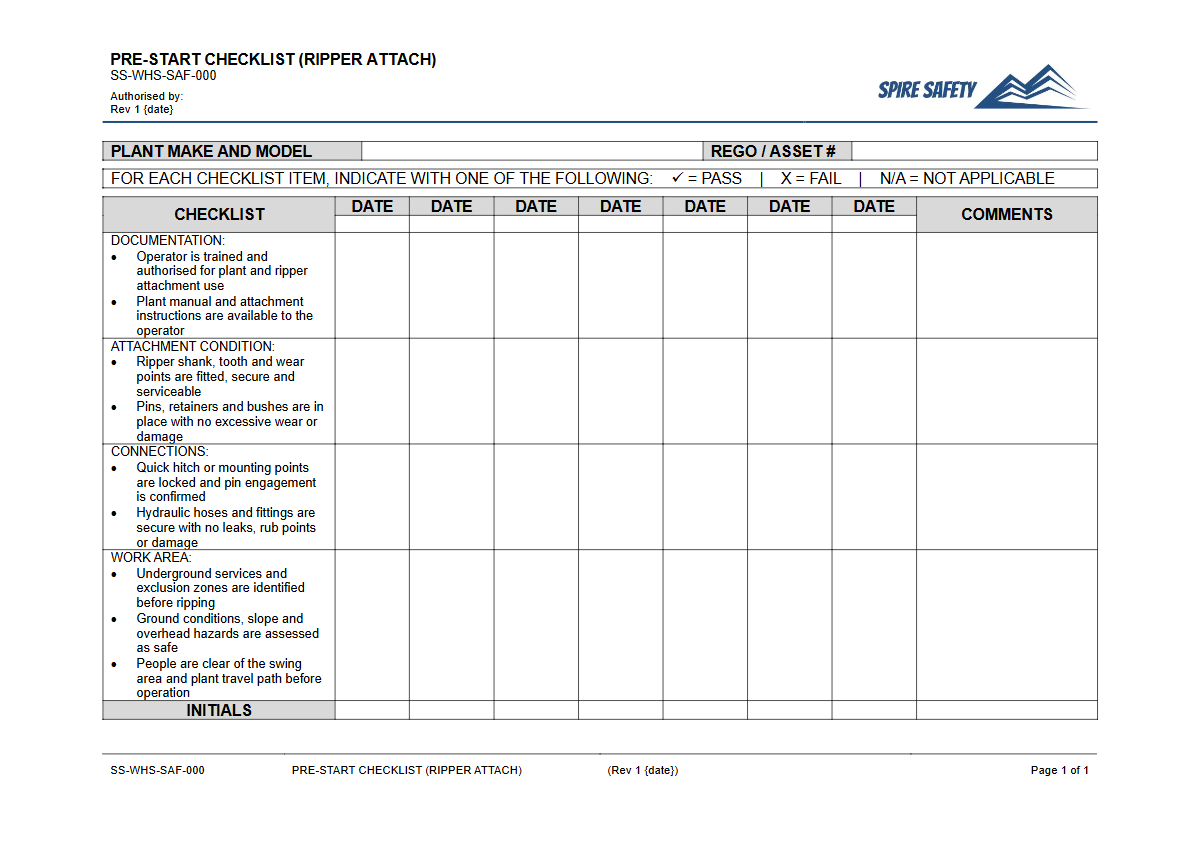
Download our free Pre-Start Checklist for Ripper Attachments. This template helps formalise daily equipment checks and identify hazards before use.
Free Pre-Start Checklist (Ripper Attachment) Template
DOCX • 125 KB + PDF
Updated Oct 2026
No signup required
Purpose of the Free Pre-Start Checklist (Ripper Attachment) Template
Operating heavy machinery with attachments like rippers introduces significant risks if not managed correctly. This Free Pre-Start Checklist (Ripper Attachment) Template provides a structured starting point for formalising daily inspections.
The primary goal is to systematically identify and control hazards before the equipment is used. Regular checks help detect issues such as hydraulic leaks, structural fatigue, wear on tynes, and insecure locking mechanisms, preventing attachment failure, property damage, or serious injury.
Implementing consistent pre-start inspections is a fundamental part of any plant safety program. It demonstrates a proactive approach to risk management and helps maintain the equipment in safe working order.
To reinforce this practice with your team, consider using our Pre-Start Checks and Plant Maintenance Toolbox Talk Template to facilitate focused safety discussions.
Video walkthrough
How to use the Free Pre-Start Checklist (Ripper Attachment) Template
This template is provided in both DOCX and PDF formats for your convenience. To get started, download the file and integrate it into your safety management procedures.
The checklist guides operators through a logical inspection sequence, covering critical components of the ripper attachment itself, as well as its connection to the host machine (e.g., dozer, excavator, grader).
Important: This is a template, not a finished document. You must customise it to suit your specific workplace.
We recommend adding your company branding and including details specific to the make and model of your ripper attachment and host machinery. When introducing this new process, it's vital to consult with your workers.
You can use a Free Pre-Start Meeting Template to document these discussions and ensure everyone understands their responsibilities.
When to use a Ripper Attachment Checklist
A pre-start checklist for a ripper attachment should be completed by a competent operator before each shift or before the first use of the day. It should become a non-negotiable routine, just like checking the engine oil or fuel level of the machine itself.
The check should also be performed after the attachment has been fitted to a machine to ensure it has been connected correctly and securely.
Additionally, it's good practice to conduct a brief post-use inspection to identify any damage that may have occurred during operation, allowing for timely repairs. This process isn't unique to rippers; similar diligence is required for all attachments.
For example, if you also use ground-aerating equipment, our Free Pre-Start Checklist (Aerator) Template provides a comparable framework.
Who should use this Checklist
This checklist is designed for use by individuals directly involved with the equipment. This includes:
- Plant Operators: As the primary users, they are responsible for conducting the daily check and reporting any faults.
- Supervisors and Forepersons: They are responsible for ensuring the checks are being completed correctly and that any identified issues are addressed promptly.
- Maintenance Personnel: Fitters and mechanics can use the completed checklists to understand recurring faults and schedule preventative maintenance.
Using this template helps formalise operational discipline and provides documented evidence of your inspection regime. These records are a critical component of effective WHS management systems, demonstrating due diligence in managing plant-related risks.
Integrating Ripper Checks into Your Safety System
A pre-start checklist is one part of a comprehensive safety system. It works alongside other critical WHS documents and processes.
For instance, the hazards identified during pre-start checks should align with the risks outlined in your risk assessments or Safe Work Method Statements. While this checklist focuses on pre-operational safety, high-risk tasks involving the machinery require a full SWMS, such as the process detailed in our SWMS for Concrete Truck Operation template.
Periodically, you should verify that your safety processes are effective and being followed correctly. Completed checklists can serve as valuable evidence during safety reviews or audits.
If you need assistance evaluating the effectiveness of your overall safety framework, a WHS compliance audit can provide expert third-party insight and identify areas for improvement.
This document is one of many tools available to help you build a safer workplace. Feel free to explore our complete free WHS resources library for more templates, checklists, and toolbox talks to support your safety objectives.
Common mistakes
Common mistakes to avoid
- Pencil-whipping the checklist without physically inspecting the attachment.
- Ignoring small hydraulic leaks or 'weeping' hoses, which indicate imminent failure.
- Failing to confirm that locking pins and retainers are fully and correctly engaged.
- Using a generic checklist that doesn't cover the specific model of ripper or its host machine.
Legal references
Legal considerations
The following legal requirements may be relevant to this type of work.
- Work Health and Safety Act (Harmonised) — Provides the primary duties for protecting workers and other people from work health and safety risks.
- Work Health and Safety Regulations (Harmonised) — Sets out requirements supporting the management of workplace hazards and risks.
The following codes may be relevant to this type of work.
- Managing WHS Risks Code of Practice — Provides practical guidance on identifying hazards, assessing risks and applying effective controls.
- Work Health and Safety Consultation, Cooperation and Coordination Code of Practice — Provides practical guidance on consulting workers and coordinating with other duty holders.
- Managing the Work Environment and Facilities Code of Practice — Provides practical guidance on safe work environments, workplace facilities and related controls.
Did you know
Attachment Failure
Ground-engaging tools like rippers experience immense force. The vast majority of attachment failures result from incorrect fitting or undetected wear on critical components like pins and locking mechanisms.
Hydraulic Pressure Dangers
Hydraulic systems on heavy machinery can operate at pressures exceeding 3,000 PSI. A pinhole leak at this pressure can inject hydraulic fluid under the skin, causing severe, deep-tissue injuries that require immediate medical attention.
FAQ
Frequently asked questions
01What should be included in a ripper attachment pre-start inspection?
02How often should a ripper attachment pre-start check be completed?
03Is a digital pre-start checklist better than a paper one?
04Who is responsible for ensuring pre-start checks are done?
Share this resource
Free Pre-Start Checklist (Ripper Attachment) Template
Browse Categories
How To Use It
- 1Download and open in Word or PDF.
- 2Replace the placeholders with your business details.
- 3Get it reviewed by a WHS specialist before rollout.
Need it customised?
Our WHS consultants can adapt this template to your site, run a gap analysis, or audit what you already have in place.
Book a Free Consultation WHS consulting servicesor call 1300 156 382