
Free Pre-Start Checklist (Road Planer) Template
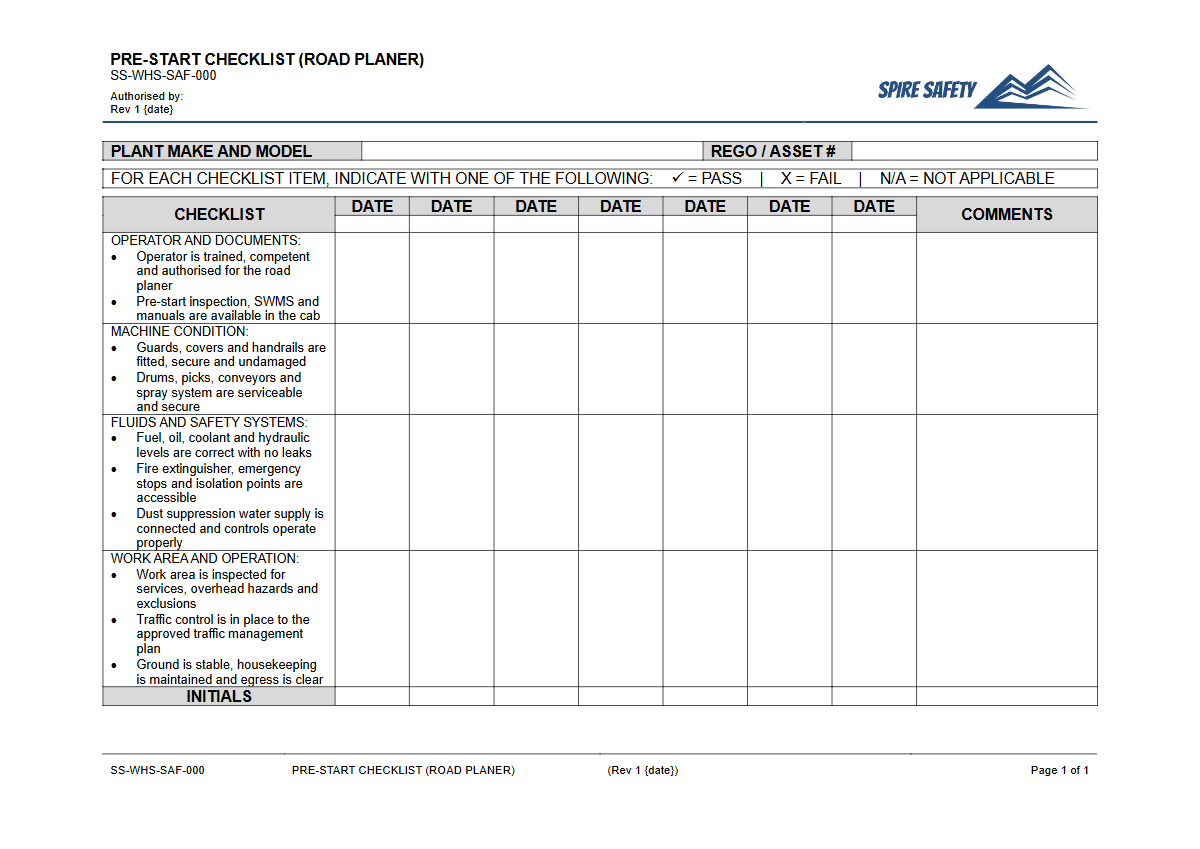
Download our free Pre-Start Checklist for Road Planers. This template helps formalise equipment safety inspections and manage WHS risks.
Free Pre-Start Checklist (Road Planer) Template
DOCX • 125 KB + PDF
Updated Oct 2026
No signup required
Purpose of the Free Pre-Start Checklist (Road Planer) Template
A road planer, also known as a cold planer or asphalt milling machine, is powerful and complex mobile plant. Ensuring it is safe to operate before each use is a critical WHS responsibility.
This Free Pre-Start Checklist (Road Planer) Template provides a structured framework for operators to conduct thorough, consistent inspections. Using a checklist helps formalise the process of identifying potential hazards, mechanical faults, or damage that could lead to an incident.
It serves as a daily record that the equipment was inspected, promoting operator accountability and a proactive safety culture.
Regular pre-start inspections are a fundamental part of plant maintenance and risk management. They help prevent unexpected breakdowns, reduce costly repairs, and, most importantly, protect the operator and other workers from harm.
Integrating these checks into your daily routine is a key step in meeting your primary duty of care under WHS legislation. To further support this process, consider running a specific Pre-Start Checks and Plant Maintenance Toolbox Talk to reinforce the importance of these inspections with your team.
Video walkthrough
How to use the Free Pre-Start Checklist (Road Planer) Template
This resource is provided in both DOCX and PDF formats for your convenience. The DOCX file is fully editable, allowing you to tailor the checklist to the specific make and model of your road planer and the unique conditions of your worksite.
It is crucial that you customise this template; a generic checklist may not cover all specific hazards or components of your equipment. We recommend adding your company branding, specific site rules, and any unique check items relevant to your machine's configuration (e.g., specific dust suppression systems, GPS guidance).
Once customised, the checklist should be integrated into your organisation's daily operational procedures. The process is simple: operators complete the checklist before starting the machine for their shift, sign and date it, and report any identified defects immediately to their supervisor.
Completed checklists should be filed as part of your safety management records. These records are vital for demonstrating due diligence and form an important part of broader WHS management systems, providing valuable data for maintenance scheduling and safety performance analysis.
Key Checks for a Road Planer
While your customised checklist will be more detailed, a thorough pre-start inspection for a road planer should always cover several key areas. These include:
- General Condition: Check for any visible damage, leaks (hydraulic, oil, coolant), or loose components. Ensure all guards and covers are secure.
- Operator's Cabin: Verify that the seat, seatbelt, controls, and gauges are functional. Check for clear visibility from the operator's station and ensure mirrors and cameras are clean and correctly adjusted.
- Cutting System: Inspect the cutting drum, tool holders, and cutting teeth (picks) for wear, damage, or missing parts. A damaged drum can cause excessive vibration and poor performance.
- Conveyor System: Check the condition and tension of both the primary and loading conveyor belts. Ensure rollers and scrapers are functioning correctly to prevent material build-up.
- Travel System: For wheeled or tracked models, inspect tyres or tracks for correct pressure, wear, and damage. Check that the braking and steering systems are responsive.
- Safety Systems: Test all safety features, including the horn, lights, travel alarm, and emergency stop buttons. Ensure fire extinguishers are present, charged, and accessible. As with any heavy vehicle, documenting checks is similar to what's required in a SWMS for Concrete Truck Operation.
When to use it
The road planer pre-start checklist must be completed before the plant is used for the first time in a shift. This ensures that any issues that may have developed overnight or since its last use are identified before work commences.
If multiple operators use the same machine during a day, a handover inspection should be conducted at the change of shift. It's also good practice to conduct a post-operative check to identify any maintenance needs for the next shift. These daily checks can be incorporated into your broader site safety briefings, which can be formalised using a Free Pre-Start Meeting Template.
Who should use it
The primary user of this checklist is the trained and competent operator assigned to the road planer. They have the hands-on responsibility for conducting the physical inspection and documenting their findings.
Supervisors also have a key role; they must ensure that operators are completing the checks correctly and that any reported faults are addressed promptly. A supervisor should review and sign off on the checklists and take immediate action to isolate and tag out any unsafe equipment. The process for managing risks identified in the checklist aligns with the broader safety planning documented in a Road Construction SWMS.
Completed checklists also provide valuable information for maintenance personnel, helping them to schedule preventative maintenance and prioritise repairs based on operator feedback. This collaborative approach ensures the ongoing mechanical integrity and safety of the plant.
Regular review of these records during WHS compliance audits can help identify trends and areas for improvement in your plant management program. You can find more templates like this one in our free WHS resources library.
Common mistakes
Common mistakes to avoid
- Completing the checklist from memory without physically inspecting each item ('pencil-whipping').
- Failing to report minor defects, which can escalate into major failures or safety incidents.
- Using a generic, non-customised checklist that doesn't cover the specific features or hazards of the road planer model.
- Continuing to operate a machine after a fault has been identified, rather than tagging it out of service for repair.
Legal references
Legal considerations
The following legal requirements may be relevant to this type of work.
- Work Health and Safety Act (Harmonised) — Provides the primary duties for protecting workers and other people from work health and safety risks.
- Work Health and Safety Regulations (Harmonised) — Sets out requirements supporting the management of workplace hazards and risks.
The following codes may be relevant to this type of work.
- Managing WHS Risks Code of Practice — Provides practical guidance on identifying hazards, assessing risks and applying effective controls.
- Work Health and Safety Consultation, Cooperation and Coordination Code of Practice — Provides practical guidance on consulting workers and coordinating with other duty holders.
- Managing the Work Environment and Facilities Code of Practice — Provides practical guidance on safe work environments, workplace facilities and related controls.
Did you know
Asphalt Recycling
The material removed by a road planer, known as reclaimed asphalt pavement (RAP), is highly recyclable. It is often reused in new asphalt mixes, reducing waste and the need for virgin materials.
Mobile Plant Safety
According to Safe Work Australia, incidents involving vehicles, particularly mobile plant, are a leading cause of workplace fatalities and serious injuries in the construction and transport industries.
FAQ
Frequently asked questions
01What is the purpose of a road planer pre-start checklist?
02How often should a road planer pre-start check be completed?
03Who is responsible for completing the road planer pre-start checklist?
04Can this template be used for other types of construction plant?
Share this resource
Free Pre-Start Checklist (Road Planer) Template
Browse Categories
How To Use It
- 1Download and open in Word or PDF.
- 2Replace the placeholders with your business details.
- 3Get it reviewed by a WHS specialist before rollout.
Need it customised?
Our WHS consultants can adapt this template to your site, run a gap analysis, or audit what you already have in place.
Book a Free Consultation WHS consulting servicesor call 1300 156 382