
Free Pre-Start Checklist (Road Profiler) Template
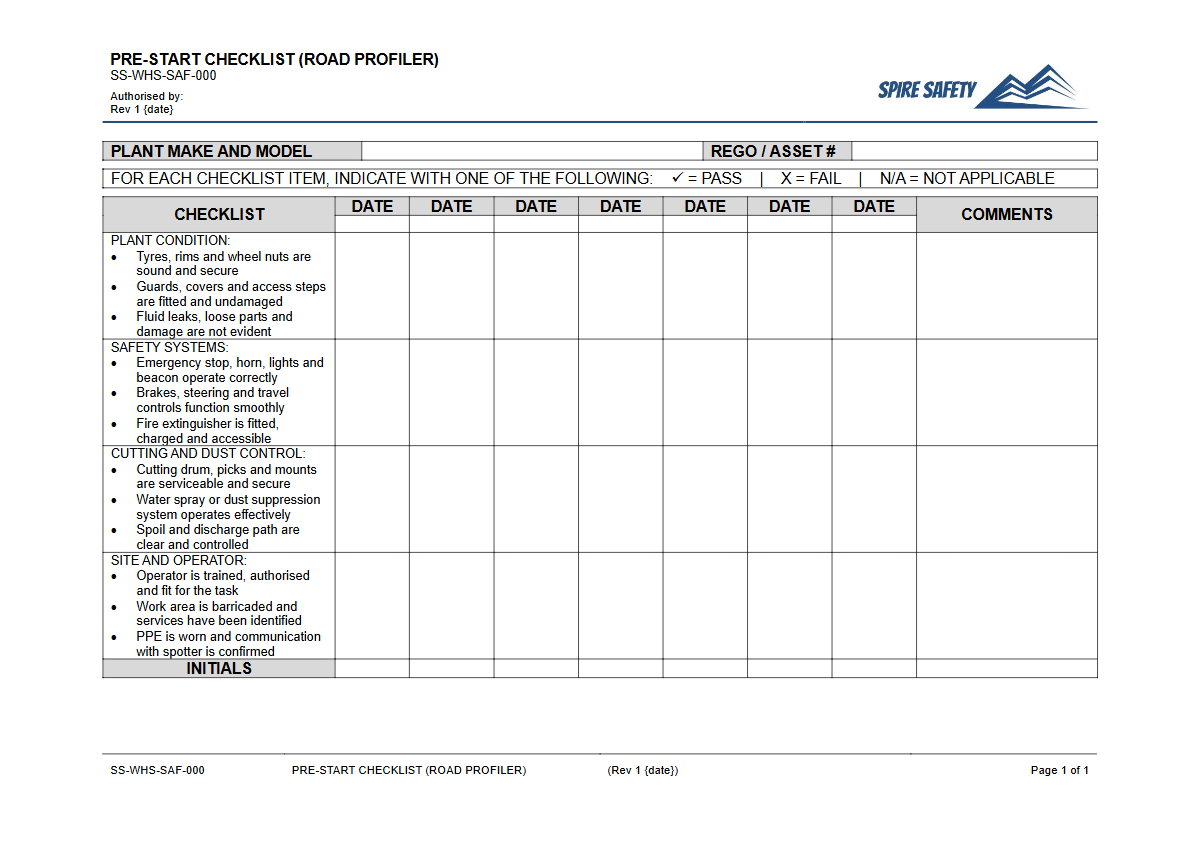
Download our free Pre-Start Checklist (Road Profiler) Template to formalise daily equipment inspections. This structured DOCX and PDF helps identify hazards.
Free Pre-Start Checklist (Road Profiler) Template
DOCX • 125 KB + PDF
Updated Oct 2026
No signup required
Purpose of the Free Pre-Start Checklist (Road Profiler) Template
This free Pre-Start Checklist (Road Profiler) Template provides a structured starting point for operators to conduct daily safety inspections before using a road profiler or cold planer. Regular pre-start checks are a fundamental part of maintaining a safe work environment and ensuring heavy machinery is fit for service.
Integrating these checks into your daily routine is a key component of an effective WHS management system, helping to identify potential faults before they lead to incidents, costly downtime, or injuries.
The main purpose of this Pre-Start Checklist (Road Profiler) Template is to formalise the process of inspecting the equipment before use. It guides the operator through a logical sequence of checks covering critical safety and operational components, such as the engine, hydraulics, cutting drum, conveyor system, and operator controls.
By documenting these checks, a Person Conducting a Business or Undertaking (PCBU) can demonstrate due diligence in managing plant-related risks. This process complements other critical safety documents, such as a free Road Construction SWMS template, by focusing specifically on the mechanical and electrical integrity of the machine itself.
Video walkthrough
How to use the Free Pre-Start Checklist (Road Profiler) Template
To use this Pre-Start Checklist (Road Profiler) Template effectively, download the DOCX file and adapt it to the specific make and model of the profiler used at your workplace. Add your company branding, site details, and any unique inspection points relevant to your machine's configuration or the tasks it performs.
It is crucial to train operators on how to conduct a thorough inspection, not just tick boxes. This can be reinforced through regular site safety meetings, such as by using a Pre-Start Checks and Plant Maintenance Toolbox Talk.
Important Note: This template is a guide only. It is your responsibility to customise it to address the specific hazards and operational requirements of your workplace and equipment.
We recommend consulting the manufacturer’s operating manual for a definitive list of inspection points.
When to use it
A pre-start inspection should be completed at the beginning of every shift or before the road profiler is used for the first time each day. It should also be conducted if a new operator takes over the machine during a shift.
The checklist serves as a record that the inspection was performed, with completed forms typically submitted to a supervisor or site manager. These records are valuable for tracking maintenance needs and can be reviewed during safety audits, with key findings raised using a free Pre-Start Meeting Template to ensure all team members are aware of any new or temporary controls.
Who should use it
The pre-start checklist should be completed by the competent, trained, and authorised operator of the road profiler. This individual has the most direct knowledge of the machine's condition and is best placed to identify any changes, noises, or faults.
Supervisors and managers also have a role in ensuring the checks are completed correctly and that any reported defects are addressed promptly. These documented checks provide evidence of systematic plant management, which is often a key focus of formal WHS compliance auditing.
Properly managing the risks associated with heavy plant like road profilers is non-negotiable in the construction industry. This checklist is one of many tools that can support your safety processes. Similar principles apply to managing other mobile plant, such as those covered in our Safe Work Method Statement (Concrete Truck Operation) Template. For more downloadable documents, browse our complete free WHS resources library.
Common mistakes
Common mistakes to avoid
- Ignoring minor hydraulic leaks, which can indicate a developing major failure.
- Failing to check the condition and security of every cutting tooth on the drum.
- Skipping checks on safety features like emergency stops, alarms, and guards.
- Treating the checklist as a 'tick-and-flick' exercise without genuine physical inspection.
Legal references
Legal considerations
The following legal requirements may be relevant to this type of work.
- Work Health and Safety Act (Harmonised) — Provides the primary duties for protecting workers and other people from work health and safety risks.
- Work Health and Safety Regulations (Harmonised) — Sets out requirements supporting the management of workplace hazards and risks.
The following codes may be relevant to this type of work.
- Managing WHS Risks Code of Practice — Provides practical guidance on identifying hazards, assessing risks and applying effective controls.
- Work Health and Safety Consultation, Cooperation and Coordination Code of Practice — Provides practical guidance on consulting workers and coordinating with other duty holders.
- Managing the Work Environment and Facilities Code of Practice — Provides practical guidance on safe work environments, workplace facilities and related controls.
Did you know
Cutting Forces
The cutting teeth on a road profiler can experience extreme forces and temperatures, making regular inspection for wear, damage, and security essential for both performance and safety.
Silica Dust Hazard
Milling concrete or asphalt can generate high levels of respirable crystalline silica dust. A pre-start check must confirm the water spray dust suppression system is fully operational to protect workers and the public.
FAQ
Frequently asked questions
01What are the most critical items on a road profiler pre-start checklist?
02How often should a road profiler pre-start check be completed?
03Who is responsible for completing and signing off on the checklist?
04Can a digital pre-start checklist be used instead of a paper one?
Share this resource
Free Pre-Start Checklist (Road Profiler) Template
Browse Categories
How To Use It
- 1Download and open in Word or PDF.
- 2Replace the placeholders with your business details.
- 3Get it reviewed by a WHS specialist before rollout.
Need it customised?
Our WHS consultants can adapt this template to your site, run a gap analysis, or audit what you already have in place.
Book a Free Consultation WHS consulting servicesor call 1300 156 382