
Free Pre-Start Checklist (Roll Conveyor) Template
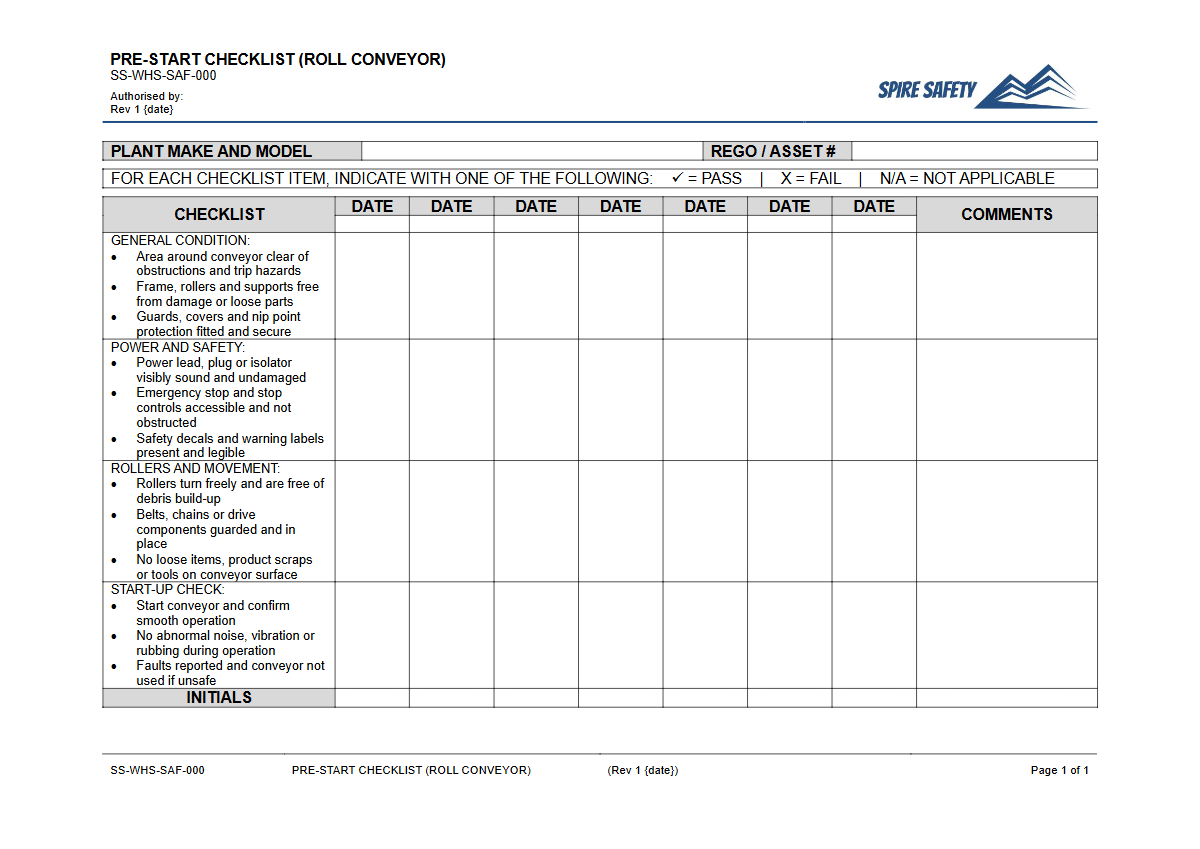
Download our free Pre-Start Checklist (Roll Conveyor) Template. This structured DOCX & PDF helps formalise daily equipment checks and manage WHS risks.
Free Pre-Start Checklist (Roll Conveyor) Template
DOCX • 125 KB + PDF
Updated Oct 2026
No signup required
Purpose of the Free Pre-Start Checklist (Roll Conveyor) Template
Effectively managing workplace health and safety requires consistent and thorough procedures, especially for machinery with moving parts. This Free Pre-Start Checklist (Roll Conveyor) Template provides a structured starting point for organisations to formalise daily equipment inspections.
Using this checklist helps operators systematically identify potential hazards before they cause an incident. Key risks associated with roll conveyors include unguarded moving parts, pinch points, damaged rollers, and malfunctioning emergency stops.
By documenting these checks, a Person Conducting a Business or Undertaking (PCBU) can demonstrate due diligence in managing plant safety risks.
A documented pre-start process is a critical component of proactive risk management. It encourages a safety-first mindset among operators and provides a clear record of the equipment's condition over time.
Integrating such checklists into your broader WHS management systems creates a robust framework for maintaining plant safety, ensuring issues are identified, reported, and rectified promptly. This practice helps prevent equipment failure, reduces downtime, and, most importantly, protects workers from harm.
Video walkthrough
How to use the Free Pre-Start Checklist (Roll Conveyor) Template
This resource is available for download in both DOCX and PDF formats. The DOCX file is fully editable, allowing for customisation to suit your specific workplace and machinery.
It is crucial to adapt this template before implementation.
Important: This document is a template only. We recommend a competent person reviews and adapts it to address the specific hazards of your conveyor system, operational environment, and internal procedures.
You should add your company branding and details, along with specific checks relevant to the make and model of your roll conveyor. This might include inspections for specific drive mechanisms, belt tensioners, or unique guarding arrangements that are not covered in a generic template.
What to Check on a Roll Conveyor
While your customised checklist will be more detailed, a typical roll conveyor inspection should cover several key areas to ensure safe operation. These checks form the foundation of a good pre-start routine.
- Guarding: Ensure all guards are in place, secure, and undamaged. This includes guards over drive chains, belts, motors, and any accessible pinch points or nip hazards.
- Emergency Stops: Verify that all emergency stop buttons, pull-cords, and other safety cut-offs are clearly visible, accessible, and functional. Test them to ensure they effectively halt the conveyor's movement.
- Rollers and Frame: Visually inspect rollers for damage, excessive wear, or seizure. Check the conveyor frame for structural integrity, ensuring it is stable and free from damage or corrosion.
- Drive Mechanism: Inspect the motor, gearbox, chains, or belts for signs of wear, correct tension, and proper lubrication. Listen for any unusual noises during a brief test run.
- General Area: Check that the area around the conveyor is clear of obstructions, debris, and slip or trip hazards. Ensure adequate lighting and that all warning signs are legible and in place. While conveyors have unique risks, the principle of a structured check is universal for many types of equipment, such as that detailed in a Pre-Start Checklist for a Bench Grinder.
When to use a Roll Conveyor Pre-Start Checklist
A pre-start check should be completed by a trained operator at the beginning of each shift or before the conveyor is used for the first time on any given day. For equipment that is used infrequently, a check should still be performed before each use.
The frequency should be determined by a risk assessment, considering factors like the intensity of use, the operating environment, and the manufacturer's recommendations. Regular checks ensure the equipment's condition hasn't changed or deteriorated since its last use.
While the core function differs, the inspection frequency follows similar principles to those for a Pre-Start Checklist (Food Conveyor) Template, which also requires diligent pre-operational checks.
Who should use this checklist
This checklist is designed to be used by trained and authorised operators of the roll conveyor system. Competency is key; operators must understand not only how to operate the machinery but also what each item on the checklist means and how to identify a potential fault.
Supervisors or managers also have a role in reviewing completed checklists to ensure they are being filled out correctly and to action any reported defects or maintenance requests. These records can be a valuable input for periodic WHS compliance auditing to verify that safety procedures are being followed consistently.
This process ensures accountability and closes the loop on hazard reporting.
This document is just one of many templates designed to assist Australian businesses. For more tools to support your safety management framework, browse our complete free WHS resources library.
Common mistakes
Common mistakes to avoid
- Using a generic checklist without customising it for the specific make, model, and configuration of the conveyor.
- Operators performing 'tick and flick' checks without physically and visually inspecting each item.
- Failing to have a clear process for reporting, isolating, and rectifying defects found during the check.
- Not providing adequate training to operators on how to perform the inspection correctly and understand the hazards involved.
Legal references
Legal considerations
The following legal requirements may be relevant to this type of work.
- Work Health and Safety Act (Harmonised) — Provides the primary duties for protecting workers and other people from work health and safety risks.
- Work Health and Safety Regulations (Harmonised) — Sets out requirements supporting the management of workplace hazards and risks.
The following codes may be relevant to this type of work.
- Managing WHS Risks Code of Practice — Provides practical guidance on identifying hazards, assessing risks and applying effective controls.
- Work Health and Safety Consultation, Cooperation and Coordination Code of Practice — Provides practical guidance on consulting workers and coordinating with other duty holders.
- Managing the Work Environment and Facilities Code of Practice — Provides practical guidance on safe work environments, workplace facilities and related controls.
Did you know
Conveyor Entanglement
A significant portion of conveyor-related injuries involve entanglement of clothing, hair, or body parts in moving components like rollers, idlers, and drive chains. This is why ensuring all guards are in place is a critical pre-start check.
FAQ
Frequently asked questions
01What happens if a fault is found during a roll conveyor pre-start check?
02How often should our roll conveyor pre-start checklists be reviewed and updated?
03Is using a roll conveyor pre-start checklist a legal requirement in Australia?
04Can I use a digital app for my roll conveyor pre-start checks?
Share this resource
Free Pre-Start Checklist (Roll Conveyor) Template
Browse Categories
How To Use It
- 1Download and open in Word or PDF.
- 2Replace the placeholders with your business details.
- 3Get it reviewed by a WHS specialist before rollout.
Need it customised?
Our WHS consultants can adapt this template to your site, run a gap analysis, or audit what you already have in place.
Book a Free Consultation WHS consulting servicesor call 1300 156 382