
Free Pre-Start Checklist (Roof Fan) Template
Download our free Pre-Start Checklist for Roof Fans. This customisable template helps formalise safety checks before use. Get your DOCX & PDF now.
Free Pre-Start Checklist (Roof Fan) Template
DOCX • 125 KB + PDF
Updated Oct 2026
No signup required
Purpose of the Free Pre-Start Checklist (Roof Fan) Template
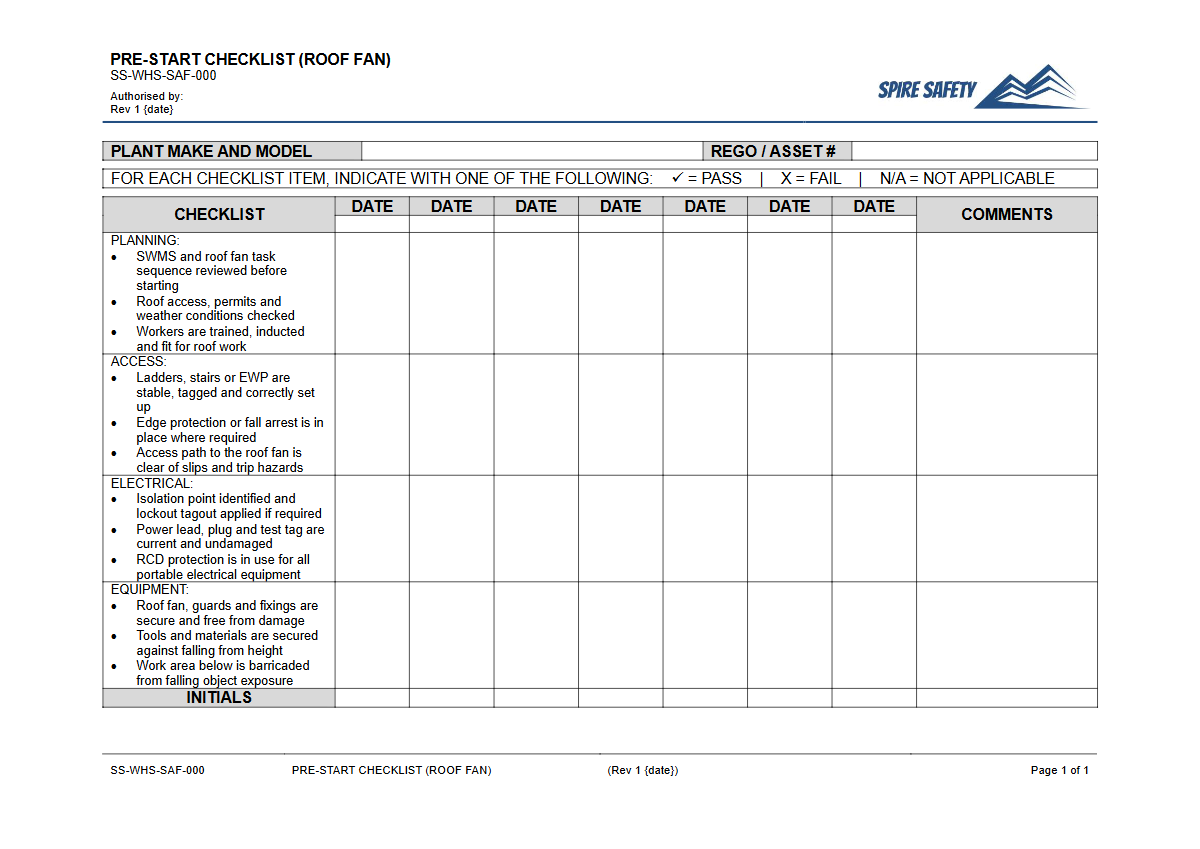
This Free Pre-Start Checklist (Roof Fan) Template provides a structured framework for conducting safety inspections on roof-mounted ventilation fans before they are operated or maintained. Roof fans, critical components of a building's HVAC system, present unique hazards due to their location, moving parts, and electrical connections.
Using this checklist helps systematically identify potential issues such as unsecured guards, electrical faults, debris in the fan housing, or excessive vibration, allowing them to be rectified before they lead to equipment failure or worker injury.
A consistent pre-start inspection process is a cornerstone of a proactive safety culture. It formalises the operator's responsibility to verify that the equipment is in safe working order, helping your organisation meet its primary duty of care under WHS legislation.
Documenting these checks also creates a valuable record for maintenance planning and incident investigations. Regular inspections are also discussed in our Pre-Start Checks and Plant Maintenance Toolbox Talk, which can help reinforce these practices with your team.
Video walkthrough
How to use the Free Pre-Start Checklist (Roof Fan) Template
The template is provided in both DOCX and PDF formats for your convenience. The DOCX file is fully editable, allowing you to tailor the checklist to the specific models of roof fans used at your workplace, the environmental conditions they operate in, and your site-specific safety procedures.
The PDF version is ready for immediate printing and use.
Important: This document is a template only. It is essential that you customise it to reflect the specific hazards and control measures relevant to your workplace.
We recommend a competent person reviews and adapts the checklist before you implement it as part of your safety procedures. The checks required for a small exhaust fan may differ significantly from those for a large-scale smoke spill fan, so context is critical.
Integrating this checklist into your organisation's broader safety framework is key to its effectiveness. This document can form part of your overall WHS management systems, ensuring that plant inspections are scheduled, completed, and reviewed consistently.
For similar equipment, you may also find our free Pre-Start Checklist (Air Handler) Template a useful resource.
When to use it
A roof fan pre-start checklist should be completed before the commencement of any work that involves operating or interacting with the fan. For maintenance technicians, this means completing the check before starting any repair, inspection, or cleaning tasks.
For building managers or operators who control the fan's daily operation, a check should be performed at the beginning of each day or shift to confirm its safe status.
The checklist is also a valuable tool to use before a team commences work on or around the equipment. Documenting the safety status of plant can be incorporated into daily team briefings, which can be structured using a free Pre-Start Meeting Template to ensure all relevant hazards are communicated.
Accessing roof-mounted equipment often involves working at height, which is a high-risk activity. The risk of falls is significant, as highlighted in a tragic safety incident resulting in a $100,000 fine after a fatal fall. Therefore, the pre-start process must also include checks of all fall prevention controls, such as guardrails, anchor points, and the condition of the roof surface itself.
Who should use it
This checklist is designed for use by competent personnel who are authorised to inspect, maintain, or operate roof fans. This typically includes HVAC technicians, electricians, maintenance fitters, and facilities management staff.
These individuals should be trained and experienced in identifying the mechanical and electrical hazards associated with this type of plant.
Supervisors and managers should also use the completed checklists to monitor compliance with safety procedures and identify recurring faults or trends that may indicate a need for more comprehensive maintenance or equipment replacement. Regular reviews of these records can be a vital component of ongoing risk management.
A periodic review of your safety processes by an external party can provide valuable insights, which is a key function of a WHS compliance auditing service.
This template is one of many tools designed to support your safety efforts. You can explore a wide range of similar documents in our extensive free WHS resources library to find templates suited to other plant and work activities at your site.
Common mistakes
Common mistakes to avoid
- Failing to lock out and tag out the fan's power source before any physical inspection.
- Ignoring minor vibrations or unusual noises, which can be early indicators of imminent mechanical failure.
- Completing the checklist from memory or as a paper-filling exercise without physically inspecting each item.
- Using the generic template without adapting it to the specific make, model, and location of the roof fan.
Legal references
Legal considerations
The following legal requirements may be relevant to this type of work.
- Work Health and Safety Act (Harmonised) — Provides the primary duties for protecting workers and other people from work health and safety risks.
- Work Health and Safety Regulations (Harmonised) — Sets out requirements supporting the management of workplace hazards and risks.
The following codes may be relevant to this type of work.
- Managing WHS Risks Code of Practice — Provides practical guidance on identifying hazards, assessing risks and applying effective controls.
- Work Health and Safety Consultation, Cooperation and Coordination Code of Practice — Provides practical guidance on consulting workers and coordinating with other duty holders.
- Managing the Work Environment and Facilities Code of Practice — Provides practical guidance on safe work environments, workplace facilities and related controls.
Did you know
Energy Efficiency
Regular cleaning and maintenance, often prompted by pre-start check findings, can improve a fan's energy efficiency by up to 15% by ensuring blades are clean and components are running smoothly.
Working at Height
Falls from height are a leading cause of fatalities in Australian workplaces. Safe access is a critical part of any task involving roof-mounted equipment like fans.
FAQ
Frequently asked questions
01What is the main purpose of a roof fan pre-start checklist?
02How often should a roof fan pre-start check be completed?
03Who is responsible for completing the roof fan checklist?
04Can this template be used for all types of roof fans?
Share this resource
Free Pre-Start Checklist (Roof Fan) Template
Browse Categories
How To Use It
- 1Download and open in Word or PDF.
- 2Replace the placeholders with your business details.
- 3Get it reviewed by a WHS specialist before rollout.
Need it customised?
Our WHS consultants can adapt this template to your site, run a gap analysis, or audit what you already have in place.
Book a Free Consultation WHS consulting servicesor call 1300 156 382