
Free Pre-Start Checklist (Rotisserie) Template
Download our free Pre-Start Checklist (Rotisserie) Template.
Free Pre-Start Checklist (Rotisserie) Template
DOCX • 125 KB + PDF
Updated Oct 2026
No signup required
Purpose of the Free Pre-Start Checklist (Rotisserie) Template
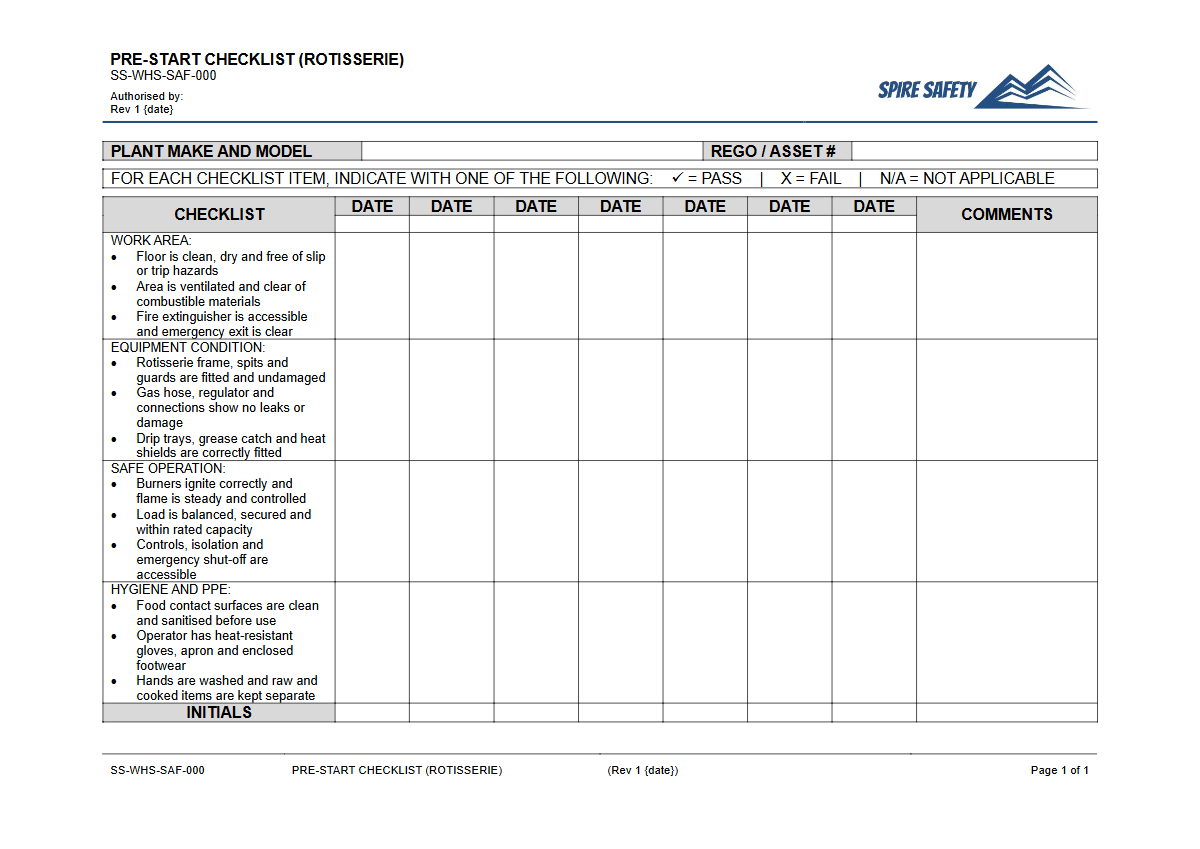
Operating commercial kitchen equipment like a rotisserie introduces significant workplace hazards if not managed correctly. Our Free Pre-Start Checklist (Rotisserie) Template provides a structured framework for operators to conduct consistent, documented safety inspections before use.
Regular checks help identify and control risks such as burns from hot surfaces, electric shock from faulty wiring, entanglement in rotating parts, and food contamination from poor hygiene.
By implementing a routine inspection process, you create a documented record of due diligence and foster a proactive safety culture within your team. This checklist forms a practical part of your broader WHS management systems, helping to ensure equipment is maintained in a safe condition and that hazards are identified before they lead to an incident.
Video walkthrough
How to use the Free Pre-Start Checklist (Rotisserie) Template
This document serves as a comprehensive starting point, designed to be adapted to your specific operational needs. To use it effectively:
- Download the DOCX version and open it in your preferred word processor.
- Review each item and customise it to match the specific make, model, and features of your rotisserie. Add or remove checks based on the manufacturer’s instructions and a workplace-specific risk assessment.
- Train all operators on how to use the checklist correctly, ensuring they understand what each item means and what to do if a fault is found.
- Integrate the completed checklist into your daily opening procedures for the kitchen.
Please note: This is a template resource. It is essential that you customise this document to reflect the unique hazards and control measures of your specific equipment and work environment.
Spire Safety provides this as a guide; you are responsible for ensuring it is fit for your purpose.
Completed checklists can be discussed during team briefings to update staff on equipment status. Using a formal free Pre-Start Meeting Template can help formalise this communication process.
When to use this Pre-Start Checklist
A pre-start check should be completed before the rotisserie is used for the first time each day or at the beginning of each new shift. This routine ensures the equipment's condition has not changed unexpectedly and that it remains safe for operation.
It is a quick visual and functional inspection, not a substitute for scheduled preventative maintenance or detailed services performed by qualified technicians.
These daily records are valuable evidence of your organisation's commitment to safety. They provide useful information for safety committees and can be reviewed during formal WHS compliance auditing activities to demonstrate proactive risk management.
Who should use this Pre-Start Checklist
The pre-start check should be conducted by a worker who has been trained and deemed competent to operate the specific rotisserie. This typically includes chefs, cooks, apprentices, or kitchen hands assigned to the task.
The Person Conducting a Business or Undertaking (PCBU) has the primary duty of care to ensure that a system for these checks is in place and that workers are trained and supervised to carry them out effectively.
The fundamental safety principles of pre-start inspections apply across all industries and equipment types. The process of identifying hazards before use is just as critical whether you are preparing a commercial oven or using a pre-start checklist for 3D printers in a design workshop. For more templates covering a wide range of plant and equipment, browse our entire free WHS resources library.
Common mistakes
Common mistakes to avoid
- Assuming the previous user left the equipment in a safe condition without checking.
- Ignoring minor issues like frayed electrical cords, loose guards, or unusual noises, which can escalate into serious failures.
- Failing to clean the equipment thoroughly after use, increasing both fire risk from grease build-up and food safety risks.
- Using a generic checklist without customising it for the specific make and model of the rotisserie in use.
Legal references
Legal considerations
The following legal requirements may be relevant to this type of work.
- Work Health and Safety Act (Harmonised) — Provides the primary duties for protecting workers and other people from work health and safety risks.
- Work Health and Safety Regulations (Harmonised) — Sets out requirements supporting the management of workplace hazards and risks.
The following codes may be relevant to this type of work.
- Managing WHS Risks Code of Practice — Provides practical guidance on identifying hazards, assessing risks and applying effective controls.
- Work Health and Safety Consultation, Cooperation and Coordination Code of Practice — Provides practical guidance on consulting workers and coordinating with other duty holders.
- Managing the Work Environment and Facilities Code of Practice — Provides practical guidance on safe work environments, workplace facilities and related controls.
Did you know
Burn Hazards
Contact burns from hot surfaces, oil, and grease are among the most common injuries associated with commercial kitchen equipment. Pre-start checks help verify that guards, insulation, and safety features are functioning correctly to prevent worker injury.
Food Safety Integration
An effective pre-start check for a rotisserie includes hygiene. Verifying the cleanliness of the equipment is essential for preventing cross-contamination and the growth of harmful bacteria, integrating WHS with food safety standards.
FAQ
Frequently asked questions
01Is a rotisserie pre-start check legally required in Australia?
02How often should a commercial rotisserie be inspected?
03What are the main hazards of a commercial rotisserie?
04Can I use this template for any brand of rotisserie?
Share this resource
Free Pre-Start Checklist (Rotisserie) Template
Browse Categories
How To Use It
- 1Download and open in Word or PDF.
- 2Replace the placeholders with your business details.
- 3Get it reviewed by a WHS specialist before rollout.
Need it customised?
Our WHS consultants can adapt this template to your site, run a gap analysis, or audit what you already have in place.
Book a Free Consultation WHS consulting servicesor call 1300 156 382