
Free Pre-Start Checklist (Rototiller) Template
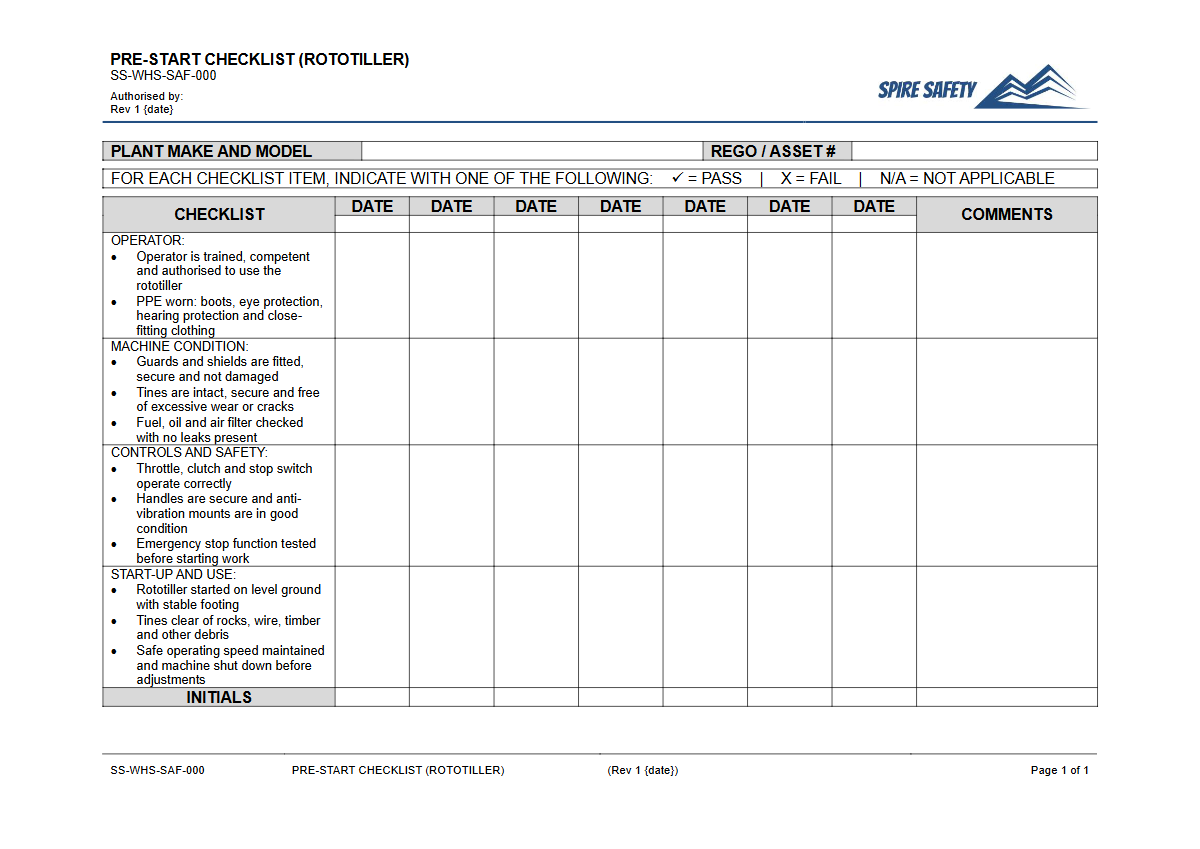
Download our Free Pre-Start Checklist (Rototiller) Template to formalise your equipment inspections. This structured DOCX & PDF helps manage WHS risks.
Free Pre-Start Checklist (Rototiller) Template
DOCX • 125 KB + PDF
Updated Oct 2026
No signup required
Purpose of the Free Pre-Start Checklist (Rototiller) Template
Using a rototiller, like any powered plant, introduces significant risks into the workplace, including entanglement, striking hazards, and musculoskeletal injuries. This Free Pre-Start Checklist (Rototiller) Template provides a structured framework for operators to conduct thorough safety inspections before each use.
A consistent pre-start process helps identify mechanical faults, damage, or missing safety features before they can cause an incident. Formalising these checks is a key part of an effective safety management system, demonstrating due diligence and a proactive approach to hazard control.
Implementing documented pre-start inspections helps your organisation meet its duties under Australian WHS law to provide and maintain safe plant. It also encourages a safety-conscious culture where workers are empowered to stop and report issues.
For a broader discussion on this topic, our Pre-Start Checks and Plant Maintenance Toolbox Talk can help reinforce these principles with your team.
Video walkthrough
How to Use the Free Pre-Start Checklist (Rototiller) Template
This template is a starting point designed to be adapted to your specific operational needs. To use it effectively, follow these steps:
- Download: Get the template in your preferred format (DOCX or PDF).
- Customise: Modify the checklist to include the specific make and model of your rototiller(s). Add or remove items to reflect your site's unique environment, tasks, and risk profile. This step is critical for relevance and effectiveness.
- Train: Ensure all operators are trained not just on how to use the rototiller, but also on the importance and correct procedure for completing the pre-start checklist. Workers must understand what each checkpoint means and the process for reporting faults.
- Implement: Integrate the checklist into your daily operational workflow. Make it a non-negotiable step before any rototiller is operated.
Note: This document is a template only. We have provided it as a starting point, but it must be customised to suit the specific plant, tasks, and environment of your workplace.
For assistance with tailoring safety documentation, consider engaging our WHS consulting services for expert support.
When to Use It
A rototiller pre-start checklist should be completed before every use or at the beginning of each shift where the equipment will be operated. It is particularly important when the machine has been inactive for a period, has been transported to a new location, or has been used by another operator.
Regular checks ensure that the equipment's condition hasn't degraded since its last use. This same principle applies to other landscaping machinery; if your operations use similar equipment, you might also benefit from our Free Pre-Start Checklist (Aerator) Template.
Who Should Use It
This checklist is primarily for use by the trained and authorised operators of the rototiller. They are the ones physically interacting with the equipment and are best placed to spot potential issues. However, other personnel have a role:
- Supervisors and Managers: They are responsible for ensuring the pre-start process is consistently followed and for reviewing completed checklists. They must also act on any reported faults by taking the equipment out of service until it is repaired. Reviewing these documents can be a key part of your internal review processes, which can be strengthened through services like WHS compliance auditing.
- Maintenance Personnel: They use the information from completed checklists to identify recurring problems and schedule preventative maintenance, helping to improve equipment reliability and safety over time.
Integrating such procedures into your daily briefings is an excellent way to keep safety front-of-mind. You can formalise this process using our Free Pre-Start Meeting Template to document discussions and actions.
These tools are all part of building robust WHS management systems that protect your workers and your business. For more tools like this, explore our complete free WHS resources library.
Common mistakes
Common mistakes to avoid
- Pencil-whipping the checklist without physically inspecting the machine.
- Using a generic checklist not specific to the rototiller model.
- Failing to take faulty equipment out of service immediately.
- Neglecting to train operators on how to properly complete the checklist.
Legal references
Legal considerations
The following legal requirements may be relevant to this type of work.
- Work Health and Safety Act (Harmonised) — Provides the primary duties for protecting workers and other people from work health and safety risks.
- Work Health and Safety Regulations (Harmonised) — Sets out requirements supporting the management of workplace hazards and risks.
The following codes may be relevant to this type of work.
- Managing WHS Risks Code of Practice — Provides practical guidance on identifying hazards, assessing risks and applying effective controls.
- Work Health and Safety Consultation, Cooperation and Coordination Code of Practice — Provides practical guidance on consulting workers and coordinating with other duty holders.
- Managing the Work Environment and Facilities Code of Practice — Provides practical guidance on safe work environments, workplace facilities and related controls.
Did you know
Vibration Exposure
Prolonged use of equipment like rototillers can expose operators to Hand-Arm Vibration (HAV), a leading cause of permanent and debilitating injuries. Regular breaks and anti-vibration gloves are important controls.
FAQ
Frequently asked questions
01What are the biggest risks associated with using a rototiller?
02Is specific training required to operate a rototiller in a workplace?
03What should an operator do if a fault is found during a pre-start check?
04How does a pre-start checklist help with WHS compliance?
Share this resource
Free Pre-Start Checklist (Rototiller) Template
Browse Categories
How To Use It
- 1Download and open in Word or PDF.
- 2Replace the placeholders with your business details.
- 3Get it reviewed by a WHS specialist before rollout.
Need it customised?
Our WHS consultants can adapt this template to your site, run a gap analysis, or audit what you already have in place.
Book a Free Consultation WHS consulting servicesor call 1300 156 382