
Free Pre-Start Checklist (Sewer Jet) Template
Download our free Pre-Start Checklist (Sewer Jet) Template to streamline equipment safety checks.
Free Pre-Start Checklist (Sewer Jet) Template
DOCX • 125 KB + PDF
Updated Oct 2026
No signup required
Purpose of the Free Pre-Start Checklist (Sewer Jet) Template
Operating a sewer jet involves significant risks, including high-pressure water injection, exposure to biological hazards, and potential equipment failure. This Free Pre-Start Checklist (Sewer Jet) Template provides a structured starting point for operators to conduct thorough inspections before use.
Using a systematic checklist helps formalise the process of identifying and controlling hazards associated with the engine, pump, water tanks, hoses, nozzles, and safety systems. Regular, documented checks are a fundamental part of ensuring plant is safe to operate, protecting workers and the public from harm.
Integrating these daily inspections into your routine is a key component of a proactive safety culture. It transforms safety from an abstract concept into a practical, daily activity. To further embed this practice, consider discussing the importance of equipment checks during regular team meetings, which can be documented using our free Pre-Start Meeting Template.
Video walkthrough
How to use the Free Pre-Start Checklist (Sewer Jet) Template
This resource is available as a DOCX file for easy customisation and a PDF for immediate printing. To use it effectively, download the template and adapt it to the specific make, model, and configuration of the sewer jetting units in your workplace.
Different units have unique features, controls, and potential failure points that must be reflected in your final checklist.
Important Note: This document is a template only. To be effective, you must customise it to reflect the specific equipment, tasks, and risks present in your workplace.
We recommend a competent person reviews and approves the final document before it is implemented. Proper implementation is a critical part of developing robust WHS management systems that genuinely control risk.
What's included in the checklist?
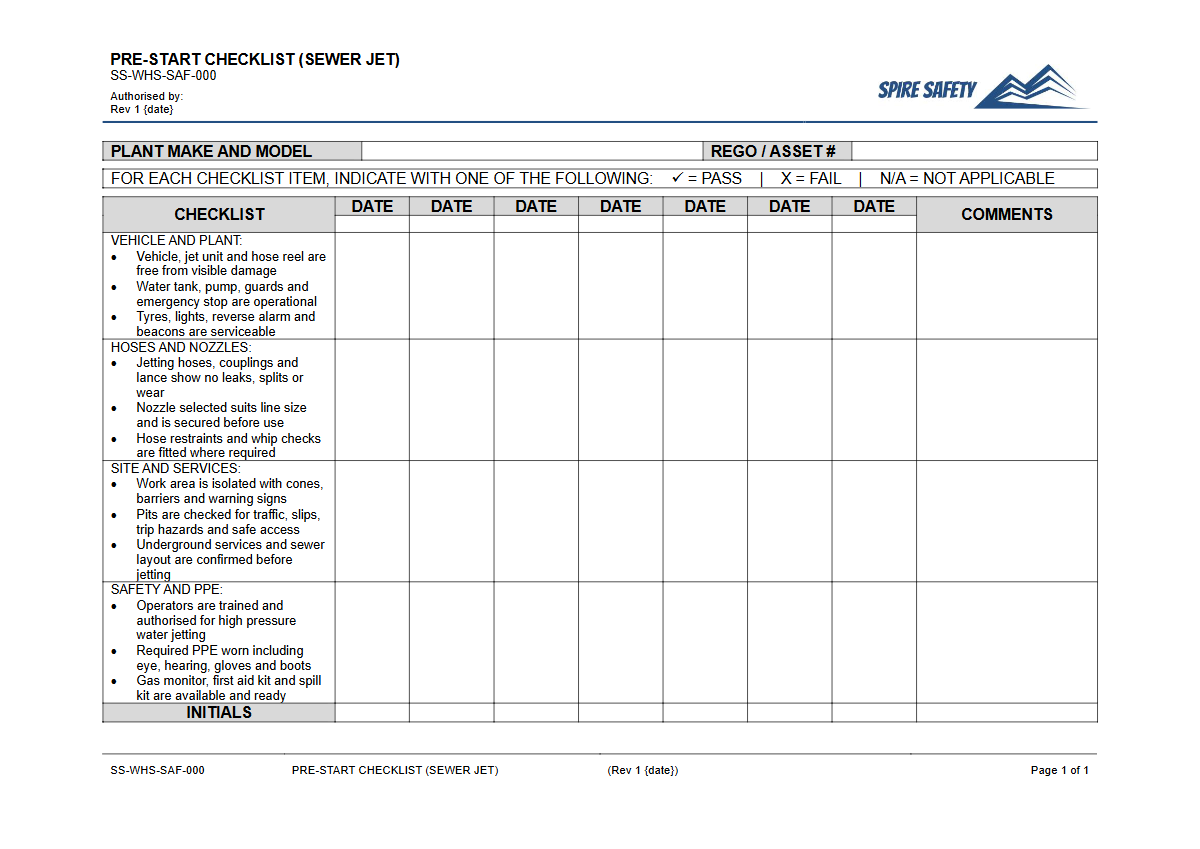
The template provides sections to inspect key components, including:
- General unit condition (leaks, damage, security of components)
- Engine and pump systems (fluid levels, belts, guards)
- High-pressure hoses, reels, and connections
- Nozzles and jetting tools
- Safety features (emergency stop, pressure relief valves, gauges)
- Required personal protective equipment (PPE)
For high-risk activities like operating mobile plant, a pre-start check should be complemented by a thorough risk assessment. You can see an example of how such activities are managed with a Safe Work Method Statement (SWMS) for Concrete Truck Operation, which follows similar principles of hazard identification and control.
When to use it
A pre-start checklist for a sewer jet should be completed before the equipment is used for the first time each day or at the beginning of every shift. It should also be used if a new operator takes over the equipment during a shift.
The goal is to catch any faults, damage, or developing issues before the system is pressurised and work begins. Consistent use helps create a clear record of the plant's condition over time, which is invaluable for maintenance planning.
Who should use it
This checklist is designed to be completed by the trained and competent operator of the sewer jetting equipment. They have the most hands-on knowledge of the unit and are best placed to identify any changes in its condition or performance.
Supervisors or managers should also be familiar with the checklist, using it to verify that inspections are being completed correctly and to review any reported defects. These documented checks can form part of your evidence base during a WHS compliance auditing process.
Reinforcing the habit of conducting thorough pre-start checks is crucial. A great way to do this is through regular, focused safety discussions.
You can facilitate these conversations effectively using our Pre-Start Checks and Plant Maintenance Toolbox Talk Template. You can also browse our complete free WHS resources library for more templates and tools to support your safety program.
Common mistakes
Common mistakes to avoid
- Skipping checks on hoses and fittings for abrasion, cracks, and other wear.
- Failing to verify the function of the emergency stop and pressure relief valves.
- Using a generic checklist not specific to the make and model of the sewer jet.
- Treating the checklist as a 'tick-and-flick' exercise without performing a thorough physical inspection.
Legal references
Legal considerations
The following legal requirements may be relevant to this type of work.
- Work Health and Safety Act (Harmonised) — Provides the primary duties for protecting workers and other people from work health and safety risks.
- Work Health and Safety Regulations (Harmonised) — Sets out requirements supporting the management of workplace hazards and risks.
The following codes may be relevant to this type of work.
- Managing WHS Risks Code of Practice — Provides practical guidance on identifying hazards, assessing risks and applying effective controls.
- Work Health and Safety Consultation, Cooperation and Coordination Code of Practice — Provides practical guidance on consulting workers and coordinating with other duty holders.
- Managing the Work Environment and Facilities Code of Practice — Provides practical guidance on safe work environments, workplace facilities and related controls.
Did you know
Injection Injury Risk
Water jets operating at pressures as low as 7 bar (100 psi) can penetrate the skin and cause serious injection injuries. These injuries often appear minor initially but can lead to severe tissue damage and infection.
Australian Standard
AS/NZS 4233.1:2013 provides detailed guidance on the safe operation and maintenance of high-pressure water jetting systems. It outlines requirements for equipment, training, and operational procedures.
FAQ
Frequently asked questions
01What is a pre-start checklist for a sewer jet?
02Why are pre-start checks important for high-pressure water jetting?
03Who is responsible for completing the sewer jet pre-start checklist?
04How often should a sewer jet pre-start check be performed?
Share this resource
Free Pre-Start Checklist (Sewer Jet) Template
Browse Categories
How To Use It
- 1Download and open in Word or PDF.
- 2Replace the placeholders with your business details.
- 3Get it reviewed by a WHS specialist before rollout.
Need it customised?
Our WHS consultants can adapt this template to your site, run a gap analysis, or audit what you already have in place.
Book a Free Consultation WHS consulting servicesor call 1300 156 382