
Free Pre-Start Checklist (Sewing Machine) Template
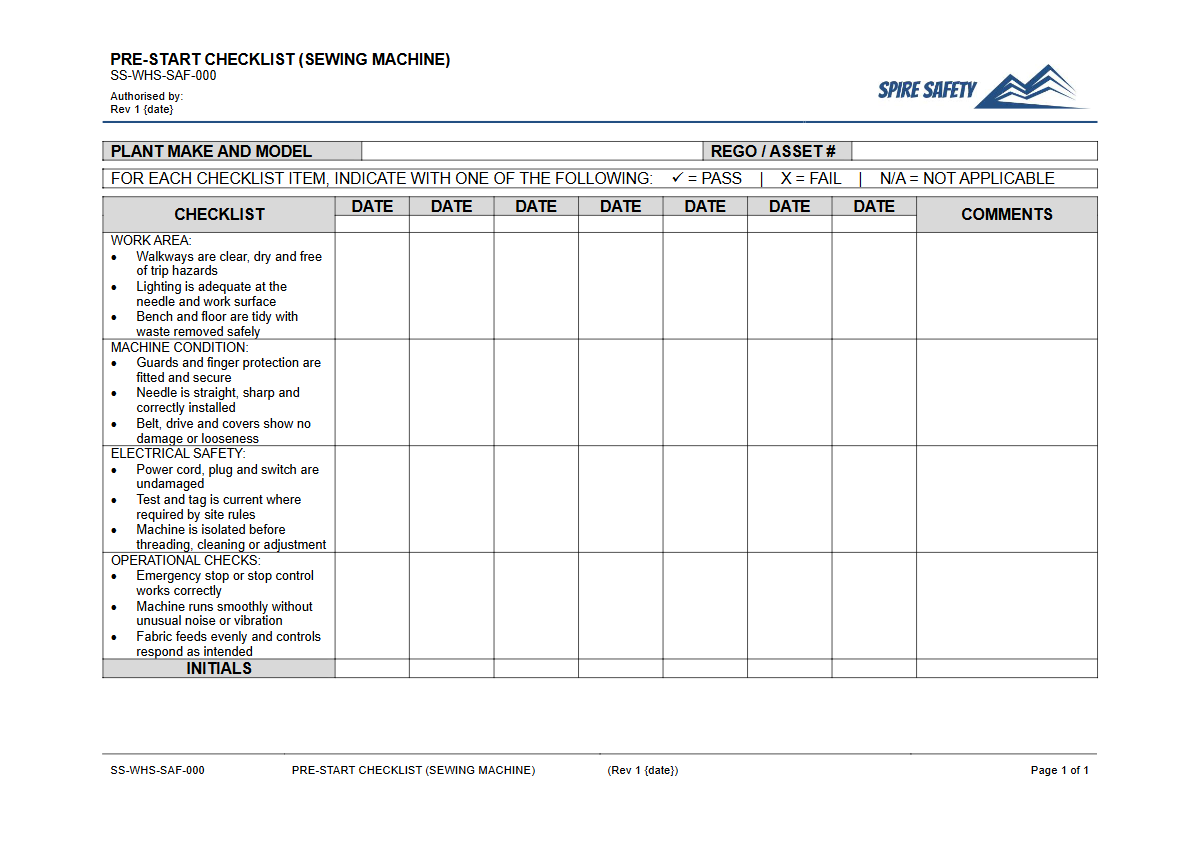
Download our free Pre-Start Checklist (Sewing Machine) Template to formalise equipment safety inspections. Aligned with Australian WHS practices. Download now.
Free Pre-Start Checklist (Sewing Machine) Template
DOCX • 125 KB + PDF
Updated Oct 2026
No signup required
Purpose of the Free Pre-Start Checklist (Sewing Machine) Template
A sewing machine, particularly in a commercial or industrial setting, contains hazards that can cause serious injury if not properly managed. This free Pre-Start Checklist (Sewing Machine) Template provides a structured framework for operators to conduct consistent, documented safety inspections before starting work.
Using this checklist helps identify potential issues such as missing needle guards, frayed electrical cords, incorrect setup, or malfunctioning safety features. By identifying these faults before operation, organisations can proactively manage risks, prevent incidents, and demonstrate a commitment to a safe system of work.
Integrating routine checks like this is a fundamental component of effective WHS management systems, ensuring that plant and equipment are safe to use on a daily basis. It formalises the inspection process, moving it from an ad-hoc check to a recorded, verifiable activity that supports your overall safety and maintenance program.
Video walkthrough
How to use the Free Pre-Start Checklist (Sewing Machine) Template
To implement this resource, download the DOCX or PDF file and integrate it into your daily operational procedures. The DOCX version is fully editable, allowing for extensive customisation.
The primary goal is to create a checklist that is specific to the make and model of the sewing machines used in your workplace, as well as the specific tasks being performed.
Operators should be trained to complete the checklist at the beginning of their shift or before using the machine for the first time that day. The process involves visually inspecting each item, testing functions where applicable, and ticking off each point.
Any identified faults, damage, or concerns must be reported immediately to a supervisor for action before the machine is used. Completed checklists should be filed as a record of your organisation's safety diligence.
For further guidance on embedding these checks, our Pre-Start Checks and Plant Maintenance Toolbox Talk Template can help facilitate team discussions.
A Note on Customisation
Please note: This document is a template and must be customised to your specific workplace. We recommend a person with relevant expertise and experience consults on the customisation to ensure it addresses all site-specific risks, machine models, and operational details.
A generic checklist cannot cover all potential hazards.
When to use it
This Pre-Start Checklist should be completed before the first use of a sewing machine on any given day or at the beginning of each new shift. It is a routine safety measure designed to catch immediate hazards and is not a replacement for scheduled preventative maintenance, which involves more detailed technical inspections and servicing carried out by a competent person.
Using this template consistently helps create a safety-conscious culture where equipment is always assessed before operation.
This principle of pre-use inspection is critical for all types of machinery, not just sewing machines. For workplaces with a variety of equipment, similar checks are necessary, such as those detailed in our free Pre-Start Checklist (CNC Router) Template.
Who should use it
The checklist is designed to be used by the machine operators themselves, as they are the ones most familiar with the equipment's day-to-day performance. However, several roles are involved in the process:
- Operators: Conduct the physical inspection and complete the checklist. They are the first line of defence in identifying faults.
- Supervisors: Ensure operators are completing the checks correctly and consistently. They are responsible for taking action when faults are reported, such as isolating the equipment (tagging out) and arranging for repairs.
- WHS Managers/Personnel: May use the completed checklists during WHS compliance auditing to verify that safety procedures are being followed. They also ensure the checklist content remains relevant and effective.
Ensuring operators are proficient in these checks is a key part of confirming their capability. Competency goes beyond just using the machine; it includes understanding its safety features, which can be formally assessed using resources like a Verification of Competency (Portable Welding Machine) for other types of plant.
Common mistakes
Common mistakes to avoid
- Failing to customise the checklist for the specific machine model.
- "Pencil-whipping" the form without performing the actual physical checks.
- Continuing to use the machine after a fault has been identified.
- Not training operators on how to properly conduct the inspection and what to look for.
Legal references
Legal considerations
The following legal requirements may be relevant to this type of work.
- Work Health and Safety Act (Harmonised) — Provides the primary duties for protecting workers and other people from work health and safety risks.
- Work Health and Safety Regulations (Harmonised) — Sets out requirements supporting the management of workplace hazards and risks.
The following codes may be relevant to this type of work.
- Managing WHS Risks Code of Practice — Provides practical guidance on identifying hazards, assessing risks and applying effective controls.
- Work Health and Safety Consultation, Cooperation and Coordination Code of Practice — Provides practical guidance on consulting workers and coordinating with other duty holders.
- Managing the Work Environment and Facilities Code of Practice — Provides practical guidance on safe work environments, workplace facilities and related controls.
Did you know
A Dangerous Invention
Early sewing machines of the 19th century lacked any form of needle or flywheel guarding, leading to frequent and severe injuries involving fingers, hair, and clothing entanglement. Modern safety features are a direct result of over a century of incident data and risk management.
Common Injuries
Needle-stick injuries are the most common incident associated with industrial sewing machines, but other significant risks include musculoskeletal strain from poor ergonomics and entanglement with moving parts like belts and wheels.
FAQ
Frequently asked questions
01What is the difference between a pre-start check and scheduled maintenance?
02Is this pre-start checklist suitable for a home sewing machine?
03Why do I need to customise the sewing machine checklist template?
04How often should an industrial sewing machine pre-start check be performed?
Share this resource
Free Pre-Start Checklist (Sewing Machine) Template
Browse Categories
How To Use It
- 1Download and open in Word or PDF.
- 2Replace the placeholders with your business details.
- 3Get it reviewed by a WHS specialist before rollout.
Need it customised?
Our WHS consultants can adapt this template to your site, run a gap analysis, or audit what you already have in place.
Book a Free Consultation WHS consulting servicesor call 1300 156 382