
Free Pre-Start Checklist (Soft Serve) Template
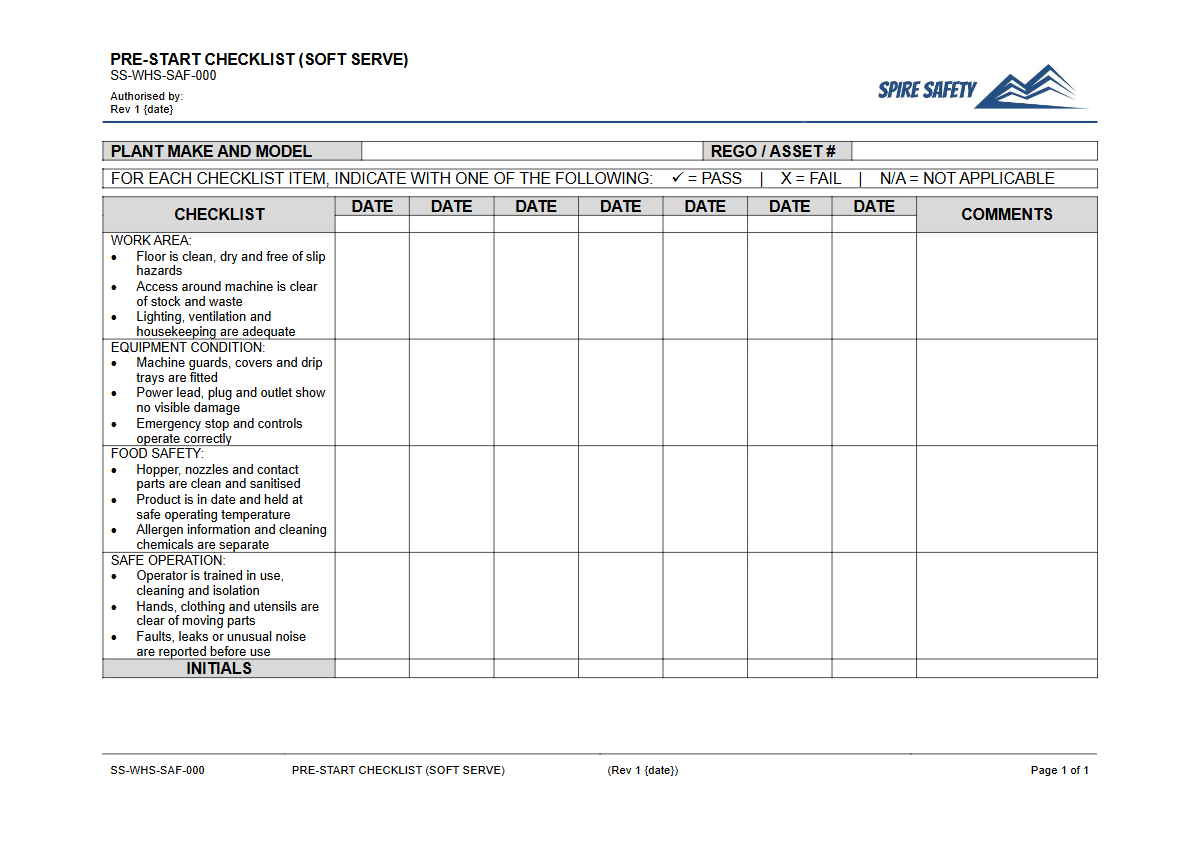
Download our free Pre-Start Checklist for Soft Serve machines. This DOCX & PDF helps formalise daily equipment safety checks to manage WHS risks.
Free Pre-Start Checklist (Soft Serve) Template
DOCX • 125 KB + PDF
Updated Oct 2026
No signup required
Purpose of the Free Pre-Start Checklist (Soft Serve) Template
Operating any form of plant, including commercial kitchen equipment like soft serve machines, introduces risks into the workplace. This free Pre-Start Checklist (Soft Serve) Template provides a structured framework for operators to conduct routine safety and hygiene inspections before use.
Its primary purpose is to systematically identify potential hazards, ensuring the machine is safe to operate and compliant with food safety standards. Implementing a consistent pre-start process helps build a proactive safety culture, reduces the risk of equipment failure, and minimises the chance of injury or illness.
A thorough pre-start check on a soft serve machine should cover a range of potential issues, including:
- Electrical Safety: Inspecting cords, plugs, and switches for damage or wear.
- Mechanical Safety: Ensuring all guards, covers, and panels are securely in place.
- Operational Safety: Checking for leaks, unusual noises, or vibrations during a brief test run.
- Hygiene and Cleanliness: Verifying that the machine has been properly cleaned and sanitised, with no residue from previous use.
- Environment: Ensuring the surrounding area is free from slip and trip hazards like spills or trailing cables.
Formalising these inspections helps a Person Conducting a Business or Undertaking (PCBU) meet their primary duty of care. These checks are a fundamental component of plant safety, a topic you can reinforce with your team using our Pre-Start Checks and Plant Maintenance Toolbox Talk Template.
Video walkthrough
How to use the Free Pre-Start Checklist (Soft Serve) Template
This resource is available for immediate download in both DOCX and PDF formats. The DOCX file is fully editable, allowing you to tailor the checklist to the specific make and model of your soft serve machine and the unique environment of your workplace.
We strongly recommend cross-referencing the checklist items with the manufacturer's operating manual to ensure all critical checks are included.
Please note: This document is a template and must be customised to your specific workplace, equipment, and legislative requirements. We recommend a person with appropriate knowledge and experience reviews and tailors the document before use.
Spire Safety assumes no liability for the use or misuse of this document.
Once customised, the checklist should be integrated into your daily operating procedures. Train all operators on how to complete the check correctly and what actions to take if a fault is identified.
These records are valuable documentation, forming a key part of your comprehensive WHS management systems by demonstrating proactive risk management.
When to use it
A pre-start checklist should be completed before the soft serve machine is used for the first time each day or at the beginning of each new shift. This ensures any issues that may have developed overnight or during a period of inactivity are caught before operation begins.
It's also wise to perform a check after the machine has been cleaned, serviced, or moved to a new location. Consistency is key; making the pre-start check a non-negotiable daily habit is the most effective way to ensure its success. This can be covered as part of a daily briefing, which can be documented with our free Pre-Start Meeting Template.
Who should use it
The pre-start checklist should be completed by the person who will be operating the soft serve machine. This empowers the user to take direct responsibility for their own safety and the safety of others.
Supervisors or managers should also be familiar with the checklist to periodically verify that checks are being performed correctly and to manage any reported faults. Maintenance personnel may also use the checklist as a reference before and after conducting repairs.
It is critical that anyone tasked with completing the checklist has received adequate training on the machine's safe operation and the specific items they need to inspect. While this checklist is for soft serve machines, the principles apply to other equipment, as seen in resources like our Free Pre-Start Checklist (Agitator) Template.
For organisations needing assistance in developing and implementing robust safety procedures tailored to their specific equipment and legal obligations, engaging external WHS consulting professionals can provide expert guidance and peace of mind. You can also explore our free WHS resources library for more templates and tools to support your safety management system.
Common mistakes
Common mistakes to avoid
- "Pencil-whipping" the checklist without physically inspecting the equipment.
- Failing to customise the template for the specific make and model of the soft serve machine.
- Not training operators on what to look for and how to complete the checklist correctly.
- Neglecting to take faulty equipment out of service and report issues immediately.
Legal references
Legal considerations
The following legal requirements may be relevant to this type of work.
- Work Health and Safety Act (Harmonised) — Provides the primary duties for protecting workers and other people from work health and safety risks.
- Work Health and Safety Regulations (Harmonised) — Sets out requirements supporting the management of workplace hazards and risks.
The following codes may be relevant to this type of work.
- Managing WHS Risks Code of Practice — Provides practical guidance on identifying hazards, assessing risks and applying effective controls.
- Work Health and Safety Consultation, Cooperation and Coordination Code of Practice — Provides practical guidance on consulting workers and coordinating with other duty holders.
- Managing the Work Environment and Facilities Code of Practice — Provides practical guidance on safe work environments, workplace facilities and related controls.
Did you know
Electrical Risks
Faulty electrical equipment is a leading cause of workplace incidents in Australia. Regular checks of cords, plugs, and connections, as prompted by a pre-start checklist, are a critical control measure against electric shock.
Food Safety Link
Pre-start checks for soft serve machines are not just about mechanical safety; they are vital for food safety. Ensuring cleaning cycles are complete and nozzles are sanitary prevents the growth of harmful bacteria like Listeria.
FAQ
Frequently asked questions
01Is a pre-start checklist legally required for a soft serve machine in Australia?
02How often should a soft serve machine pre-start check be completed?
03What happens if a fault is found during a pre-start check?
04Can I use this template for other kitchen equipment?
Share this resource
Free Pre-Start Checklist (Soft Serve) Template
Browse Categories
How To Use It
- 1Download and open in Word or PDF.
- 2Replace the placeholders with your business details.
- 3Get it reviewed by a WHS specialist before rollout.
Need it customised?
Our WHS consultants can adapt this template to your site, run a gap analysis, or audit what you already have in place.
Book a Free Consultation WHS consulting servicesor call 1300 156 382