
Free Pre-Start Checklist (Tail Lift) Template
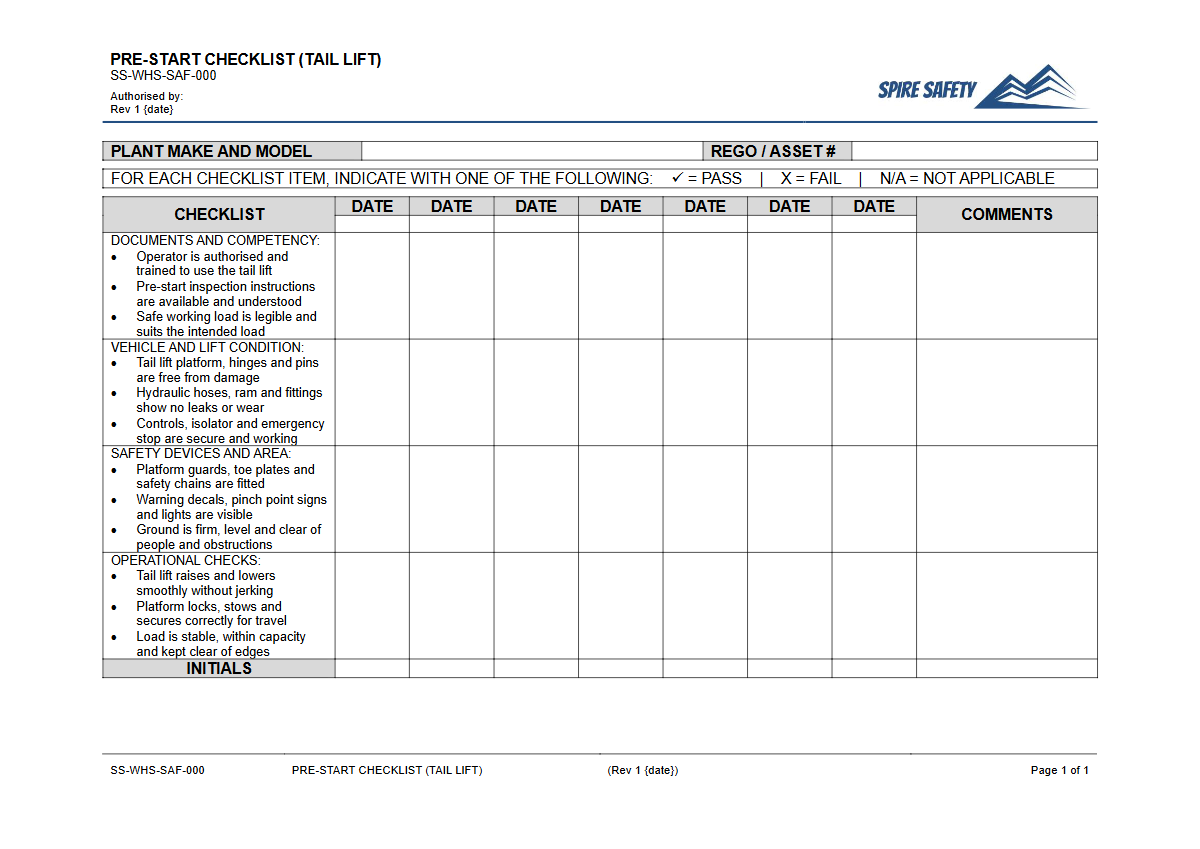
Download our Free Pre-Start Checklist (Tail Lift) Template to formalise daily equipment inspections. This structured DOCX & PDF helps identify hazards.
Free Pre-Start Checklist (Tail Lift) Template
DOCX • 125 KB + PDF
Updated Oct 2026
No signup required
Purpose of the Free Pre-Start Checklist (Tail Lift) Template
A tail lift is a critical piece of equipment for many transport, logistics, and delivery operations, but it also presents significant risks if not properly maintained and inspected. This Free Pre-Start Checklist (Tail Lift) Template provides a structured framework for operators to conduct thorough, documented safety checks before each use.
Implementing a consistent pre-start process helps your organisation identify potential faults, prevent unexpected equipment failure, and reduce the risk of incidents involving crushing, shearing, or falls. It serves as a practical tool to help meet your duties as a Person Conducting a Business or Undertaking (PCBU) to provide and maintain safe plant.
Regular inspections are a cornerstone of any effective plant safety program. Using this template helps standardise the inspection process across all operators and vehicles, creating a clear record that the equipment was in safe working order at the start of a shift.
For broader team engagement on equipment safety, consider using a Pre-Start Checks and Plant Maintenance Toolbox Talk to reinforce the importance of these daily routines. This checklist is an essential component of your overall safety framework, integrating seamlessly into broader WHS management systems to ensure a proactive approach to risk management.
Video walkthrough
How to use the Free Pre-Start Checklist (Tail Lift) Template
This template is designed for ease of use and customisation. After downloading the DOCX or PDF file, you can adapt it to the specific needs of your workplace and the equipment you use.
The checklist guides the operator through a logical sequence of visual and functional checks covering key components like the platform, lifting mechanism, hydraulic systems, controls, and safety cut-outs.
Important: It is crucial that you customise this template for the specific make and model of tail lift used in your workplace. We have provided a comprehensive starting point based on common industry practice, but you must add, remove, or modify items to reflect your unique operational risks and equipment features.
Once customised, ensure all operators are trained on how to complete the checklist correctly and understand the 'pass/fail' criteria for each item. For complex tasks involving lifting equipment, a pre-start check may be one of several required controls; you may also need a Safe Work Method Statement for scissor lift operations or a similar document for other high-risk plant.
When to use it
The tail lift pre-start checklist should be completed before the first use of the equipment each day or at the beginning of every shift. This ensures that any damage or faults that may have occurred overnight, during transit, or from the previous shift are identified before the equipment is put into service.
It should also be used after any significant period of inactivity or following maintenance or repair work to verify its safe operational status. Integrating this process into your daily schedule is key to its effectiveness, a practice that can be reinforced and monitored through regular WHS compliance auditing.
Who should use it
This checklist must be completed by a worker who is trained, competent, and authorised to operate the specific tail lift. The operator is in the best position to notice subtle changes in the equipment's performance or condition.
Supervisors and managers also have a role to play; they should periodically review completed checklists to ensure they are being filled out diligently and to identify any recurring maintenance issues that might indicate a deeper problem with the equipment. Verifying that operators have the necessary skills is a key part of the process, similar to the formal assessments detailed in our Scissor Lift VOC (Verification of Competency) template for other types of elevating work platforms. The correct use of mechanical aids like tail lifts is a fundamental control measure to prevent injuries, a topic also central to a manual handling toolbox talk.
By embedding this checklist into your standard operating procedures, you create a powerful, proactive tool for managing risk. Explore our complete free WHS resources library for more templates, toolbox talks, and guides to support your safety management system.
Common mistakes
Common mistakes to avoid
- Skipping the check entirely to save time during busy periods.
- "Pencil-whipping" the form without physically inspecting the components.
- Failing to report minor defects like hydraulic fluid drips, which can indicate a more serious issue.
- Using a generic vehicle checklist that doesn't cover tail-lift-specific components like the platform, controls, and locking mechanisms.
Legal references
Legal considerations
The following legal requirements may be relevant to this type of work.
- Work Health and Safety Act (Harmonised) — Provides the primary duties for protecting workers and other people from work health and safety risks.
- Work Health and Safety Regulations (Harmonised) — Sets out requirements supporting the management of workplace hazards and risks.
The following codes may be relevant to this type of work.
- Managing WHS Risks Code of Practice — Provides practical guidance on identifying hazards, assessing risks and applying effective controls.
- Work Health and Safety Consultation, Cooperation and Coordination Code of Practice — Provides practical guidance on consulting workers and coordinating with other duty holders.
- Managing the Work Environment and Facilities Code of Practice — Provides practical guidance on safe work environments, workplace facilities and related controls.
Did you know
Fall and Crush Risks
According to Safe Work Australia data, falls from trucks and crushing incidents involving lifting equipment are leading causes of serious injuries and fatalities in the transport and logistics industry.
FAQ
Frequently asked questions
01What are the most common hazards associated with tail lifts?
02How often should a tail lift pre-start check be performed?
03Is a pre-start checklist a legal requirement in Australia for tail lifts?
04What should an operator do if they find a fault during a pre-start check?
Share this resource
Free Pre-Start Checklist (Tail Lift) Template
Browse Categories
How To Use It
- 1Download and open in Word or PDF.
- 2Replace the placeholders with your business details.
- 3Get it reviewed by a WHS specialist before rollout.
Need it customised?
Our WHS consultants can adapt this template to your site, run a gap analysis, or audit what you already have in place.
Book a Free Consultation WHS consulting servicesor call 1300 156 382